MercoPress. South Atlantic News Agency
Health & Science
-
Friday, June 29th 2012 - 01:18 UTC
Emergency mobile hospitals in Santiago to treat bout of respiratory diseases
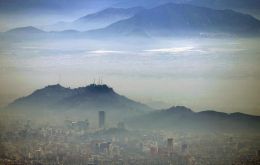
Faced with a critical season of respiratory diseases and an increasingly unmet demand for medical services, Chilean authorities announced two military mobile hospital centres will be installed in Santiago this week.
-
Thursday, June 28th 2012 - 20:23 UTC
HMS Protector back in Portsmouth after seven months in Antarctica duties

Royal Navy ice patrol ship HMS Protector returned to Portsmouth on June 27 from her maiden deployment. The 5.000-ton ice-breaker spent most of her seven months away surveying and patrolling the Antarctic Peninsula.
-
Thursday, June 28th 2012 - 07:47 UTC
FAO/OIE launch global strategy to eradicate foot and mouth disease world wide

The Food and Agriculture Organization of the United Nations (FAO) and the World Organisation for Animal Health (OIE) are joining forces to combat foot-and-mouth disease on a global scale, laying out a detailed strategy to bring the devastating livestock disease under control.
-
Tuesday, June 19th 2012 - 23:44 UTC
Coca Cola confronts NY Mayor Bloomberg: denies responsibility for US obesity epidemics

Coca-Cola CEO Muhtar Kent insists his company is not responsible for the rise in US obesity despite New York Mayor Michael Bloomberg's recent moves to limit the consumption of sugary drinks.
-
Thursday, June 14th 2012 - 10:43 UTC
University Rankings: Brazilian dominance points to future economic might

By Danny Byrne, Editor of TopUniversities.com - Universities throughout Latin America are in a period of transition. Though precise circumstances vary by country, factors such as the growth in scientific research, massification of social demand for higher education, increased student mobility and the rise of private universities have exerted an influence across the region.
-
Thursday, June 14th 2012 - 10:21 UTC
Brazil has 65 of the top 250 universities in Latam, with Sao Paulo top ranked
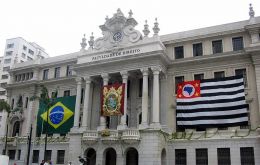
Brazil dominates the Quacquarelli Symonds (QS) Latin American University Rankings for the second year, with 65 institutions in the top 250, led by the Universidad de Sao Paulo.
-
Tuesday, June 12th 2012 - 21:50 UTC
World Health Organization classifies diesel engine exhaust as carcinogenic to humans

After a week-long meeting of international experts, the International Agency for Research on Cancer (IARC), which is part of the World Health Organization (WHO), classified on Tuesday diesel engine exhaust as carcinogenic to humans (Group 1), based on sufficient evidence that exposure is associated with an increased risk for lung cancer.
-
Monday, June 11th 2012 - 19:23 UTC
Extended blooming phytoplankton discovered under thinning Arctic ice cap
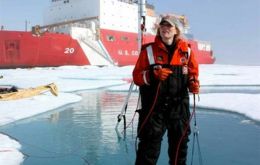
Scientists have made a biological discovery in Arctic Ocean waters as dramatic and unexpected as finding a rainforest in the middle of a desert. A NASA-sponsored expedition punched through three-foot thick sea ice to find waters richer in microscopic marine plants, essential to all sea life, than any other ocean region on Earth.
-
Monday, June 11th 2012 - 03:15 UTC
“Depraved” sexual activities among penguins come to light a century later

Accounts of unusual sexual activities among penguins, observed a century ago by a member of Captain Scott's polar team are finally being made public.
-
Friday, June 8th 2012 - 23:34 UTC
Beverage industry blasts New York for limiting sale of oversized sugary drinks

New York City's top health official shot back at critics who have blasted the city's plan to limit the sale of oversized sugary drinks such as soda, calling beverage industry opposition ridiculous.
