MercoPress. South Atlantic News Agency
International
-
Friday, November 9th 2012 - 05:41 UTC
Drastic changes in UK forces: Territorial Army will be deployed in the Falklands
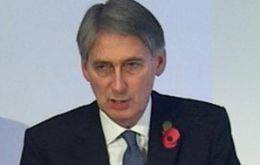
UK Defence Secretary Phillip Hammond signalled Thursday morning that members of the Territorial Army will be deployed to the Falkland Islands. Addressing the House of Commons Secretary Hammond said that reserve forces will be expected to fulfill new roles including contributing to standing commitments such as the Falklands.
-
Friday, November 9th 2012 - 05:30 UTC
Strong controversy at the 2012 World Travel Market in London

World Travel Market 2012, the leading global event for the travel industry, became the hub of the world's tourism trade this week in London when more than 100 ministers attended the sixth UNWTO (World Tourism Organization)&Ministers' Summit.
-
Thursday, November 8th 2012 - 01:53 UTC
Brazil expands investmetns and builds closer economic ties in Africa
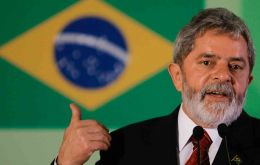
Brazilian companies are moving into Africa amid a government drive to build closer economic ties with the continent. A year ago Vale, the Brazilian mining giant, exported its first overseas coal shipment from Mozambique.
-
Wednesday, November 7th 2012 - 22:52 UTC
Global meat production reached 297 million tons last year, up 0.8% over 2010

Global meat production rose to 297 million tons in 2011, an increase of 0.8% over 2010 levels, and is projected to reach 302 million tons by the end of 2012, according to new research conducted by the Worldwatch Institute.
-
Wednesday, November 7th 2012 - 22:42 UTC
India becomes main world beef exporter in 2012, and probably 2013

While the mantle of the world largest beef exporting nation has traditionally been a three-way race between Australia, Brazil and the US, 2012 has seen India race ahead of the pack, with expectations for Indian beef exports to grow again in 2013.
-
Wednesday, November 7th 2012 - 21:38 UTC
MP Mark Lancaster will represent UK government at Falklands’ Remembrance ceremonies
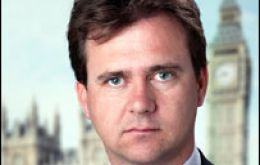
Milton Keynes North MP Mark Lancaster will be in the Falkland Islands for Remembrance Sunday as the British Government’s representative. HRH the Duke of Kent will also be attending the ceremonies.
-
Wednesday, November 7th 2012 - 04:34 UTC
Ex Mexican finance minister named IMF Western Hemisphere director
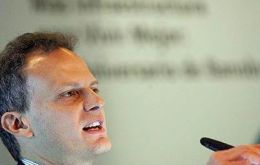
Mexican economist Alejandro Werner was named on Tuesday to the position of IMF Director, Western Hemisphere Department. His appointment will become effective early in January 2013. Mr. Werner succeeds Mr. Nicolas Eyzáguirre, who resigned effective July 26, 2012.
-
Tuesday, November 6th 2012 - 21:28 UTC
International tourist arrivals up 4% this year; Americas among the most dynamic
International tourist arrivals grew by 4% between January and August 2012 compared to the same period of 2011 according to the latest UNWTO World Tourism Barometer. The resilience of international tourism in a continuing uncertain economy is further confirmed by the positive data on tourism earnings and expenditure.
-
Tuesday, November 6th 2012 - 20:56 UTC
NZ scientists in world first discovery of the elusive spade-toothed beaked whale
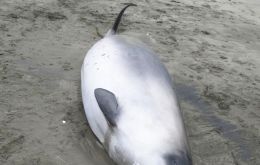
New Zealand scientists have made a world first discovery when they identified two skeletons belonging to the spade-toothed beaked whale, which is so rare that nobody has seen one alive. A 17-foot whale mother and her calf beached themselves in New Zealand in 2010 and were buried misidentified for a much more common type of whale that occasionally strands on NZ beaches.
-
Tuesday, November 6th 2012 - 20:04 UTC
Argentina reiterates it will use all legal means to defend position against US court ruling
Argentina will use all legal means to defend its position against a US court ruling that would force the country to repay creditors who sued to collect on defaulted Argentine bonds, Economy Minister Hernan Lorenzino reiterated in Mexico.