MercoPress. South Atlantic News Agency
International
-
Thursday, September 29th 2011 - 06:28 UTC
EC desperate call on the European Central bank to maintain financial stability
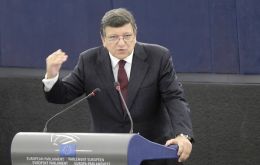
European Commission President Jose Manuel Barroso urged the European Central Bank to do everything in its power to maintain financial stability in the Euro zone, saying the EU faced the biggest challenge in its 50-year history.
-
Thursday, September 29th 2011 - 00:40 UTC
‘Why support Argentina financially when the country threatens Falklands?’
Why should the UK support Argentina financially when the country is acting against British interests particularly in issues such as the Falkland Islands, asks an article in the Mail-online.
-
Wednesday, September 28th 2011 - 23:42 UTC
Argentine minister and UK generals exchange blows on Faklands defence
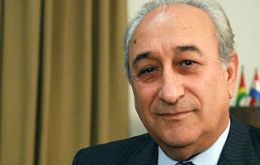
“Force” and “defence budgets” are the only reason Great Britain can wield in support of the Malvinas Islands where “it holds 2.000 people hostage on Islands of Argentine sovereignty”, said Argentine Defence minister Arturo Puricelli.
-
Wednesday, September 28th 2011 - 15:00 UTC
Travel and tourism industry account for 9% of world GDP and 260 million jobs

The World Travel & Tourism Council (WTTC) urged governments to recognize the vast economic and social contribution of travel and tourism - particularly as a driver of sustainable economic growth and revival.
-
Wednesday, September 28th 2011 - 01:42 UTC
UK opens consultation period on new strategy for Overseas Territories
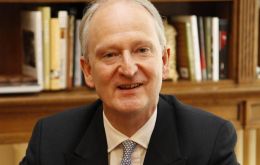
The Foreign Office has launched a consultation on a new strategy for the Overseas Territories and is inviting views from people of those Territories and the UK on how to implement the goals.
-
Wednesday, September 28th 2011 - 01:17 UTC
Germany promises help to rebuild confidence in debt-stricken Greece
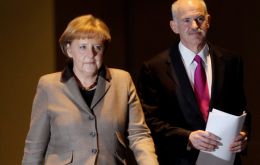
Germany will do all it can to rebuild confidence in debt-stricken Greece as it implements reforms to meet the conditions of its international bailout package, Chancellor Angela Merkel said on Tuesday.
-
Tuesday, September 27th 2011 - 23:45 UTC
Odyssey locates British WW II shipwreck with 200m silver haul onboard
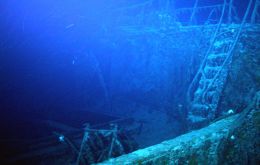
A British cargo ship sunk during the Second World War has been discovered in the Atlantic with the world's largest ever haul of precious metal onboard.
-
Tuesday, September 27th 2011 - 14:30 UTC
World's best travelling nationalities (and peculiarities) according to CNN
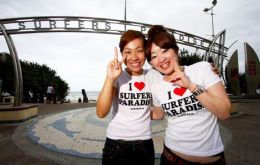
Mention the word “tourist” and you can be forgiven for recalling the expectorations, feeble linguistic skills and criminally small swimming briefs of this homogenous traveller “race.” But not everyone’s like that.
-
Tuesday, September 27th 2011 - 05:15 UTC
UK reaffirms Falklands’ sovereignty: ‘they are British and not negotiable’
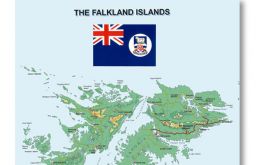
The UK has no doubts about Falkland Islands sovereignty: ‘they are British and they are not negotiable’, said on Monday a Foreign Office spokesperson in reply to a Sunday statement from the G77 plus China calling on Argentina and UK to resume sovereignty negotiations over the South Atlantic Islands.
-
Tuesday, September 27th 2011 - 01:44 UTC
Deloitte Touche Tohmatsu face 7.6bn dollars claim for failing to detect major auditing frauds
Giant accounting and consulting firm Deloitte Touche Tohmatsu has been accused of failing to detect fraud during audits of a mortgage firm which failed during the US housing crash.