MercoPress. South Atlantic News Agency
Latin America
-
Friday, March 20th 2026 - 16:26 UTC
Two US federal prosecutors investigating Colombian President Gustavo Petro over alleged narco ties
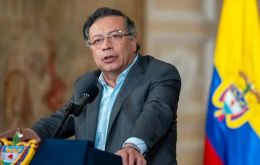
Colombian President Gustavo Petro is the subject of a criminal investigation by at least two US federal prosecutors over alleged links to international drug trafficking, The New York Times reported Thursday, citing three people with knowledge of the matter.
-
Thursday, March 19th 2026 - 02:12 UTC
Russian diesel shipment bound for Cuba challenges US blockade
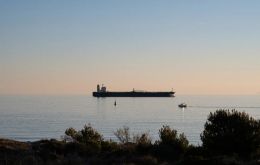
A Hong Kong-flagged tanker that could be carrying fuel to Cuba has resumed navigation in the Atlantic after remaining halted for several weeks, in a move that could offer limited relief to the island’s deepening energy crisis. According to ship-tracking available on Vessel Finder, the Sea Horse loaded fuel in a ship-to-ship operation earlier this year and then resumed course with Cuba as a possible destination. The Financial Times reported that the vessel was part of two Russian energy shipments headed to the island and could arrive within days.
-
Wednesday, March 18th 2026 - 01:07 UTC
Magnitude 6 quake strikes eastern Cuba as island remained under nationwide blackout
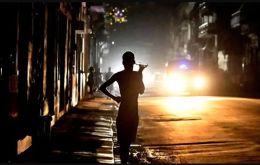
A magnitude 6.0 earthquake struck eastern Cuba early on Tuesday while the island was still dealing with a nationwide blackout caused hours earlier by the collapse of the power grid. The quake was recorded by the European Mediterranean Seismological Centre at a depth of about 15 km, while reports from Cuba’s seismological service placed the epicenter 37 km southeast of Imías, in Guantánamo province, and said it was felt across several eastern provinces.
-
Tuesday, March 17th 2026 - 23:31 UTC
Argentina officially withdraws from the WHO: How will this affect the country?
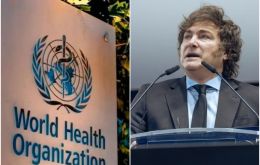
Argentina formally completed its withdrawal from the World Health Organization on March 17, a move announced by Javier Milei’s government a year ago and now confirmed by Secretary for International Economic Relations Pablo Quirno. In his statement, Quirno said the country would continue promoting health cooperation through bilateral and regional channels while fully safeguarding its sovereignty over public health policy.
-
Tuesday, March 17th 2026 - 23:24 UTC
Kast launches border barriers in northern Chile and hardens migration agenda
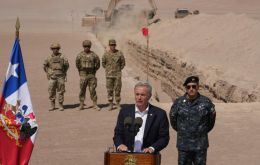
Chilean President José Antonio Kast on Monday launched the border control works he had promised during the campaign, starting in Chacalluta in the Arica and Parinacota region, in an early sign that migration and security will be among the defining priorities of his administration. According to Chile’s presidency, Kast inspected the works at the frontier and highlighted the Army’s deployment to secure the area.
-
Tuesday, March 17th 2026 - 22:45 UTC
Petro accuses Ecuador of bombing Colombian territory, deepening rift with Noboa
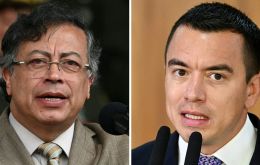
The crisis between Colombia and Ecuador escalated sharply on Tuesday after Colombian President Gustavo Petro said his country was being bombed from Ecuadorian territory, while his counterpart Daniel Noboa rejected the allegation and insisted military operations were taking place only on Ecuador’s side of the border.
-
Tuesday, March 17th 2026 - 11:44 UTC
Rafael Correa in Uruguay: controversy over visit by convicted Ecuadorean ex-president
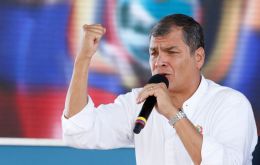
Former Ecuadorian president Rafael Correa is in Uruguay, according to Uruguayan government sources cited by Montevideo daily El País. His presence prompted criticism from the opposition, while the government said that, for now, no formal meetings with executive branch authorities were planned.
-
Tuesday, March 17th 2026 - 03:19 UTC
Trump says it would be “a great honor” to “take Cuba” as Washington presses Havana in talks
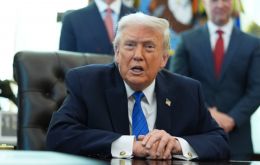
U.S. President Donald Trump sharply escalated his rhetoric toward Cuba on Monday, saying it would be “a great honor” for him to “take Cuba in some form” and that he can “do anything” he wants with the island. The comments came as Cuba was enduring a nationwide blackout and while bilateral contacts acknowledged by both governments since last week continued in the background.
-
Tuesday, March 17th 2026 - 03:00 UTC
Noboa imposes curfew in four provinces of Ecuador deploys 75,000 personnel in new anti-crime offensive
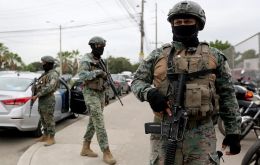
Ecuador’s President Daniel Noboa has launched a new security offensive with a nightly curfew in four violence-hit provinces and the deployment of 75,000 soldiers and police officers. The restriction runs from 11 p.m. to 5 a.m. in Guayas, El Oro, Los Ríos and Santo Domingo de los Tsáchilas, began on Sunday night and is expected to remain in force for two weeks. In the first hours of the operation, authorities reported 253 arrests for violating the measure.
-
Monday, March 16th 2026 - 21:08 UTC
Cuba suffers nationwide blackout after total collapse of national power grid
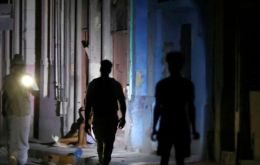
Cuba suffered a nationwide blackout on Monday after the Ministry of Energy and Mines reported a “complete disconnection” of the National Electric System, leaving virtually the entire island without power. The collapse hit a country of roughly 10 to 11 million people and came amid an energy crisis that had already been causing prolonged outages and severe generation deficits.