MercoPress. South Atlantic News Agency
Latin America
-
Tuesday, October 2nd 2018 - 08:57 UTC
Trump hails the launching of the United States/Mexico/Canada trade agreement

After 14 months of talks between the United States and its closest allies, President Donald Trump celebrated the United States Mexico Canada Agreement, or USMCA, a new trade agreement that is poised to replace the North American Free Trade Agreement, or NAFTA.
-
Tuesday, October 2nd 2018 - 07:48 UTC
Chile cannot be forced to negotiate a Bolivian sovereign access to the Pacific, says UN court
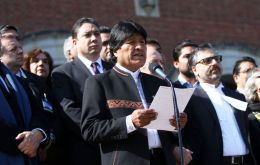
Landlocked Bolivia cannot force Chile to negotiate over granting it “sovereign access” to the Pacific Ocean, judges at the International Court of Justice ruled on Monday in a setback to Bolivian President Evo Morales. Bolivia surrendered most of its former coastline to Chile in a 1904 treaty following the War of the Pacific.
-
Monday, October 1st 2018 - 08:42 UTC
US and Canada reach a NAFTA framework pudate; “we have a trilateral deal”, sayd Mexican sources
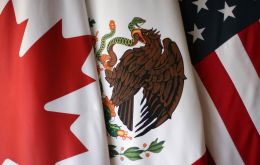
The US dollar slipped against the Canadian dollar on Monday as the United States and Canada reached a framework deal to update the North American Free Trade Agreement. The deal reached involves offering more dairy access to U.S. farmers as well as Canada agreeing to a side-letter arrangement effectively capping automobile exports to the United States.
-
Saturday, September 29th 2018 - 09:05 UTC
Chile calls for the restoration of democracy in Venezuela
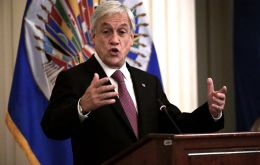
The President of Chile Sebastián Piñera called on the international community to increase efforts to restore democracy in Venezuela. Piñera made the statement during a visit to the Organization of American States headquarters in Washington.
-
Friday, September 28th 2018 - 08:34 UTC
Controversial Almagro’s “complete support” for the Referral to ICC of Venezuela Investigation
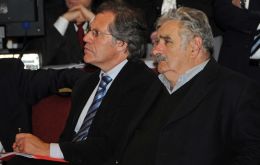
The controversial Secretary General of the Organization of American States (OAS), Luis Almagro, expressed his complete support for the decision of the presidents of Argentina, Mauricio Macri; of Chile, Sebastián Piñera; of Colombia, Iván Duque; of Paraguay, Mario Abdo Benítez; of Peru, Martín Vizcarra; and of the Prime Minister of Canada, Justin Trudeau, to refer to the International Criminal Court (ICC) the investigation into the existence of crimes against humanity in Venezuela.
-
Thursday, September 27th 2018 - 08:40 UTC
With post-Brexit in mind Scottish Secretary begins a UK trade tour to Uruguay and Chile
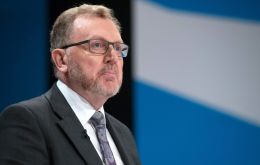
The Scottish Secretary David Mundell started a four-day trade mission to South America, where he will be meeting politicians and business leaders in Uruguay and Chile. Mr. Mundell will be promoting trade links on the visit undertaken on behalf of the UK Government’s Board of Trade, and will be looking into how UK can support new post-EU trade opportunities in South America, promoting Scotland as a great exporter and the UK being open for business.
-
Thursday, September 27th 2018 - 08:35 UTC
UK’s Trade Envoy in Peru with 15-strong business delegation to launch Joint Task Force
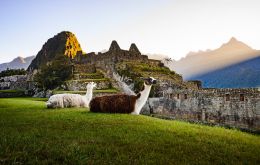
Mark Menzies, the UK Prime Minister’s Trade Envoy to Peru, Chile, and Colombia, is in Lima this week with a delegation of 15 representatives of British government and businesses, including Arup, MACE, Clifford Chance, Crossrail, UK Export Finance, and the City of London. He will seek to identify new areas to boost UK-Peru trade and investment.
-
Wednesday, September 26th 2018 - 21:13 UTC
Fed raises interest rate and announces a third increase this year
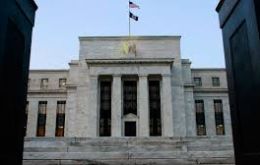
The United States Federal Reserve announced on Wednesday, after a two-day policy meeting, that it would raise interest rates for the third time this year. The decision, which had been widely expected, raised the federal funds rate by 25 basis points, to a range of 2% to 2.25%.
-
Wednesday, September 26th 2018 - 09:08 UTC
“Thank you Donald Trump, for surrounding me with dignity” replies Maduro next to US sanctioned officials
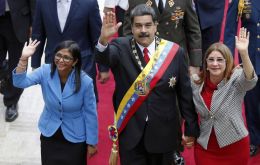
Venezuelan president Nicolas Maduro replied to Donald Trump's UN speech saying his comments were an apology for America’s history of colonialism in the region and offered words of support for the sanctioned officials who joined him during an event broadcast over state television.
-
Friday, September 21st 2018 - 08:21 UTC
Peruvian congress renews confidence in cabinet of president Vizcarra
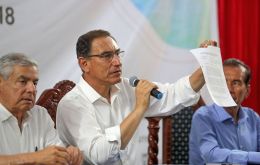
Peru’s opposition-run Congress renewed its confidence in the cabinet of President Martin Vizcarra on Wednesday, averting a political crisis that could have forced new legislative elections.