MercoPress. South Atlantic News Agency
Latin America
-
Thursday, March 7th 2013 - 06:33 UTC
US soy exports with a price edge over Brazil plagued with logistical shipment problems
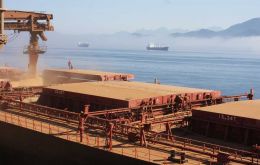
US farm officials forecast a tough autumn battle between Brazilian and US soybean exports, as Brazil attempts to make up for a poor start to 2012-13, with shipments hurt by logistical hiccups. US Department of Agriculture staff in Brasilia, while cutting their forecast of the Brazilian soybean crop to 82.5m tons, stood by a forecast of soybean exports of 39m tons for 2012-13, report agrimoney.
-
Thursday, March 7th 2013 - 01:11 UTC
French company investing 205m dollars in two wind farms with 35 turbines

French Akuo Energy has broken ground at two maiden wind farm developments in Uruguay totalling 92MW, as it prepares to expand its footprint across Latin America.
-
Wednesday, March 6th 2013 - 11:04 UTC
Obama calls for a ‘constructive’ future relationship with Venezuela
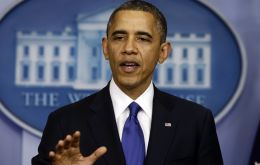
President Barack Obama said within hours of the death of President Hugo Chavez Tuesday that the United States was interested in a “constructive” future relationship with Venezuela.
-
Wednesday, March 6th 2013 - 10:59 UTC
As president for 14 years, “Chavez left a lasting impression on Venezuela and more widely”
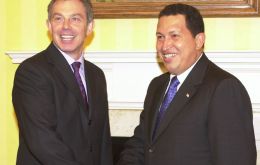
The UK Foreign secretary has paid tribute to Venezuelan President Hugo Chavez, who he said left a “lasting impression” on his country. Chavez, 58, died on Tuesday after being seriously ill with cancer, ending his 14-year rule.
-
Wednesday, March 6th 2013 - 10:54 UTC
Chavez funeral ceremony at the Military Academy, ‘cradle of the Bolivarian revolution’
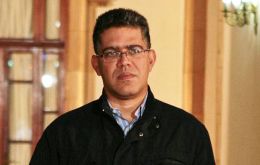
The Venezuelan government declared seven days of national mourning and suspended classes until next Friday as it organizes the funeral of President Hugo Chavez that is scheduled to take place at the Military Academy, where he will lie in state beginning Wednesday morning.
-
Wednesday, March 6th 2013 - 10:50 UTC
Nicolas Maduro named interim president; elections within 30 days
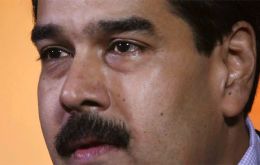
Venezuelan Vice President Nicolas Maduro will take over as interim president of the country while elections are organized within 30 days following the death of Hugo Chavez, Foreign Minister Elias Jaua announced on Tuesday.
-
Wednesday, March 6th 2013 - 10:46 UTC
Santos pays special tribute to Chavez for his efforts to help bring peace to Colombia
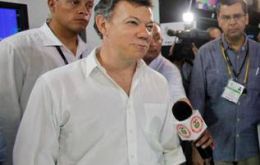
Colombian President Juan Manuel Santos regretted the loss of Hugo Chavez and attributed the advances in the peace process of his government with the FARC Marxist guerrillas (Colombian Revolutionary Armed Forces) to the deceased Venezuelan leader.
-
Wednesday, March 6th 2013 - 10:43 UTC
Latinamerican leaders praise Chavez and prepare to travel to Caracas for his funeral on Friday
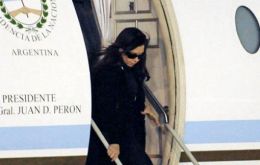
All Latinamerican leaders expressed their deep sorrow over the death of President Hugo Chavez, and several of them will be travelling to Caracas for his funeral scheduled next Friday.
-
Wednesday, March 6th 2013 - 02:06 UTC
Venezuela announces the death of President Hugo Chavez
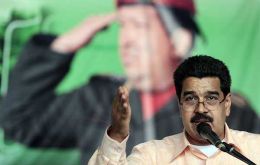
Venezuelan Vice-President Nicolás Maduro announced during a nation-wide transmission that President Hugo Chávez “has died today at 4:25pm.”
-
Tuesday, March 5th 2013 - 05:33 UTC
An estimated one million dollars ‘trickled’ per day from Argentina to Uruguayan banks
The dollar ‘clamp’ in Argentina had led to a ‘dollar trickle’ to Uruguayan banks, which according to official data from the two central banks can be estimated at a million dollars per day.