MercoPress. South Atlantic News Agency
Latin America
-
Sunday, November 3rd 2013 - 00:03 UTC
Brazil's golden boy files for bankruptcy; an example of overblown expectations?

Just a few year ago, flashy Brazilian billionaire Eike Batista was bragging that he would soon overpass Carlos Slim as the world's richest man. He even liked to show visitors his Mercedes-Benz McLaren parked right in the living room of his mansion. But his fall has been deep and fast.
-
Saturday, November 2nd 2013 - 23:39 UTC
Chile's Torres del Paine park named '8th Wonder of the World” by VritualTourist
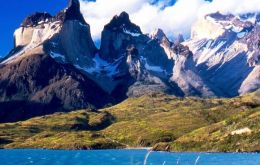
VirtualTourist announced that after more than five million worldwide votes, Turismo Chile's entry of Torres del Paine National Park has been named the “8th Wonder of the World”.
-
Saturday, November 2nd 2013 - 21:03 UTC
Mujica says Argentina's attitude in Mercosur is 'insular' and shatters integration
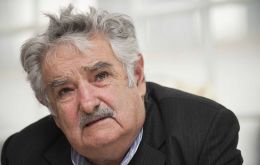
Uruguay President José “Pepe” Mujica questioned Argentina’s recent decision to stop freight transfers at ports belonging to Mercosur countries Buenos Aires has no maritime agreements with. Mujica blasted an “insular” position that “shatters” regional integration.
-
Saturday, November 2nd 2013 - 15:41 UTC
“From the ”Labyrinth of Solitude“ to a ”Network of Partnerships”, the new story of Mexico
By R. Viswanathan (*) Octavio Paz, the celebrated Mexican writer who was Ambassador to India in the sixties, wrote in his book “The Labyrinth of Solitude“ that the ”Mexican is always remote from the world and other people”. This was his conclusion after an in-depth analysis of the character and identity of the Mexicans who have inherited a mix of Aztec and Mayan Indian traditions and European culture and have been influenced overwhelmingly by the culture of US.
-
Friday, November 1st 2013 - 21:40 UTC
Argentina warns Barrick on announced suspension of gold mine project
Barrick, the world’s largest gold mining company, is indefinitely suspending construction of its troubled gold mine straddling the Chile-Argentine border, part of a cost-cutting effort that also involves 10 other mining projects around the world.
-
Friday, November 1st 2013 - 21:36 UTC
Dollar-short Venezuela creates new exchange rate system for arriving tourists
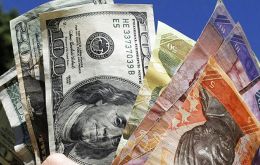
Venezuela will create a new exchange rate for tourists to buy up to US$10,000 of the local Bolivar currency per year in a measure intended to help reduce black market trading, the government said in its official gazette.
-
Friday, November 1st 2013 - 05:59 UTC
Argentina will again be 'a normal country', when Cristina Fernandez is out of the political stage
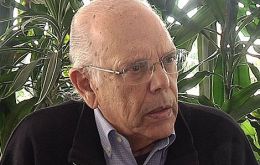
Uruguayan former president Jorge Batlle (2000/2005) said on Facebook that Argentina will again “be a normal country” when President Cristina Fernandez “disappears from the political stage”. And when this happens “the Argentines are going to be happier and as a consequence so will we”.
-
Friday, November 1st 2013 - 05:40 UTC
IMF warns about global slowdown and appeals to Latam governments' prudence
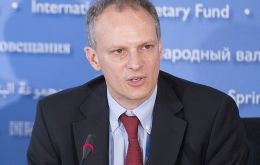
The Director of the International Monetary Fund’s (IMF) Western Hemisphere Division, Alejandro Werner, says Latin American and Caribbean economies are well placed to once again sustain relatively high growth rates.
-
Friday, November 1st 2013 - 05:31 UTC
Malvinas' flagged vessels ideological solidarity with Argentina costs Uruguay lost jobs and income

To the loss of transshipments from Argentina, estimated in 100 million dollars a year by Montevideo port authorities, must be added the 60 million dollars following the ban on Falklands' flagged vessels from operating in Uruguay, claimed Mario Baubeta, president of Uruguay's Navigation Centre.
-
Thursday, October 31st 2013 - 21:35 UTC
Mercosur calls special meeting in November to consolidate trade proposal before the EU
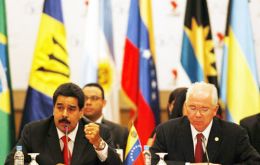
Mercosur will be holding a special meeting of foreign ministers next 15 November in Caracas to consolidate “Mercosur presentation before the European Union”, according to a release from the Argentine Foreign ministry.