MercoPress. South Atlantic News Agency
Mercosur
-
Monday, December 23rd 2013 - 13:27 UTC
Argentina successfully launches rocket; “program to recover defense capabilities”

Argentina successfully launched a research rocket as part of its space program, the Defense Ministry said on Friday. The launch took place on Wednesday from Chamical, in La Rioja province, 880 km northwest of the capital.
-
Saturday, December 21st 2013 - 21:22 UTC
Uruguay Economy minister resigns over scandal involving flag air carrier Pluna
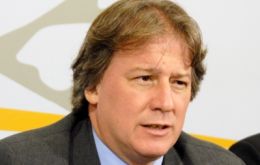
Uruguay's economy minister Fernando Lorenzo resigned on Saturday in the face of questions over the alleged irregular sale of government-owned airplanes following the closure of Pluna, the country's flag carrier, President Jose Mujica announced at a brief press conference, with no questions taken, next to Vice president Danilo Astori.
-
Friday, December 20th 2013 - 06:48 UTC
Stiglitz says China demand for better diet will keep Mercosur countries busy
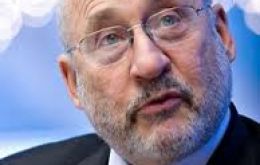
The commodities-exporting economies of Latin America will continue expanding in the years ahead, driven by demand from China despite slower growth in its economy, Nobel Prize-winning economist Joseph Stiglitz said during a conference round in Uruguay.
-
Wednesday, December 18th 2013 - 19:03 UTC
Chilean congress rejects bill imposing harsher punishments for public disorder
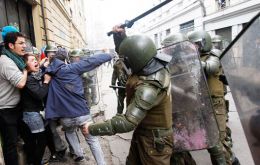
Chile's Lower house ended a two-year debate over the contentious ‘Hinzpeter Law’ aimed to impose stricter punishments for public disorder, but which critics argued it would also apply harsh penalties to peaceful protesters.
-
Wednesday, December 18th 2013 - 06:29 UTC
Paraguay set to approve Venezuela Mercosur membership this Wednesday, ending 18-month rift
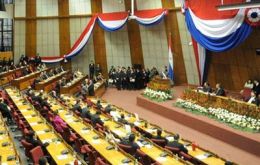
Paraguay is waiting for the formality of a Wednesday vote in the Lower House floor to acknowledge the controversial incorporation of Venezuela as full member of Mercosur, putting an end to an 18 months political and diplomatic rift in the block. The Deputies' Constitution Affairs and Foreign Affairs committees on Tuesday afternoon approved Venezuela's Mercosur incorporation protocol, which means all is ready for the full house expected positive vote.
-
Friday, December 13th 2013 - 12:57 UTC
Argentina surprised by EU request to delay another month trade negotiations with Mercosur

The European Union has asked for a one-month delay in the exchange of proposals to kick off free-trade negotiations with Mercosur, Argentine Cabinet Chief Jorge Capitanich confirmed on Thursday. The news was first reported by Sao Paulo newspapers on statements from Brazilian Foreign minister Luiz Fernando Figuereido.
-
Thursday, December 12th 2013 - 06:54 UTC
EU admits difficulties and requests Mercosur to delay the exchange of tariff proposals
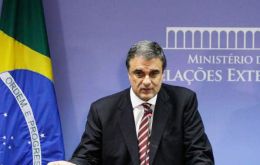
The European Union has formally requested that the exchange of tariff proposals with Mercosur for the creation of a cooperation and free trade zone, originally scheduled for next week, be delayed until 2014. The message was received by the Brazilian delegation at the recent WTO Bali discussions.
-
Wednesday, December 11th 2013 - 06:23 UTC
Paraguayan Senate accepts Venezuela as full member of Mercosur; praise from Brazil
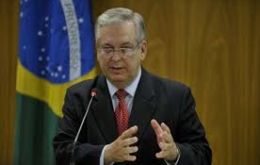
The Paraguayan Senate finally passed on Tuesday afternoon, with a large majority a protocol for including Venezuela as full member of Mercosur. The protocol, which was submitted to Congress by President Horacio Cartes, was supported 29-10.
-
Wednesday, December 11th 2013 - 04:09 UTC
Alejandro Betts, technical advisor of Tierra del Fuego Malvinas Observatory
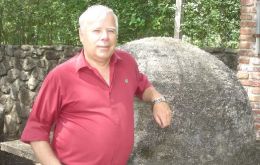
The Tierra del Fuego Malvinas Question Provincial Observatory Advisory Council held its last meeting of the year at the Malvinas Foundation building and among other issues named former Falklands Islander Alejandro Betts as Technical Advisor to the Observatory.
-
Wednesday, December 11th 2013 - 04:01 UTC
Cristina Fernandez blasts police: “I don't believe in coincidence nor in contagious events”
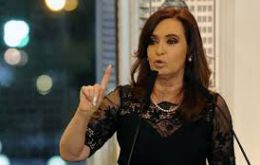
Marking the 30th anniversary of the return of democracy to Argentina, President Cristina Fernández referred to the wave of lootings across the country and police force protests, and stated that “they were no coincidence”, during a rally from the Government House in Buenos Aires on Tuesday evening.