MercoPress. South Atlantic News Agency
Mercosur
-
Saturday, March 9th 2013 - 05:20 UTC
Mujica tells Venezuelans that big contradictions in society are ‘not squashed but conducted’
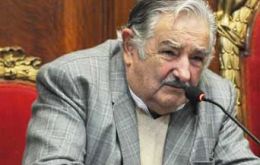
Uruguayan president Jose Mujica called for unity and responsibility in Venezuela, ‘to fight for freedom and peace’ and cautioned that big contradictions in a society are not squashed but conducted. He also called on Brazil to lead the region but warned: “not creating a new regional empire”.
-
Wednesday, March 6th 2013 - 02:06 UTC
Venezuela announces the death of President Hugo Chavez
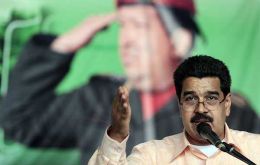
Venezuelan Vice-President Nicolás Maduro announced during a nation-wide transmission that President Hugo Chávez “has died today at 4:25pm.”
-
Monday, March 4th 2013 - 05:20 UTC
OAS mission praises Paraguay’s Electoral Court organizing 21 April elections
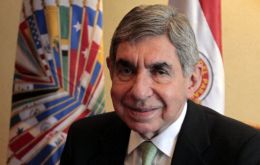
Oscar Airas, chief of the OAS Electoral Observation and Political Accompaniment Mission in Paraguay completed his second visit to Asunción collecting information from different sources ahead of the coming general elections scheduled for April 21.
-
Saturday, March 2nd 2013 - 08:36 UTC
Mujica says Mercosur is a stalled pachyderm and needs trade accords with third parties
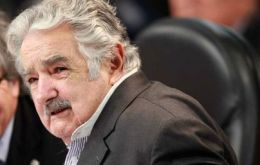
Mercosur more than a common market is a “poor customs union” said Uruguayan president Jose Mujica adding that new discussions on the future of the group’s future should be considered but which imply the possibility of establishing new free trade agreements with third parties.
-
Saturday, February 23rd 2013 - 06:31 UTC
OAS mission promotes political dialogue in Paraguay ahead of the April 21 general election
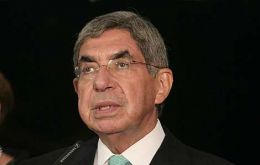
The head of the Electoral Observation and Political Accompaniment Mission of the Organization of American States (OAS) in Paraguay, the former President of Costa Rica and Nobel Peace Prize Winner, Óscar Arias begins this weekend a visit to Asuncion to promote dialogue between the different Paraguayan political and social actors, and to prepare the deployment of the Mission that will monitor the general elections of April 21.
-
Thursday, February 21st 2013 - 05:27 UTC
Mercosur begins technical meetings for new proposals on trade accord with EU
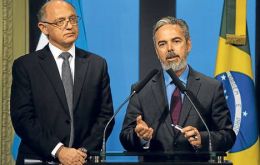
Mercosur will retake next March technical discussions for a new proposal to be presented to the European Union for a trade and cooperation agreement, announced Argentine Foreign minister Hector Timerman next to his peer Antonio Patriota following bilateral talks on Wednesday in Rio do Janeiro.
-
Thursday, February 21st 2013 - 04:45 UTC
Brazilian soybean farmers oppose contract with Monsanto to end royalties’ dispute
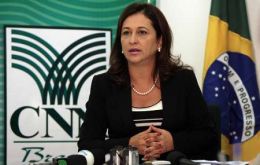
Brazilian farmer groups are opposing a contract that Monsanto the world’s biggest seed company is offering farmers to end a dispute over royalty payments on its genetically modified soybean seeds. Monsanto is trying to resolve uncertainty over its ability to collect fees on its new Intacta soybeans, which it is scheduled to start selling in Brazil during the next growing season.
-
Thursday, February 21st 2013 - 04:43 UTC
Unasur, invited by electoral officials will observe the April 21 election in Paraguay
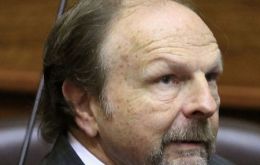
Paraguay’s Superior Electoral Tribunal, TSJE said on Wednesday that representatives from Unasur, Union of South American Nations, would be present as observers of the electoral process scheduled for next April. The accord was signed by TSJE president Alberto Ramirez Zamonini and the head of Unasur High Level Group, Salomon Lerner.
-
Thursday, February 21st 2013 - 04:41 UTC
Correa hopeful Paraguayan elections will be “transparent and democratic”
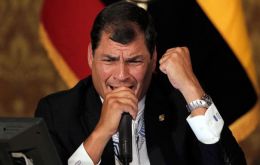
Re-elected Ecuadorean president Rafael Correa is hopeful “transparent and democratic” elections will be held in Paraguay next April, a country with which he is waiting to normalize relations.
-
Thursday, February 21st 2013 - 01:47 UTC
Nationalized airport operators demand 90 million dollars from Bolivia
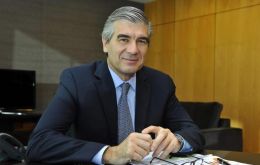
The Spanish infrastructure company Abertis said it was seeking 90 million dollars from Bolivia in compensation for the nationalization of its subsidiary Servicios de Aeropuertos Bolivianos (Sabsa). Abertis was also considering other possible legal claims, its chief executive Francisco Reynes said.