MercoPress. South Atlantic News Agency
Mercosur
-
Thursday, June 30th 2011 - 00:28 UTC
Mercosur wants Bolivia and Ecuador to become full members

Mercosur plans to begin negotiations with associate members Bolivia and Ecuador to make them full members, said Brazilian Foreign Affairs minister Antonio Patriota during Wednesday’s presidential summit in Paraguay.
-
Wednesday, June 29th 2011 - 06:20 UTC
Trade in local currencies and tariffs on the Mercosur agenda for discussion

Argentina Economy Minister Amado Boudou said that the idea of appealing to an only shared currency by Mercosur members generates ‘doubts’ given the European experience, and feels more inclined ‘to stimulate trade with local currencies”, so that each member country can take advantage of monetary policy macroeconomic instruments.
-
Wednesday, June 29th 2011 - 03:57 UTC
Argentina asks Mercosur to draft an industrial policy and contain Asian imports
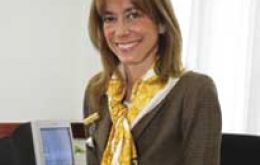
Mercosur Ministers of Industry meeting in Paraguay, ahead of the presidential summit, discussed on Tuesday different mechanisms to weaken the flood of ‘cheap’ manufactured goods from Southeast Asia.
-
Wednesday, June 29th 2011 - 03:53 UTC
Mercosur ‘structural convergence fund’ has distributed 1.1bn USD in 37 projects

Mercosur structural convergence fund, Focem, which was created in 2005, has distributed 1.1 billion US dollars among its full members for the implementation of 37 projects basically to improve roads for inter-region and international trade, according to official figures released in Asunción.
-
Tuesday, June 28th 2011 - 16:32 UTC
Argentina promises to end fluvial obstacles to land-locked Paraguayan trade

Foreign Affairs minister Hector Timerman in Asuncion for the Mercosur summit promised on Tuesday Argentina will put an end to fluvial obstacles to Paraguayan trade. Landlocked Paraguay trades with the rest of the world through the Parana River, most of which crosses Argentine territory.
-
Tuesday, June 28th 2011 - 16:26 UTC
Japan interested in closer links with Mercosur attends summit in Paraguay
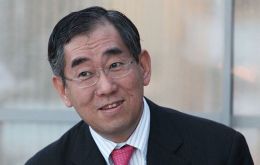
Japan is attending the Mercosur summit in Paraguay with an eye on proposing the launch of a dialogue to boost bilateral economic relations and explore the possibility of signing a free trade agreement, reports the Japanese news agency Kyodo.
-
Tuesday, June 28th 2011 - 06:12 UTC
Mercosur summit begins Tuesday among controversy over its effectiveness
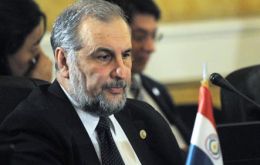
The Mercosur summit will be an opportunity to solve asymmetry problems and social inequalities in the region, said Paraguay’ Foreign Affairs minister Jorge Lara Castro. The South American customs union is meeting this week in Asuncion for the first of two annual summits when the rotating chair will be passed on to Uruguay.
-
Monday, June 27th 2011 - 06:40 UTC
Global rice production reaches 476 million tons in 2011; strong Mercosur recovery
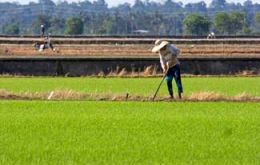
Global rice production is expected to touch 476 million tons in 2011, on the back of improved weather conditions, as the influence of La Niña is expected to neutralize by June, United Nation’s body FAO said.
-
Monday, June 27th 2011 - 06:24 UTC
Parlasur member claims Mercosur summits have become ‘display of empty rhetoric’
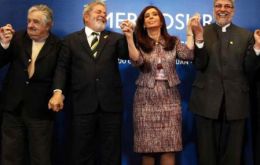
Mercosur summits have become a display of empty rhetoric, full of protocol and ‘family photos’ but with no full hearted willingness to achieve a solid, fair integration, claimed the head of the Paraguayan delegation before Parlasur, the Mercosur Parliament.
-
Saturday, June 25th 2011 - 08:00 UTC
Canada interested in closer links with Mercosur announces ‘exploratory talks’
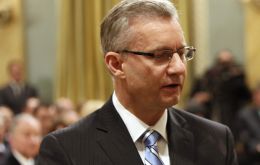
Canada and Mercosur agreed on Friday to hold exploratory talks to strengthen their relationship, Canadian Trade Minister Ed Fast said on Friday. Fast is currently in Asunción to promote bilateral trade and investments, and Paraguay currently holds the Mercosur chair.