MercoPress. South Atlantic News Agency
Mercosur
-
Monday, April 11th 2011 - 19:42 UTC
EU agriculture ministers meet to address current trade talks with Mercosur

European Union Agriculture ministers will be meeting this week in Luxembourg to discuss the current trade negotiations with Mercosur, according to European Commission sources.
-
Monday, April 11th 2011 - 06:22 UTC
Mercosur costs and growing domestic demand limit beef export volumes
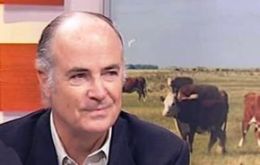
With stronger local currencies Mercosur main beef exporters, Brazil and Uruguay are finding it more profitable to supply their domestic markets than exporting, in spite of growing international demand.
-
Monday, April 11th 2011 - 05:58 UTC
Mujica strongly lobbies for Venezuela’s full incorporation to Mercosur
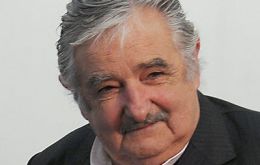
Uruguayan president Jose Mujica strongly supported the incorporation of Venezuela as full member of Mercosur from a Sunday column published in one of Brazil’s most influential newspapers, Folha de Sao Paulo.
-
Friday, April 8th 2011 - 20:08 UTC
Argentina imports’ hurdles create ‘uncertainty’ to EU/Mercosur trade negotiations
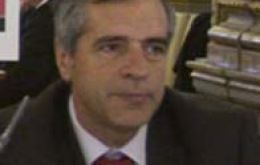
Argentina’s hurdles to imports don’t help European Union /Mercosur trade negotiations and generate “uncertainty” warned the EU head of delegation in Argentina Alfonso Diez Torres. He also criticized the “one to one” Argentine policy that forces the local assembly plants to match every import-dollar with export dollars.
-
Friday, April 8th 2011 - 03:14 UTC
Mercosur provides 3% of EU imports, which represent 20% of the block’s exports
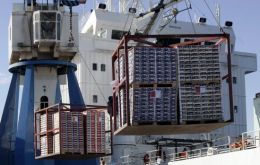
“Argentina is not a great trade partner for the European Union in absolute terms, but the EU is a crucial partner for Argentina”, pointed out the head of the EU delegation in Buenos Aires Alfonso Diez Torres.
-
Tuesday, April 5th 2011 - 22:22 UTC
Ulster farmers against any EU/Mercosur deal that includes beef and lamb

The Ulster Farmers’ Union has raised concerns over the current trade deal being discussed between the European Union and Mercosur. UFU beef and lamb chairman Ray Elkin said: “The potential for a Mercosur trade deal is of great concern to the UFU, and could have a devastating impact on Northern Ireland’s beef sector in particular.”
-
Tuesday, April 5th 2011 - 21:11 UTC
EU official optimistic about the next round of trade negotiations with Mercosur
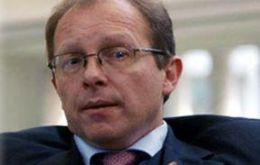
The European Union and Mercosur have a clear commitment to advance trade negotiations and conclude a deal, if possible, by the end of the year, if not at the beginning of next year when Argentina will again hold the rotating chair of the South American group.
-
Tuesday, April 5th 2011 - 10:15 UTC
Venezuelan business community concerned about full Mercosur integration
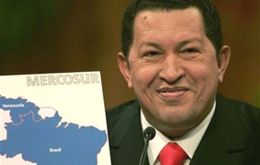
The potential full membership of Venezuela in Mercosur, before formalizing its departure from the Andean Community (CAN) has Venezuelan entrepreneurs and several parties linked to integration “awaiting and in uncertainty” since they are not in touch with government actions on the issue.
-
Friday, April 1st 2011 - 01:54 UTC
Mujica: we need Venezuela in Mercosur “to help balance the group”
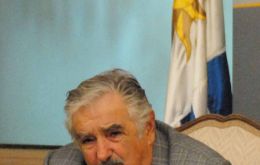
Uruguayan president Jose Mujica promised his peer Hugo Chavez he would press strongly for Venezuela’s incorporation as full member of Mercosur because this will help balance the group.
-
Friday, April 1st 2011 - 01:37 UTC
In spite of Mercosur “unfulfilled agenda”, there will be trade agreement with EU
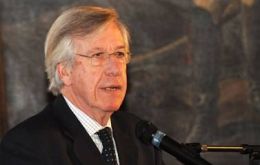
Uruguay’s Vice-president Danilo Astori said that Mercosur “unfulfilled agenda” will not affect the chances of reaching an agreement with the European Union which if finally achieved will also help the “block to work better”.