MercoPress. South Atlantic News Agency
Politics
-
Monday, September 14th 2026 - 10:40 UTC
Scotland and Wales to sign a cooperation agreement at the Cardiff independence summit

The first ministers of Scotland and Wales, John Swinney and Rhun ap Iorwerth, were due to sign an agreement on future collaboration in areas of shared interest on Monday afternoon, after meeting in Cardiff with Northern Ireland First Minister Michelle O'Neill, in the first face-to-face gathering of the three since ap Iorwerth took office in May.
-
Monday, September 14th 2026 - 10:25 UTC
Milei reaches 166 judicial appointments in a year and announces a federal courts overhaul
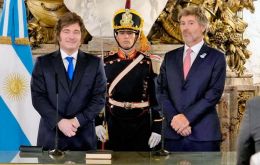
Argentine President Javier Milei signed a new round of judicial appointments last week bringing his government to 166 appointments of judges, prosecutors and public defenders in a year, according to a tally released by Justice Minister Juan Bautista Mahiques, who presented it as a record figure.
-
Monday, September 14th 2026 - 05:10 UTC
Falklands RAF’s Voyager tanker back in MPA after support of US efforts in Iran
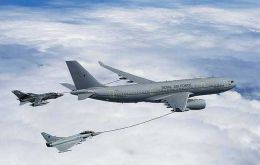
RAF air defenses protecting the Falklands Islands have been bolstered by the re-deployment of an Airbus A330 Voyager tanker aircraft back to Mount Pleasant airbase after a five-month long gap.
-
Monday, September 14th 2026 - 05:04 UTC
Falklands ex Chief Executive, Keeling holding temporary CEO job in Cornwal

A former chief executive of the Falkland Islands government is taking on a temporary leadership role at a council in the UK. Andy Keeling has been appointed by Cornwall Council as interim deputy chief executive and will start the job this week.
-
Monday, September 14th 2026 - 02:58 UTC
South Georgia Fisheries Protection Vessel, 20th Anniversary of Pharos SG
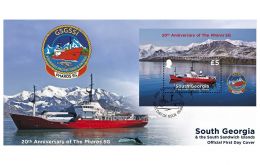
For the past twenty years, the Pharos SG has been a constant and vital presence in the waters surrounding South Georgia and the South Sandwich Islands, safeguarding one of the most remote and ecologically significant marine environments on the planet.
-
Monday, September 14th 2026 - 02:55 UTC
Falklands Post Office celebrates 10th Anniversary of the Blue Belt Program
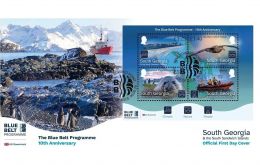
The UK Overseas Territories (OTs) are home to 90% of the UK’s biodiversity. Since its launch in 2016, the UK Blue Belt Program has worked in partnership with OTs’ Governments to enhance the protection and sustainable management of these unique marine environments, marking a decade of collaborative ocean stewardship. In total, 4,309,000 km² of the world’s oceans are protected by the Blue Belt Program. That is an area 18 times the size of the UK. Falklands Post Office celebrates such an achievement with the release of specific stamps issues.
-
Saturday, September 12th 2026 - 17:25 UTC
Trump says he could 'settle' any conflict over the Falklands, calling it a potential disaster
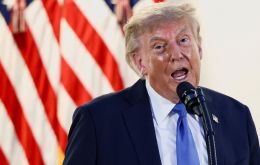
US President Donald Trump said in Dublin on Saturday that he expects to be called in if a new conflict breaks out between the United Kingdom and Argentina over the Falklands, which he described as a “potential disaster,” and said he would probably be able to settle it.
-
Saturday, September 12th 2026 - 10:26 UTC
US approves possible sale of four Black Hawk helicopters to Argentina for US$140 million
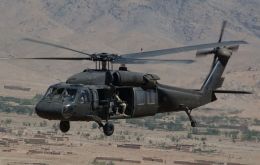
The US State Department has approved a possible sale of four UH-60L Black Hawk helicopters and related equipment to Argentina at an estimated cost of US$140 million, and notified Congress of the transaction, which has a review period before it can proceed.
-
Friday, September 11th 2026 - 21:40 UTC
Man with Falklands ties obtains Argentine ID and seeks it for his partner's daughter

A man with ties to the Falklands obtained his Argentine national identity document in July and is now pursuing Argentine documentation for his partner's daughter, who was born in the archipelago, according to an account he made public himself.
-
Friday, September 11th 2026 - 21:21 UTC
New York marks 25 years since 9/11 with a seventh moment of silence
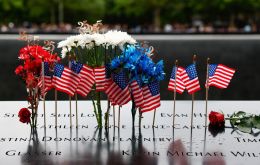
The ceremony held Friday at Ground Zero in New York for the 25th anniversary of the September 11, 2001 attacks included a seventh moment of silence for the first time, dedicated to those who died later from illnesses and injuries linked to the attacks. Organizers said it will become a permanent part of the annual event.

