MercoPress. South Atlantic News Agency
Politics
-
Monday, August 17th 2026 - 23:07 UTC
The Washington-Tehran memorandum expires without talks ever having opened
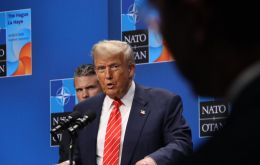
The memorandum of understanding signed on June 17 by the United States and Iran expired on Monday at the end of its sixty-day term, without the peace talks it envisaged ever taking place and without either side announcing an extension.
-
Monday, August 17th 2026 - 22:57 UTC
Falklands debates immigration inflow ahead of oil industry development
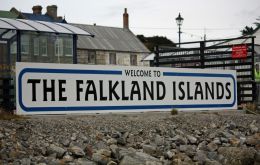
After the announcement that the Falkland Islands Government has decided to suspend Permanent Residence Permits (PRP) for a year in order to carry out a review of the entire scheme, the local press approached two elected members who back the initiative to explain the reasons behind the measure.
-
Monday, August 17th 2026 - 22:09 UTC
FAO World Food Prices edged up in April, mainly cereals, vegetable oils and sugar
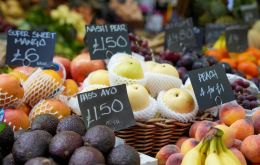
The benchmark measure of world food commodity prices edged up in July, as recent heatwaves and energy price dynamics pushed up quotations for cereals, vegetable oils and sugar, according to new data released Friday by the Food and Agriculture Organization of the United Nations (FAO)
-
Monday, August 17th 2026 - 09:25 UTC
Cali closes the rescue phase after 140 hours and moves to clearing rubble
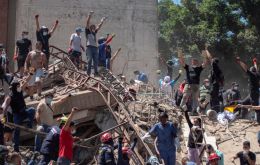
Authorities in Cali declared the search and rescue phase over a week after the magnitude 7.4 earthquake that struck western Colombia, following more than 140 hours of continuous operations. Teams deployed in the capital of Valle del Cauca department are now focused on recovering the last bodies located and on removing rubble.
-
Sunday, August 16th 2026 - 22:46 UTC
Lula and Flávio Bolsonaro open Brazil's campaign in their respective political birthplaces
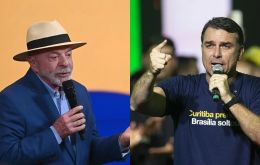
Brazil's two leading presidential candidates launched their campaigns for the October 4 elections on Sunday with rallies at the venues associated with their political trajectories. President Luiz Inácio Lula da Silva drew more than 10,000 supporters to the Vila Euclides stadium in São Bernardo do Campo, in São Paulo's industrial belt, while Senator Flávio Bolsonaro gathered his backers on Copacabana beach in Rio de Janeiro.
-
Sunday, August 16th 2026 - 07:40 UTC
Colombia asks Washington to suspend 12.5% tariffs over the earthquake emergency
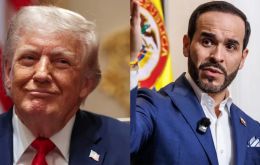
Colombian President Abelardo de la Espriella on Saturday asked his US counterpart, Donald Trump, to temporarily suspend tariffs on Colombian goods, arguing this would give exporters relief as the country faces the economic consequences of Monday's magnitude 7.4 earthquake.
-
Saturday, August 15th 2026 - 06:08 UTC
Colombia: De la Espriella calls the situation in Pereira “apocalyptic” after touring the city
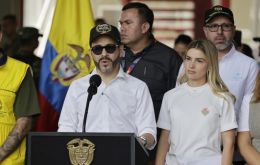
Colombian President Abelardo de la Espriella on Friday described the situation in Pereira, capital of Risaralda department and one of the places worst hit by Monday's magnitude 7.4 earthquake in the west and center of the country, as “apocalyptic.”
-
Saturday, August 15th 2026 - 05:01 UTC
Rejection of Flávio Bolsonaro exceeds Lula's despite his gains in voting intention
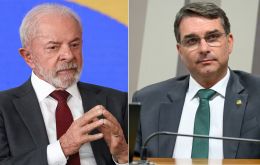
Senator Flávio Bolsonaro registers a 54% rejection rate among Brazilian voters, two points above the 52% recorded by President Luiz Inácio Lula da Silva, according to the Quaest poll released on Friday, two days before campaigning officially opens for the October 4 elections.
-
Friday, August 14th 2026 - 22:20 UTC
Peña says the Milei-Lula crisis has not affected how Mercosur functions
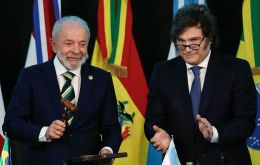
Paraguayan President Santiago Peña said on Friday that the differences between his Argentine and Brazilian counterparts, Javier Milei and Luiz Inácio Lula da Silva, have had no consequences for Mercosur, despite the diplomatic crisis between the two countries.
-
Friday, August 14th 2026 - 10:43 UTC
A year from the presidential vote, Argentina's parties begin to define alliances
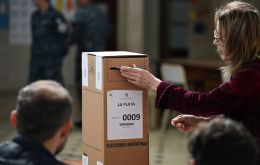
With little more than a year to go before Argentina's presidential elections of October 2027, the governing party and the main opposition force began this week to realign their positions. La Libertad Avanza, the party of President Javier Milei, resumed talks with former president Mauricio Macri's PRO, while the various currents of Peronism agreed a truce aimed at blocking the electoral reform the government is promoting.