MercoPress. South Atlantic News Agency
Tag: Bashar al-Assad
-
Monday, October 21st 2013 - 19:52 UTC
Support for Saudi Arabia's rejection of UN Security Council seat

Saudi Arabia's Gulf Arab allies and Egypt have applauded its decision to reject a UN Security Council seat in protest at the world body's failure to act on Syria, whose leader is backed by Russia and Shi'ite Iran.
-
Friday, August 30th 2013 - 00:19 UTC
UK drops out of military intervention in Syria; PM Cameron loses vote in Parliament

British MPs have rejected possible UK military action against Syrian President Bashar al-Assad's government to deter the use of chemical weapons. A government motion was defeated by 285 to 272, a majority of 13 votes.
-
Friday, March 1st 2013 - 06:39 UTC
Be careful: Russia is back to stay in the Middle East
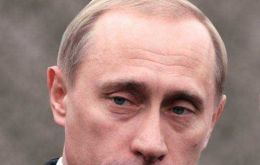
Russia is back. President Vladimir Putin wants the world to acknowledge that Russia remains a global power. He is making his stand in Syria. The Soviet Union acquired the Tartus Naval Port in Syria in 1971 without any real purpose for it. With their ships welcomed in Algeria, Cuba or Vietnam, Tartus was too insignificant to be developed. After the collapse of the Soviet Union, Russia lacked the funds to spend on the base and no reason to invest in it.
-
Monday, February 6th 2012 - 06:51 UTC
Chavez supports Russia/China veto on UN Syrian resolution as “very positive”
While Western and Arab countries responded with outrage after Russia and China vetoed a UN Security Council resolution that would have urged Syrian President Bashar al-Assad to give up power, Venezuelan president Hugo Chavez considered the veto as “very positive”.
-
Monday, May 2nd 2011 - 00:16 UTC
Tanks, bombings and snipers can’t stop Syrian protests from intensifying

Anti-government protesters in Syria are planning further demonstrations during the week, in spite of the violent crackdown including tanks, bombings and snipers unleashed on them.
-
Monday, April 25th 2011 - 06:14 UTC
More protests in Syria in spite of the security forces ‘shoot to kill’ policy

Security forces have reportedly shot dead at least three people and injured others in north-west Syria, days after the worst bloodshed since unrest began. Police and soldiers opened fire from rooftops in the coastal town of Jabla, though no protest was being held at the time, witnesses said.
-
Thursday, April 21st 2011 - 06:18 UTC
Syria lifts 50 year emergency rule but permission is needed for demonstrations

The Syrian authorities' arrest of a leftist opposition figure overnight suggests that a bill passed by the government to end emergency rule after 48 years will not halt repression, rights campaigners said.
-
Monday, April 18th 2011 - 07:05 UTC
Syrians mark Independence Day in the streets calling for freedom

Thousands of Syrians chanted slogans calling for greater freedom at Independence Day rallies, witnesses said, a day after President Bashar al-Assad promised to lift emergency law.
-
Friday, April 1st 2011 - 00:09 UTC
Massive ‘Martyr’s Day’ demonstrations challenge to Syrian government

Facing a massive protest movement demanding reform, Syria's president has set up committees to look into the deaths of civilians during nearly two weeks of unrest and replacing decades-old emergency laws.
-
Friday, March 25th 2011 - 09:19 UTC
Syria pledges to introduce reforms to meet protestor’s demands

Syrian leaders have pledged to introduce reforms to meet the demands of protesters, after days of violence in the southern city of Deraa. Officials promised to study the need for lifting the state of emergency, in place since 1963.