MercoPress. South Atlantic News Agency
Tag: China
-
Monday, November 21st 2011 - 07:25 UTC
Obama and Wen Jibao have ‘constructive’ exchange on the South China Sea issue
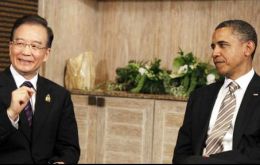
President Barack Obama was encouraged by the constructive tone of a discussion about the South China Sea issue at an East Asia leaders' meeting in Bali, Indonesia, a senior US official said.
-
Thursday, November 17th 2011 - 07:20 UTC
US is all in a “Pacific power”, Obama tells Australia (and China)

President Barack Obama said that the Asia-Pacific region will play a key role in defining the world's future. “The United States is a Pacific power, and we are here to stay,” he stated in a speech to the Australian Parliament, sending a clear message to Beijing.
-
Friday, November 11th 2011 - 08:20 UTC
Chinese main oil refiner takes over 30% of Portugal’s GALP in Brazil
China Petrochemical Corp., Asia's biggest refiner, agreed on Thursday to pay 3.54 billion dollars for a 30% stake in Galp Energia SGPS SA's Brazilian unit, in what is China's largest overseas energy acquisition this year.
-
Thursday, November 10th 2011 - 08:17 UTC
Euro crisis: IMF chief warns of a “lost decade”; China calls for strong political will
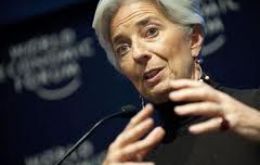
The head of the IMF warned on Wednesday that Europe's debt crisis risked plunging the global economy into a “lost decade” and said it was up to rich nations to shoulder the burden of restoring growth and confidence.
-
Friday, November 4th 2011 - 08:11 UTC
Brazil must balance trade relation and avoid ‘anti-China feeling’

Brazil must balance its trade relation with China, (leading commercial partner) and not allow an anti-Chinese feeling among manufacturers to spoil relations with Beijing said economists in Sao Paulo.
-
Thursday, November 3rd 2011 - 08:09 UTC
Greek surprise freezes China’s commitment to the Euro plan
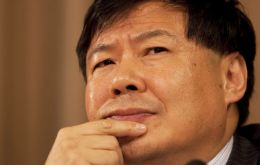
China has said it cannot commit to investing in the European Financial Stability Fund (EFSF) until the situation with Greece has been clarified. European leaders hoped that China would buy EFSF bonds, injecting capital in the region's financial markets.
-
Wednesday, November 2nd 2011 - 04:06 UTC
China on ‘harmonious mission’ in the Caribbean to show it’s a responsible power
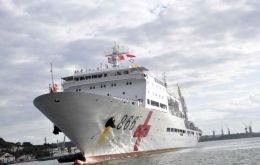
A Chinese navy hospital ship has landed dozens of doctors and nurses in Jamaica on a humanitarian mission to treat the needy on the Caribbean island. The mission is part of a global campaign by Beijing to portray its rapidly growing military as a responsible power.
-
Thursday, October 27th 2011 - 23:31 UTC
China ready to support Euro rescue fund and held stabilize global markets
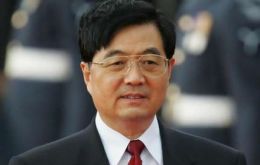
French president Nicolas Sarkozy conferred with his Chinese counterpart Hu Jintao as European policy makers seek to build support for an enlarged rescue fund designed to resolve the region’s sovereign-debt crisis.
-
Tuesday, October 25th 2011 - 03:49 UTC
Chinese leaders growing concern with food and property prices
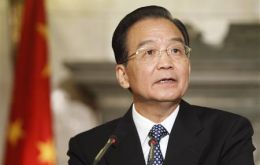
China's Premier Wen Jiabao said the country must control food and property inflation to ensure social stability. The remarks came after the premier visited fresh food markets in south western China over the weekend.
-
Monday, October 24th 2011 - 20:19 UTC
Brazil preparing strict imports’ controls to safeguard domestic industry

Brazil is preparing to implement more strict controls on imports from Asia, particularly China arguing that Beijing will try to take advantage of the positive performance of South America to compensate for the fall of sales in the European Union and the US currently under the burden of the Euro and debt crises.

