MercoPress. South Atlantic News Agency
Tag: Cristina Fernandez
-
Wednesday, May 22nd 2013 - 02:12 UTC
Cristina prepares great rally to celebrate ten years of the Kirchnerite model
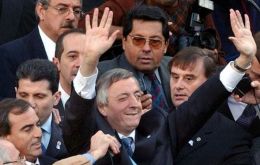
The Argentine government is preparing for a huge political demonstration next Saturday 25 May to be held in the Plaza de Mayo to celebrate 10 years since President Cristina Fernández late husband and predecessor Néstor Kirchner took office. It will also be a test ahead of the October mid-term election.
-
Monday, May 20th 2013 - 19:47 UTC
Brazil trapped by Argentina and Venezuela economic mismanagements
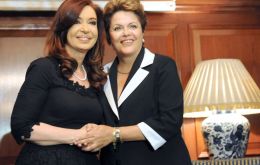
Brazil’s main financial newspaper Valor Economico revealed that the recent summit between Presidents Cristina Fernandez and Dilma Rousseff from Argentina and Brazil was far from polite and enlightening, rather the contrary with “strong disagreements in the fields of trade and investment” shaking the foundations of Mercosur.
-
Friday, May 17th 2013 - 06:51 UTC
Argentina’s ‘autarkic project’ worsens bilateral relations and multiplies problems

In an interview with the Spanish government news agency EFE, Uruguayan President José “Pepe” Mujica said Argentina’s economic “autarkic project” “worsens” bilateral ties and “multiplies” trade troubles. Still, he ruled out pressures on Buenos Aires; “they won’t work,” he insisted.
-
Wednesday, May 15th 2013 - 07:46 UTC
Cristina Fernandez pledges she will not propose any constitutional reform
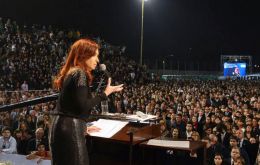
Argentine President Cristina Fernández defended her controversial judiciary reform and announced that deep reforms require “amendments to the Constitution”. However, she emphasized she would not push any initiative in that sense.
-
Wednesday, May 15th 2013 - 07:38 UTC
Allegations of a network of corruption money involves former president Kirchner
Argentine and Uruguayan magistrates and prosecutors are investigating an alleged network of corruption money, and probably money laundering involving former president Nestor Kirchner and close political and business cronies some of which continue in key positions or proximity to current head of state Cristina Fernandez.
-
Monday, May 13th 2013 - 22:34 UTC
China to the rescue of Argentina with a 10 billion dollars equivalent swap
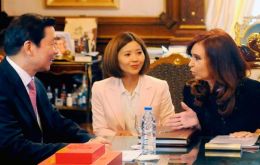
Argentina is negotiating with China a new 10 billon dollars equivalent swap of international reserves support based on the experience of 2009 when the global financial crisis. The new accord should theoretically help Argentina strengthen its international position vis-à-vis the run on the dollar (or the flight from the Peso) and which has cost the Central bank 4 billion dollars so far this year.
-
Friday, May 10th 2013 - 06:26 UTC
Chinese Vice-president in Argentina to strengthen long-term strategic partnership
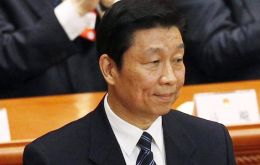
China is determined to advance in mutually beneficial cooperation with Argentina visiting Chinese Vice President Li Yuanchao said on his arrival on Thursday to Buenos Aires. He underlined that the new Chinese leadership will continue to perceive and develop bilateral relations from a long-term strategic perspective.
-
Thursday, May 9th 2013 - 05:25 UTC
Maduro says he is a ‘Kirchnerite president’ and Venezuela’s ‘second Peronist president’
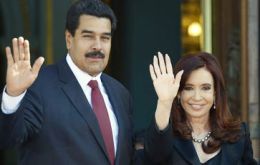
President Nicolas Maduro said he was a ‘Kirchnerite president’ and the ‘second Peronist president’ of Venezuela during a political rally with Argentine trade unions and militant groups in a packed Buenos Aires stadium to recall the figures of the deceased Hugo Chavez and Nestor Kirchner.
-
Thursday, May 9th 2013 - 05:13 UTC
Do you trust this Lady to look after your dollar savings?

The administration of President Cristina Fernandez sent on Wednesday to congress the tax amnesty bill to tap undeclared dollar assets, in the country and overseas, generating a cascade of critical reactions from well known economists while the ‘blue dollar’ in the parallel market seemed to ignore the announcements and kept climbing to a new record high.
-
Thursday, May 9th 2013 - 05:05 UTC
Argentine official pledges to look into ‘blue’ dollar market and admits problems in real estate sector
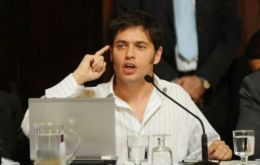
Argentina Deputy Economy minister Axel Kicillof pledged “to look into” the growing parallel market for the US dollar because it is harming many innocent people who have nothing to do with speculation and claimed that ‘certain economists’ and media are encouraging speculation with the greenback.