MercoPress. South Atlantic News Agency
Tag: SELIC
-
Thursday, January 21st 2016 - 07:13 UTC
In a surprise move, Brazil's central bank leaves interest rate unchanged at 14.25%

Recession-hit Brazil's central bank in a divided vote left the key interest rate untouched on Wednesday despite rising inflation, opting against an increase that could put a further brake on the world's seventh-biggest economy.
-
Thursday, November 26th 2015 - 16:57 UTC
In a split vote, Brazil's central bank leaves Selic rate unchanged; pressure for an increase
Brazil's central bank kept interest rates on hold for the third straight meeting on Wednesday in a split vote that shows policymakers are uneasy about inflation, a worsening recession which might lead to a raise in rates early in 2016.
-
Thursday, October 22nd 2015 - 07:09 UTC
Brazil leaves Selic rate unchanged at 14.25%; inflation the target but with no timetable

Brazil's central bank kept interest rates on hold on Wednesday, for a second straight month despite a jump in inflation expectations. The decision not to raise rates will give a breather to President Dilma Rousseff, who is fighting for her political survival amid the country's worst economic and political crisis in 25 years.
-
Tuesday, October 6th 2015 - 08:11 UTC
Brazil's GDP expected to contract 2.85% this year, says central bank survey

Economists again cut their outlook for Brazil's economic performance for this year, as consumer and business confidence continue at historic low levels. Brazil's GDP is expected to contract 2.85% this year, according to a weekly central-bank survey of 100 economists, compared with expectations last week for a contraction of 2.80%.
-
Thursday, September 3rd 2015 - 10:29 UTC
Brazil's central bank leaves basic interest rate unchanged at 14.25%

Brazil's central bank halted one of the world's boldest rate-hiking cycles on Wednesday, taking pressure off an economy struggling with recession even amid concerns that a looming budget crisis could stoke inflation.
-
Monday, August 3rd 2015 - 09:40 UTC
Brazilian currency at its weakest against the US dollar since March 2003
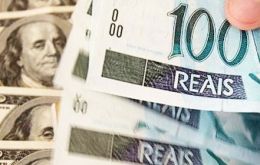
The Brazilian currency Real lost 1% at the end of trading on Friday and begins this week at 3.42 Reais to the US dollar, the lowest in twelve years, because of the political and economic uncertainties surrounding Latin America's largest economy.
-
Thursday, June 4th 2015 - 08:54 UTC
Despite a contracting economy Brazil increases basic interest rate to 13.75%

Brazil raised interest rates to the highest levels in more than six years on Wednesday, extending a tightening campaign and leaving the door open for more hikes despite concerns that steep borrowing costs could deepen an expected economic recession.
-
Friday, May 8th 2015 - 07:48 UTC
Brazil's central bank to continue increasing rate, with inflation on target at the end of 2016

Brazil's central bank expects inflation to run above the official target this year and next, despite months of monetary tightening, signaling policymakers could maintain an aggressive pace of interest-rate hikes to lower stubborn prices. In the minutes of its April 29 rate-setting meeting, the bank said it would remain vigilant to ease persistently high inflation.
-
Tuesday, March 24th 2015 - 05:08 UTC
Brazilian economy on path to biggest contraction since 1990, says central bank survey

Financial experts expect Brazil's economy to shrink 0.83% in 2015, its biggest contraction since 1990, and inflation to climb to 8.12%, its highest level since 2003, according to the results of a Central Bank survey released on Monday.
-
Friday, March 13th 2015 - 11:28 UTC
Brazil central bank admits interest policy has not been effective in fighting inflation
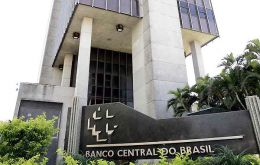
Brazil's Central Bank appears likely to continue raising interest rates in the short-term, saying in its most recent meeting that its inflation-fighting effort in recent months has been insufficiently effective. The view was reflected in the minutes, published on Thursday, of its monetary policy committee's March 4 meeting, when the bank raised its benchmark Selic interest rate by 50 basis points to 12.75%.