MercoPress. South Atlantic News Agency
Tag: Venezuelan National Assembly
-
Monday, May 22nd 2017 - 07:00 UTC
Venezuela: over fifty people killed in fifty days of protests
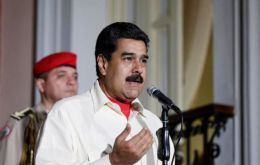
A young demonstrator has died from a gunshot wound to the chest, raising to over 50 the number of people killed in fifty days of protests targeting Venezuela’s President Nicolas Maduro, officials said Sunday. The president personally denounced a brutal attack on another man he said had been taken for a government supporter during one of several massive demonstrations across the country Saturday demanding early elections.
-
Saturday, April 1st 2017 - 23:12 UTC
Domestic (military) and foreign pressure force Maduro to revoke annulment of Congress

Venezuela's pro-government Supreme Court on Saturday revoked its controversial annulment of the opposition-led Congress amid international condemnation and protests against populist president Nicolas Maduro. Unprecedented pressure from other Latin American nations and dissent within its own ranks, and the military, appear to have been the catalyst for the court reversing its Wednesday ruling.
-
Friday, March 31st 2017 - 07:20 UTC
Venezuelan Supreme Court closes Legislative gives all power to Maduro: world condemnation
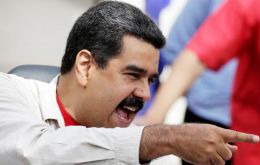
The Venezuelan Supreme Court's decision late Wednesday to take control of the opposition-controlled legislature has set off a wave of outrage, with some hemispheric neighbors, including the United States, Mexico, Brazil, Peru and Argentina, denouncing the measure as a threat to democracy.
-
Monday, January 25th 2016 - 10:01 UTC
IMF estimates 2016 Venezuela inflation at 720% and 8% economy contraction
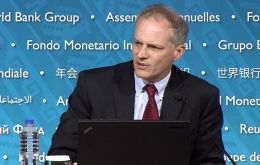
Venezuela’s consumer inflation, already the world’s highest, will more than double this year surging to 720% in 2016 from 275% last year, according to a note published by the IMF’s Western Hemisphere Director, Alejandro Werner.
-
Wednesday, January 13th 2016 - 05:34 UTC
Venezuela's 'super majority' power struggle paralyzes government
Venezuela sank deeper into a messy political crisis Tuesday as the opposition-controlled National Assembly suspended its session after the Supreme Court declared it null and void. Speaking before a nearly empty chamber, speaker Henry Ramos Allup, a fierce opponent of President Nicolas Maduro, declared the National Assembly lacked a quorum and would reconvene Wednesday morning.
-
Tuesday, January 12th 2016 - 07:36 UTC
Judicial and Legislative branches clash in Venezuela threatening institutional stability
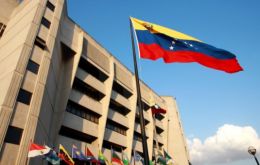
Venezuela headed into ever more complicated political waters on Monday as the Supreme Court declared the newly opposition-controlled legislature null and void and the opposition vowed to continue defying the judges.
-
Wednesday, December 9th 2015 - 08:06 UTC
It's official: Venezuelan opposition wins a two thirds majority in the legislature
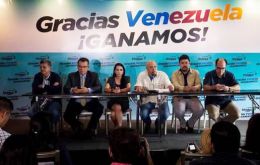
Venezuela said the opposition coalition MUD has won a two-thirds super majority in the country’s legislature, a major victory in Sunday’s elections.
-
Tuesday, December 8th 2015 - 09:10 UTC
Now comes the main challenge for the fragile opposition coalition: running Venezuela
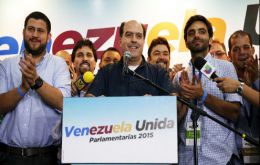
Venezuela's fragile opposition coalition which managed to come together to achieve victory over the Chavista government on Sunday, now faces the test of trying to stick together and use its newly won congressional authority to address the country’s deep economic problems and political rifts.
-
Monday, December 7th 2015 - 07:43 UTC
In peaceful voting Venezuelan opposition wins by a landslide; Maduro admits defeat
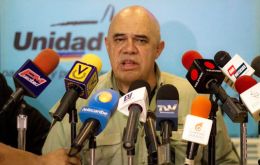
Venezuela's opposition won control of the National Assembly by a landslide, delivering a major setback to the ruling party and altering the balance of power after almost 17 years of populist rule.
-
Friday, November 27th 2015 - 08:21 UTC
Maduro blames killing of opposition leader to score-settling among gangs

Venezuelan President Nicolas Maduro said Thursday the fatal shooting of an opposition leader appeared to be a gangland score-settling dismissing claim it was politically motivated ahead of elections. An attacker shot Luis Manuel Diaz dead on Wednesday evening in the central Guarico region at a campaign rally for the December 6 legislative elections, party officials said, ratcheting up fears that violence could erupt in the lead-up to the polls.