MercoPress. South Atlantic News Agency
United States
-
Tuesday, October 11th 2016 - 09:06 UTC
Hilary leads Trump, according to NBC/WSJ latest opinion poll
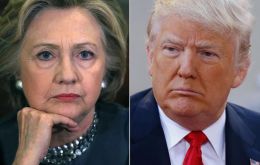
Hilary Clinton has opened up a 14-percentage-point lead against Donald Trump nationally, according to an NBC News/Wall Street Journal poll released Monday. The survey found that in a two-way race between the two nominees, Clinton leads Trump 52% to 38%, up from a 7-percentage-point lead last month.
-
Monday, October 10th 2016 - 10:26 UTC
US economy in September creates jobs at a slower pace: more people looking for work

The US economy created 156,000 jobs in September, official figures show, slightly fewer than expected. However, August figure was revised higher to 167,000 from 151,000. Both figures are lower than 180,000 average for this year. The unemployment rate edged up to 5% from 4.9%, although that was due to more people looking for work.
-
Tuesday, October 4th 2016 - 04:59 UTC
Trump's campaign on the defensive in several fronts: tax elusion and fundraising
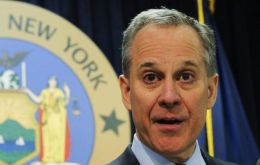
New York's attorney general ordered Republican presidential candidate Donald Trump's charitable foundation to immediately stop fundraising in the state, warning that a failure to do so would be a “continuing fraud.”
-
Thursday, September 29th 2016 - 18:14 UTC
Overriding Saudi Arabia bill veto, “a mistake and dangerous precedent”, warns Obama
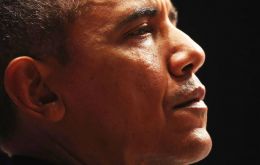
President Obama has said Congress made a “mistake” by overriding his veto and pushing through a bill that allows legal action against Saudi Arabia over the 9/11 attacks. He added that the bill would set a “dangerous precedent” for individuals around the world to sue the US government. Wednesday's vote was the first time Obama's veto power was overruled.
-
Wednesday, September 28th 2016 - 10:17 UTC
Trump embroiled in “Miss Piggy” misogynist controversy
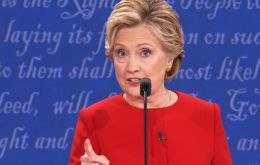
Alicia Machado says that when she gained weight after being crowned Miss Universe for 1996, Donald Trump labeled her with a sexist nickname — “Miss Piggy” — that caused her shame and humiliation. Two decades later, Machado’s dealings with Trump, her one-time beauty pageant boss, are reverberating through the 2016 campaign as the Republican businessman and reality TV star seeks the White House.
-
Wednesday, September 28th 2016 - 09:50 UTC
Obama names first ambassador in Cuba in fifty years, but needs Senate confirmation
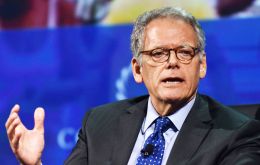
The United States has tapped Jeffrey DeLaurentis, United States' top diplomat in Havana, to become the first official ambassador to Cuba in five decades. “The appointment of an ambassador is a commonsense step forward toward a more normal and productive relationship between our two countries,” President Barack Obama said in a statement.
-
Wednesday, September 28th 2016 - 09:33 UTC
Kerry and Maduro meet in Cartagena and agree to continue bilateral discussions
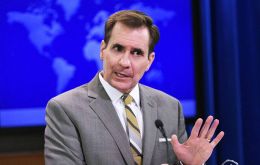
United States Secretary of State John Kerry met Venezuelan President Nicolas Maduro on Monday, the first formal encounter between the two since Kerry became the top U.S. diplomat. The two sat down together after a ceremony in the Colombian city of Cartagena de Indias to mark the signing of a peace agreement to end a 52-year armed conflict.
-
Tuesday, September 27th 2016 - 07:48 UTC
Early polls indicate better prepared Hillary came ahead of Trump in the debate
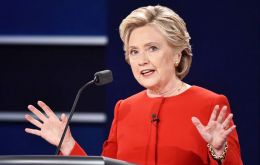
Early polls following the first of three presidential debates point to Hillary Clinton coming out ahead of Donald Trump in Monday night’s face off. According to a CNN/ORC poll taken immediately after the debate wrapped, 62% of 521 registered voters who watched the debate said Clinton won, compared to 27% for Trump. Pulbic Policy Polling also had Clinton trumping Trump, but by a more narrow margin of 51% to 40%.
-
Monday, September 26th 2016 - 10:56 UTC
US Treasury Secretary on advisory visit to Argentina, Brazil, Colombia and Mexico
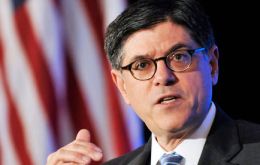
U.S. Treasury Secretary Jacob Lew will urge his counterparts in Argentina, Brazil, Colombia and Mexico to press ahead with economic and fiscal reforms aimed at restoring or strengthening growth, a senior Treasury official said on Friday. Lew will be visiting the four largest Latin American economies this week beginning with Argentina on Monday, recognizing efforts by President Mauricio Macri to reintegrate Argentina into the global economy.
-
Monday, September 26th 2016 - 10:07 UTC
US role in Colombia peace: from fanning the war to ensuring peace
When the Colombian government and Marxist rebels FARC sign the final peace accord this Monday to end a 52-year guerrilla war, a US envoy from the Obama administration will be one of the special guests at the signing ceremony.