MercoPress. South Atlantic News Agency
Agriculture
-
Saturday, May 21st 2011 - 09:14 UTC
US processor building 180.000 tons storage grain terminal in Uruguay

US agricultural processor Archer Daniels Midland Co said this week it was building a grain export terminal in Nueva Palmira, Uruguay, capable of loading large bulk shipments of corn, wheat, soybeans and soy-meal.
-
Monday, May 16th 2011 - 03:24 UTC
Sarkozy: no support for EU/Mercosur trade deal that cuts farmers’ income

French president Nicholas Sarkozy stressed over the weekend he would not accept an European Union-Mercosur trade agreement that could mean a loss of income for European farmers.
-
Friday, May 13th 2011 - 14:11 UTC
Mercosur has a surplus production of three million tons of rice
Uruguay which does not harvest transgenic rice has been consolidating as a growing European Union supplier and is a traditional provider for Mexico and Middle East countries such as Iran and Iraq.
-
Friday, May 13th 2011 - 04:42 UTC
Mid sized Chilean farms going broke because of rising costs and cheap US dollar

The Chilean Federation of Fruit Producers (Fedefruta) will join with the Association of Exporters (Asoex) and nearly 50 other exportation and agricultural associations across Chile to present proposals to, and demand aid from, the government next Friday, May 20. They will convene in Requínoa, in Chile’s Bernardo O’Higgins Region.
-
Friday, May 13th 2011 - 00:54 UTC
US farmers lobby strongly for FTA, which could generate 22.500 jobs

The inability of the United States Congress and the administration to move three stalled free trade agreements is hurting US economic growth, testified American Farm Bureau Federation President Bob Stallman before the House Agriculture Committee.
-
Wednesday, May 11th 2011 - 01:30 UTC
Brazil expects a new record crop totalling 158.7 million tons

Brazil will harvest this year a record crop of 158.7 million tons, 6% higher than last year’s 149.7 million tons, according to the latest release from the country’s Geography and Statistics Institute, IBGE.
-
Tuesday, May 10th 2011 - 22:45 UTC
Good soybean crop prospects in Brazil and Argentina, could total 123 million tons
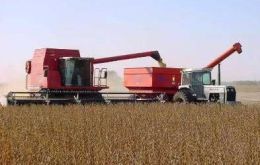
Soybean crop prospects in Brazil and Argentina, the second- and third-biggest exporters of the oilseed behind the U.S., have improved, researcher Oil World said in a report Tuesday. Growers in Brazil will produce 73 million metric tons of soybeans, up from a record 68.7 million tons a year ago, and farmers in Argentina will harvest 49.5 million tons, up 1% from a prior estimate.
-
Tuesday, May 10th 2011 - 09:55 UTC
Brazil considering leasing farm land to foreigners to circumvent sales restrictions

Brazil may start leasing farm land to foreigners to find a way around new legal restrictions on land sales and attract more foreign investment, the agriculture minister said.
-
Saturday, May 7th 2011 - 04:50 UTC
Soybean and by products represent 25% of Argentine exports
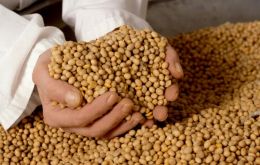
Argentine overseas sales of soybeans and by products reached 17.3 billion US dollars in 2010, equivalent to 25.4% of total exports, according to the latest report from the country’s statistics office INDEC. In 2009 the soy complex exports represented 23.3%.
-
Friday, May 6th 2011 - 17:28 UTC
EU farmers insist with the “catastrophic impact” of trade agreement with Mercosur

European farm leaders have left Members of the European Parliament in no doubt about the ‘catastrophic impact’ on EU agriculture of a trade agreement with Mercosur, reports the Friday edition of the UK’s Farmers Guardian.
