MercoPress. South Atlantic News Agency
Antarctica
-
Monday, January 29th 2018 - 10:22 UTC
Ozone hole: NASA's satellite confirms 20% less depletion; recovery by 2080
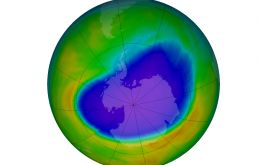
Scientists have shown through direct satellite observations of the ozone hole that levels of ozone-destroying chlorine are declining. Measurements show that the decline in chlorine, resulting from an international ban on chlorine-containing man-made chemicals called chlorofluorocarbons (CFCs), has resulted in about 20% less ozone depletion during the Antarctic winter than there was in 2005, the first year that measurements of chlorine and ozone during the Antarctic winter were made by NASA's Aura satellite.
-
Monday, January 29th 2018 - 06:55 UTC
Punta Arenas reaffirms Antarctica links with two private support vessels
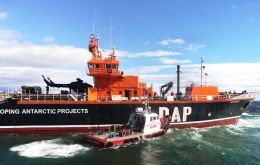
Punta Arenas. Chile seems determined to remain as the main calling point for Antarctica scientific and logistics support. This month two private undertakings were inaugurated which confirmed that determination, one of them is the DAP's MV Betanzos a scientific vessel for Antarctica research, and the second in the Antarctic Warrior, belonging to the Petromar company and which has been conditioned to transport supplies and fuel to Antarctica.
-
Tuesday, January 23rd 2018 - 06:53 UTC
British Army “Ice Maiden” expedition cross Antarctica in 62 days on muscle power

The British Army’s ‘Ice Maiden’ Expedition has become the first all-female team to cross Antarctica using muscle power alone. After spending 62 days on the ice and covering 1700kms, the six soldiers led by Major Nics Wetherill and Major Nat Taylor crossed the finish line at the Hercules Inlet at the weekend (Saturday 20th January).
-
Monday, January 15th 2018 - 09:26 UTC
Three vessels and Russia's ROV continue search for ARA San Juan, missing since two months
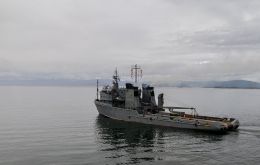
Argentine navy ARA Islas Malvinas, a vessel normally assigned to patrolling duties in the southern seas and supplying Argentine scientific bases and stations in Antarctica has joined the search for the submarine ARA San Juan with a crew of 44, which has gone missing for two months, since November 15, in the South Atlantic.
-
Friday, January 12th 2018 - 09:44 UTC
BAS team doing first scientific Southern right whale survey in South Georgia
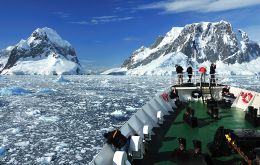
An international team of researchers, led by British Antarctic Survey (BAS), travels to the sub-Antarctic island of South Georgia this month to carry out the first scientific whale survey since whaling stopped in the 1970s.
-
Tuesday, January 2nd 2018 - 06:55 UTC
Icebreaker Irizar calls at Ushuaia on her 2017/18 Antarctica campaign
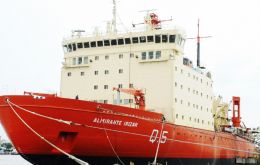
Argentina's flagship of Antarctica operations is back after ten long years. The refurbished icebreaker ARA Almirante Irizar, called at Ushuaia, Tierra del Fuego, on New Year before leaving for the 2017/18 summer campaign.
-
Thursday, December 28th 2017 - 10:15 UTC
YPF reaches agreement and will pay US$ 114m on a conflict from 2009
Argentina's state-owned oil company YPF will pay US$ 114 million to Transportadora de Gas del Mercosur (TGM) to end a conflict that began in 2009 when the company suspended the shipment of natural gas.
-
Wednesday, December 27th 2017 - 09:29 UTC
Antarctica cruise revolution: hybrid electric LNG powered icebreaker
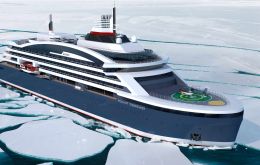
French luxury shipping line Ponant announced a world first with a hybrid electric-LNG powered icebreaker. The luxury vessel promises to deliver around 300 passengers to places never before visited by cruise passengers in ultra-luxury – and with the least damage to the environment.
-
Thursday, December 14th 2017 - 04:30 UTC
Mt Hope is the tallest mountain in the British Antarctic Territory with 3.239 meters
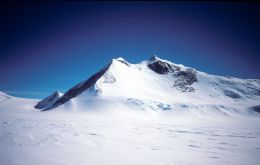
Britain has a new highest mountain after new data showed measurements from old overland surveys were inaccurate. It was thought until this point that Mount Jackson was the tallest mountain in the British Antarctic Territory at 3,184m above sea level. However, new satellite data by British Antarctic Survey (BAS) shows Mount Hope is the tallest mountain, at 3,239m.
-
Tuesday, December 5th 2017 - 08:48 UTC
South Georgia launches four-year toothfish licensing round
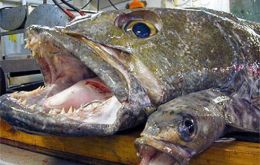
The Government of South Georgia and the South Sandwich Islands has launched the next toothfish licensing round. The documentation offered provides information for anyone applying for a license to fish for toothfish in the South Georgia & the South Sandwich Islands Maritime Zone for the years 2018 – 2021. The deadline for applications is 10 December, according to the latest SGSSI Newsletter.

