MercoPress. South Atlantic News Agency
Economy
-
Saturday, July 7th 2012 - 00:58 UTC
Argentina to pay maturing debts in third quarter with central bank reserves

The Argentine central bank will affect 4.165 billion dollars from the bank’s freely available reserves to honour government debt maturing in the third quarter, it was officially announced.
-
Saturday, July 7th 2012 - 00:35 UTC
Argentine central bank announces “pesification” of real estate operations

Following the official new curbs on US dollar purchasing for savers, the head of the Argentine Central Bank Mercedes Marcó del Pont came on stage to defend the measure and anticipate that operations in the real estate market will have to be done in Argentine Pesos.
-
Friday, July 6th 2012 - 15:59 UTC
Falklands’ farms helped with wool prices rapidly moving to wind energy
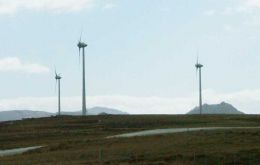
Electricity generated from wind is spreading across the Falkland Islands with two large farms Goose Green and Fitzroy preparing to be the next to have turbines, inverters and batteries installed.
-
Friday, July 6th 2012 - 15:38 UTC
EU prepared for talks with an expanded Mercosur that includes Venezuela

The European Commission has said it will continue negotiations on an association agreement with Mercosur even if Venezuela finally becomes a full member of the group and will address the issue on a “region to region” basis.
-
Friday, July 6th 2012 - 15:15 UTC
MPs call for UK to vote against World Bank loans to Argentina to counter Falklands’ aggression

Twenty nine British MPs have called for Britain to vote against Argentina receiving any more money from the World Bank. The group signed an early day motion in Parliament that was put forward by Conservative MP for Romford, Andrew Rosindell, who had previously visited the Falklands.
-
Friday, July 6th 2012 - 07:32 UTC
Mexican president elect Peña Nieto wants a strategic alliance with Brazil

Mexican president-elect Enrique Peña Nieto said in an interview that his administration will step up efforts in South America to repair the country’s image, including seeking a strategic alliance with Brazil.
-
Friday, July 6th 2012 - 07:16 UTC
US trade complaint at WTO against China for imposing duties on car exports
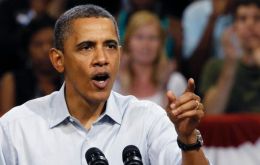
United States launched a trade complaint Thursday against China at the World Trade Organization, accusing Beijing of unfairly imposing duties on more than 3 billion dollars in exports of US-manufactured automobiles.
-
Friday, July 6th 2012 - 07:11 UTC
Mexico follows on Argentina and withdraws from zero-tariff accord for auto industry
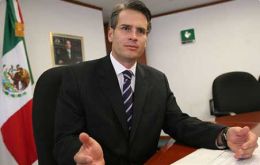
Mexico has withdrawn a zero-tariff agreement with Argentina on autos in a tit-for-tat trade dispute after the Argentine government's decision to pull out of an auto trade pact between the two countries.
-
Friday, July 6th 2012 - 07:04 UTC
Auto industry production in Argentina continued to slow down in June

Argentine automobile production fell 12% in June from the previous month and plunged 34.4% from a year earlier, according to an industry trade group. The auto industry produced 52,983 vehicles in June compared with 60,206 units in the previous month and 80,795 a year earlier.
-
Friday, July 6th 2012 - 06:39 UTC
Uruguay’s flag carrier Pluna “indefinitely grounded” and most staff redundant

Uruguay’s flagship carrier Pluna said on Thursday that is was “suspending all flights indefinitely” and announced that 720 of the 900 staff would be sent on unemployment pay until a new associate for the company is found or the airline is definitively sold.