MercoPress. South Atlantic News Agency
Economy
-
Tuesday, August 21st 2012 - 01:57 UTC
Re-re-election of Cristina Fernandez fully integrated to the political agenda of Argentina

Several groups allied to Argentine president Cristina Fernandez are actively promoting a constitutional review that would allow re-election for a third consecutive four year mandate. The last Argentine constitutional review was in 1994 when the four-year mandate was introduced with the possibility of an only immediate re-election, thus modifying the six year mandate but with no re-election.
-
Monday, August 20th 2012 - 21:14 UTC
Insufficient harvests and soaring prices anticipate another world food crisis
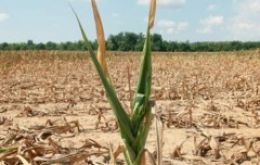
With droughts parching farms in the United States and near the Black Sea, weak monsoon rains in India and persistent hunger in Africa's Sahel region, the world could be headed towards another food crisis, experts say.
-
Monday, August 20th 2012 - 21:10 UTC
Royal Navy presents computer images of Type 26 combat ship planned for 2020
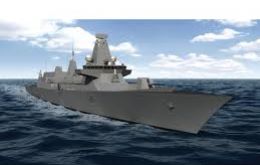
The latest design of the Royal Navy's Type 26 Global Combat Ship (T26 GCS), the next generation of warships, was unveiled on Monday. The UK Ministry of Defence has released images showing the basic specification of the T26 GCS, which is a significant milestone in the development of this program.
-
Monday, August 20th 2012 - 20:55 UTC
Falklands appoint landscape impact assessment consultant for new harbour development
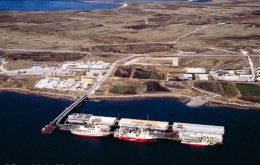
The Falkland Islands government has appointed Macclesfield based consultancy Tyler Grange to undertake a landscape and visual impact assessment for a new harbour development near the capital Stanley.
-
Monday, August 20th 2012 - 20:45 UTC
Falklands improves livestock haulage to ensure steady supply to meat plant

Falkland Islands livestock haulage should become easier in the forthcoming season with the introduction of suitable sized crates and equipment for both East and West Falkland, reports the Penguin News.
-
Monday, August 20th 2012 - 06:41 UTC
Argentina accuses EU before WTO for restriction imposed on bio-fuel imports

Argentina has taken the first steps toward formally accusing the European Union of violating World Trade Organization rules in a dispute over restrictions on bio-fuels exports to the EU from the Mercosur member country.
-
Monday, August 20th 2012 - 01:42 UTC
Ecuador insists in Mercosur interest, but admits it will be a long process
Ecuador has reiterated its intention of joining Mercosur but this needs to be compatible with the rules from the Community of Andean Nations, CAN, (to which it now belongs) said Ecuadorean ambassador Horacio Sevilla Borja.
-
Saturday, August 18th 2012 - 06:18 UTC
Argentina manages a 7.3bn dollars surplus in first half of the year
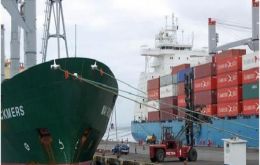
Argentina trade surplus in the first half of the year reached 7.336 billion dollars, up 26.8% over the same period a year ago, with exports reaching 39.647bn dollars and imports 32.311bn, according to the official stats office Indec.
-
Saturday, August 18th 2012 - 06:12 UTC
First shipment from Mercosur latest member to the south: 14.000 tons of urea
Venezuela dispatched on Friday a shipment of 14.000 tons of urea for Brazil and Uruguay, the first since becoming a full member of Mercosur, reported the official Venezuelan news agency.
-
Saturday, August 18th 2012 - 06:00 UTC
Conflicting reports on Argentine performance, but economy rapidly slowing
Argentina's economic activity remained flat in June compared to a year ago, according to the latest release from the country’s questioned stats office, Indec. The EMAE economic activity index, a close proxy for GDP published on Friday showed a 1.1% expansion in June versus May and 2.5% in the first half of the year.