MercoPress. South Atlantic News Agency
Economy
-
Thursday, February 10th 2011 - 22:42 UTC
“Currencies war”, new challenge for EU/Mercosur trade agreement

The European Union Trade Commissioner Karen De Gucht anticipates a full trade agreement with Mercosur will be reached in a “short time” given the negotiations “unusual” speed but also cautioned about new challenges such as currencies over or under appreciation.
-
Thursday, February 10th 2011 - 07:02 UTC
Brazil poised for another record crop of soybeans: 69/70 million tons

Brazil could harvest a record crop of 70 million tons of soybeans in 2011 because of improved climate conditions and expansion of the area planted according to Hamburg based Oil World consultants.
-
Thursday, February 10th 2011 - 06:39 UTC
Uruguay has the highest per capita milk consumption: 230 liters annually
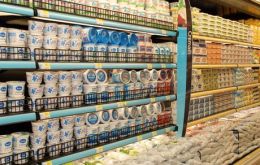
Uruguay has the highest per capita consumption of milk in Latin America averaging between 225 and 230 liters. This compares favorably with Argentina’s 220 liters, Brazil’s 110 and Chile’s 100.
-
Thursday, February 10th 2011 - 06:22 UTC
NYSE Euronext and Deutsche Boerse announce merger proposal

Two of world's leading exchanges, Deutsche Boerse and NYSE Euronext, are in advanced talks about a merger. The deal would create the world's biggest stock exchange firm by revenue and profits and would be jointly based in New York and Frankfurt.
-
Thursday, February 10th 2011 - 05:55 UTC
London and Toronto tie-up plan to create world’s largest mining and energy stock market

The London Stock Exchange is to buy Canada's TMX to claw back lost market share and create the world's fourth-largest bourse trading 4.1 trillion US dollars of stock a year.
-
Thursday, February 10th 2011 - 05:50 UTC
Bernanke warns US job creation too weak and calls for budget discipline
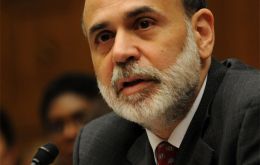
US unemployment remains too high for policymakers' comfort despite signs of strength in the economic recovery, Federal Reserve Chairman Ben Bernanke said. In testimony to the US House of Representatives' Budget Committee that largely echoed a speech he delivered last week, Bernanke also warned about the dangers of unsustainable budget deficits.
-
Thursday, February 10th 2011 - 01:06 UTC
Hong Kong residential property the “most expensive in the world”

The Global Cities Survey, published by Savills PLC, reported last week that Hong Kong residential property is now the most expensive in the world. Based on the property price index contained in the survey, residential property in Hong Kong is 55% more expensive than property in London.
-
Thursday, February 10th 2011 - 00:54 UTC
Chile extends foreign exchange market intervention program to tame strong peso

The Chilean central bank announced Tuesday it would maintain the pace of a 12 billion US dollars foreign exchange intervention to tame the strong peso between Feb. 9 and March 8, and continue to buy 50 million of US currency daily.
-
Wednesday, February 9th 2011 - 23:20 UTC
Riding on commodities boom, Peruvian exports reached 35 billion USD in 2010

Peruvian exports in 2010 reached 35 billion US dollars, up 30% from 2009, said Foreign Trade and Tourism minister Enrique Ferreyros. He also pointed out in nine years the number of Peruvian companies involved in exporting jumped from 4.086 to 7.200 and markets from 155 to 178 markets.
-
Wednesday, February 9th 2011 - 20:55 UTC
Brazilian January inflation highest since April 2005

Brazilian officials say inflation in January was the highest monthly jump in almost six years. The government's IBGE statistics bureau said that January inflation was 0.83%, the biggest monthly jump since April 2005, when inflation was 0.87%.

