MercoPress. South Atlantic News Agency
Economy
-
Wednesday, October 24th 2018 - 08:40 UTC
Argentine Peso slips on Tuesday; central bank sells debt notes at a rate of 71.39%

Argentina’s peso slipped on Tuesday, a day after the central bank’s new governor reassured the public that its approach to taming the country’s rocky economy would be sustainable over the medium term. The peso closed 0.46% weaker at 36.65 per U.S. dollar. The currency has fallen 0.30% against the dollar this week, although it has climbed 12.63% since the beginning of the month.
-
Wednesday, October 24th 2018 - 08:34 UTC
Trump again bashes the Fed, saying it posed the biggest risk to the US economy

United States president Donald Trump has sharpened his attacks on the Federal Reserve, saying it posed the biggest risk to the US economy. He also targeted Fed chairman Jerome Powell, telling the Wall Street Journal he seemed “happy” to be raising interest rates.
-
Wednesday, October 24th 2018 - 07:15 UTC
Argentina reports trade surplus in September, the first since December 2016
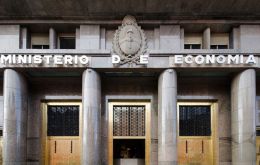
Argentina had a trade surplus of US$ 314 million in September, official statistics agency Indec said on Tuesday, the first since December 2016 and an early sign the devaluation of the peso currency has benefited the country’s exporters.
-
Tuesday, October 23rd 2018 - 21:50 UTC
Chilean scientists manage to keep fruit from turning black
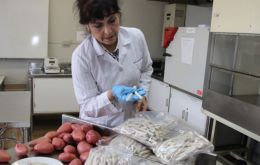
A team of Chilean researchers at the University of Santiago has developed a product that keeps fruit fresh for up to a month after being cut, and is particularly useful in the case of avocado or apples, which need to be consumed instantly or, after a while, they turn dark.
-
Tuesday, October 23rd 2018 - 17:51 UTC
Argentina hopeful about Mercosur-EU deal at G-20 Summit

Argentine Production and Labour Minister Dante Sica Monday said in Madrid he was confident the European Union and the South American Mercosur trade bloc would reach an agreement “as soon as possible,” hopefully by the G-20 Summit in Buenos Aires in late November.
-
Tuesday, October 23rd 2018 - 16:37 UTC
Embraer's new cargo airplane gets ANAC certification

Brazil's National Civilian Aviation Agency (ANAC) has certified Embraer's new cargo aircraft, the KC-390, the manufacturer announced.
-
Tuesday, October 23rd 2018 - 08:53 UTC
Argentina's primary deficit falls to 1.1% of GDP, the lowest since 2012

Argentina's primary deficit fell to 1.1% of Gross Domestic Product (GDP) between January and September this year, compared to 2.1% over the same period in 2017, the Finance Ministry announced on Monday.
-
Tuesday, October 23rd 2018 - 08:31 UTC
United States 2018 federal budget deficit at its highest since 2012: US$ 779bn

The United States federal budget deficit rose in fiscal 2018 to the highest level in six years as spending climbed, the Trump administration said. The deficit jumped to US$ 779 billion, US$ 113 billion or 17% higher than the previous fiscal period, according to a statement from Treasury Secretary Steven Mnuchin and Office of Management and Budget Director Mick Mulvaney.
-
Tuesday, October 23rd 2018 - 06:50 UTC
Uruguay expects 172 calls this 2018/19 cruise season, a 24% increase

Uruguay is expecting 172 cruise calls this season, of which 105 in Montevideo and 67 in the Atlantic resort of Punta del Este, representing a 24% increase over the 2017/2018 season. This includes the arrival of three new cruise companies, while two others, Costa and Norwegian have chosen Montevideo for the change of passengers.
-
Tuesday, October 23rd 2018 - 06:15 UTC
Ten Falkland Islands tourist lodgings gain Green Seal status

Ten tourist accommodation establishments in the Falkland Islands have been awarded ‘Green Seal status’, an award related to being environmentally responsible, following assessments by the Falkland Islands Tourist Board (FITB).