MercoPress. South Atlantic News Agency
Economy
-
Thursday, May 10th 2018 - 08:20 UTC
Argentine congress passed capital market reform bill; Merval up 6%
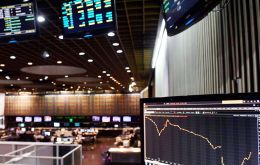
The Argentine Congress passed the government's capital markets reform bill on Wednesday, seeking to boost a troubled economy by reducing the power of market regulators and loosening restrictions on some funds investing in Argentina. Investors and economists consider the reform bill key to President Mauricio Macri's effort to boost investment in the country, whose capital markets are far smaller than regional peers.
-
Thursday, May 10th 2018 - 07:37 UTC
Argentine minister meets IMF Lagarde and US Treasury official: ratifies “gradualism”
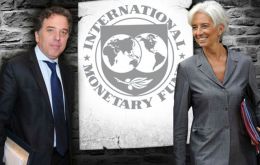
Argentina Economy Minister Nicolas Dujovne is due to meet on Thursday with IMF chief Christine Lagarde to request a financing package to help shore up the struggling economy, officials said. Dujovne will also meet with a senior US Treasury official in a key step in the talks with the IMF, which are likely to last six weeks, his spokesman said in a statement.
-
Wednesday, May 9th 2018 - 20:19 UTC
US Dollar rises: Uruguay behind Argentina
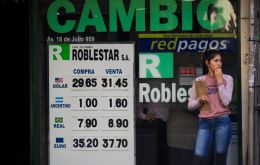
After several days up in Argentina, the devaluation of the Argentine peso and the rise of the US dollar have had some impact on the other side of the River Plate, where the exchange houses of downtown Montevideo marked on Wednesday the value of the currency up to 31,70 Uruguayan pesos per dollar, a rise of 2.08% compared to Monday —the highest in five years—. For the Uruguayan government, the country follows the global trend and calls for calm, beyond the noise generated in Argentina, which is beginning a dialogue between the Finance Minister, Nicolás Dujovne, and the International Monetary Fund (IMF) in Washington.
-
Wednesday, May 9th 2018 - 07:32 UTC
Peso storm: Argentina requests a US$ 30bn precautionary credit from IMF

Argentina asked the International Monetary Fund for financing to help stem a run from the Peso to the US dollar that is sparking a surge in interest rates and threatening to derail the country's economic recovery. The sum requested is estimated between 25 and 30bn dollars, 500% Argentina's IMF quota and could be disbursed in two forms, a flexible credit line or a precautionary credit line.
-
Wednesday, May 9th 2018 - 07:16 UTC
UK appoints Trade Commissioner for Latin America and the Caribbean
The United Kingdom's International Trade Secretary, Dr Liam Fox, named a new Trade Commissioner to champion British trade with Latin America and the Caribbean, as the UK prepares for future trade agreements with countries around the world.
-
Wednesday, May 9th 2018 - 07:10 UTC
Latin American (and global) currencies hit by strong dollar and Trump's policies
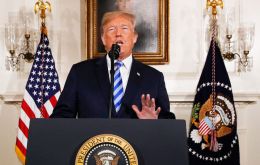
The dollar hovered near a four-month high on Tuesday, continuing to draw support from higher Treasury yields and upbeat prospects for the U.S. economy, leaving its major rivals such as the Euro struggling and other Latin American currencies including the Argentine peso down sharply.
-
Tuesday, May 8th 2018 - 08:19 UTC
Boosted by mining and consumption Chilean economy activity soars 4.6% in March
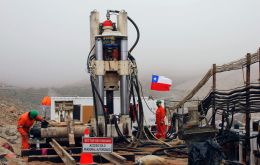
Chile's economic activity rose 4.6% in March from the same month a year ago, its sharpest rise in five years, with a boost from rising consumption and a strengthening mining sector, the central bank said on Monday. The Monthly Economic Activity Indicator (IMACEC) of the third month compares with a 4% rise in February.
-
Tuesday, May 8th 2018 - 08:08 UTC
Overseas accounts of 35.000 Argentines caught in the taxman's web
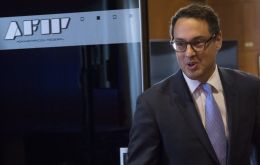
Argentina's Internal Revenue Service, AFIP, announced it had received information on 35.000 overseas bank accounts held by Argentines, which should make it easier to control payment deadlines of the respective sworn statements on taxes, profits and assets.
-
Tuesday, May 8th 2018 - 06:57 UTC
Argentine Peso: the worst of the storm seems to be over...for the time being
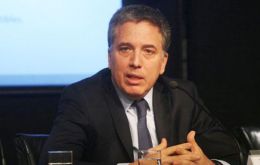
The Argentine Peso closed slightly weaker on Monday, though analysts remained optimistic the government and central bank had curbed a run on the currency with a massive rate hike and lower fiscal deficit target last week. . The local currency opened stronger on Monday but closed down 0.41%, at 21.97 per U.S. dollar. The Merval stock index ended down 3.43% and traders said investors remained cautious.
-
Monday, May 7th 2018 - 20:24 UTC
Uruguay: No position on the FTA with Chile after an official plenary
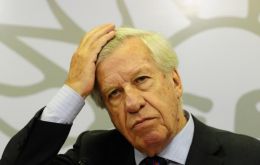
The plenary of the leftist coalition Broad Front concluded on Sunday with a motion that postergates de decision over the Free Trade Agreement (FTA) with Chile, defining to leave the decision on whether or not to support the agreement, delaying the debate to a future plenary whose date is not yet defined. The decision was voted after counting an erroneous sum of the votes in the first instance in which the motion to debate the issue in the plenary had won. However, the votes of the Communist Party of Uruguay (PCU) had been put on the wrong side.