MercoPress. South Atlantic News Agency
Economy
-
Thursday, November 30th 2017 - 15:40 UTC
More pliant rules for the banking and insurance industry in post-Brexit, says Bank of England
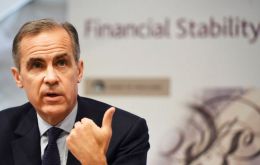
Britain’s regulators will convert banking and insurance rules inherited from the European Union after Brexit to make them more tailored to the British market, Bank of England Governor Mark Carney said on Wednesday. Carney said Britain had long expressed opposition to the EU’s cap on banker bonuses, the full application of banking capital rules on smaller lenders and the bloc’s insurance capital rules.
-
Thursday, November 30th 2017 - 14:40 UTC
By 2030 robotic automation will replace 800 million global workers, says report
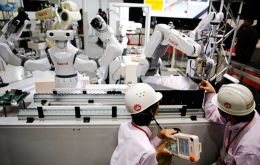
Up to 800 million global workers will lose their jobs by 2030 and be replaced by robotic automation, a new report from a consultancy has found. The study of 46 countries and 800 occupations by the McKinsey Global Institute found that up to one-fifth of the global work force will be affected.
-
Thursday, November 30th 2017 - 09:12 UTC
JMC communiqué underlines self determination and UK's commitment post Brexit

The two-day British Overseas Territories Joint Ministerial Council meeting in London ended on Wednesday with a communiqué underlining self determination, (plus commitment to counter hostile sovereignty claims), constitutional relationship, disaster recovery, --following the sweeping damages caused by hurricanes--, tax transparency and Brexit.
-
Thursday, November 30th 2017 - 08:57 UTC
Theresa May: Brexit bill “still in negotiations”; rules out paying “huge sums to the EU every year”

British Prime Minister Theresa May insisted on Wednesday there is still no agreement on the UK's Brexit bill despite reports British officials have committed up to £50bn to the EU. British newspapers reported on Tuesday that an agreement had been reached on the divorce bill and mentioned 50bn Euros.
-
Thursday, November 30th 2017 - 08:46 UTC
London prepared to devolve powers to Belfast as part of Brexit deal, reports The Times

Britain is considering devolving certain powers to Northern Ireland to avoid the possibility of a hard border with the Republic of Ireland after Brexit, according to a report from The Times.
-
Thursday, November 30th 2017 - 07:16 UTC
Argentina cuts taxes on imported electronic products: challenge for Tierra del Fuego industry

Argentina cut taxes on electronics products in a bid to lower consumer prices, the government said in its official gazette on Wednesday, after reaching a deal with companies and workers in the southern manufacturing hub of Tierra del Fuego.
-
Wednesday, November 29th 2017 - 08:23 UTC
FIH Group posted record revenue pushing profits 38%

Falkland Islands services firm FIH Group posted record group revenue in the six months leading to 30 September, pushing profits ahead by 38%. Group revenue edged up to £20.6m from the £19.8m posted at the same time a year earlier, helping lift pre-tax profits 38% to £1.4m.
-
Wednesday, November 29th 2017 - 08:10 UTC
Fed chief candidate anticipates US economy is ready to end “accommodation”
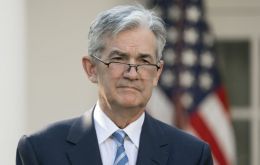
Jerome “Jay” Powell, President Donald Trump's pick to lead the US central bank, the Federal Reserve, is about to become “the most important economic policymaker in the world”. At least that's how one senator put it at Powell's confirmation hearing in Washington on Tuesday.
-
Wednesday, November 29th 2017 - 07:53 UTC
Scotiabank en route to becoming Chile's third largest private bank

Bank of Nova Scotia is pushing deeper into Latin America with a US$2.2-billion bid for control of a Chilean rival, looking to ignite its growth as the bank's fourth-quarter profit edged higher but missed expectations.
-
Wednesday, November 29th 2017 - 07:39 UTC
EU and London reach agreement on Brexit “divorce bill”, says Daily Telegraph

Westminster has reached an agreement with Brussels, in principle, on its so-called Brexit 'divorce bill', according to the Daily Telegraph. The report saw Sterling rapidly cut its losses to trade 0.24% higher at 1.3351, which was up from an intraday low of 1.3220.

