MercoPress. South Atlantic News Agency
Economy
-
Friday, December 18th 2015 - 08:01 UTC
Brazil's budget targets ignored by Congress; Finance minister could resign
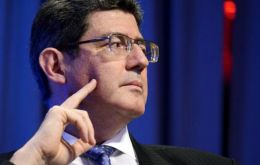
Brazil’s Congress on Thursday approved a 2016 budget with surplus targets lower than what Finance Minister Joaquim Levy wanted, a day after the country lost an investment-grade credit rating on concerns about fiscal restraint.
-
Friday, December 18th 2015 - 07:55 UTC
South America to contract 0.8% and Central America will expand 4.6% in 2016, says UN office
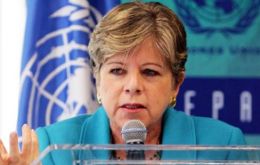
Latin American and Caribbean economies will contract 0.4% on average in 2015 and will grow just 0.2% next year, as a result of the complex external scenario, according to new projections unveiled on Thursday by the UN Latin America and Caribbean Economic commission, ECLAC. Estimates for next year are that Central America will expand 4.6% while South America will again contract 0.8%.
-
Friday, December 18th 2015 - 07:44 UTC
A good one for Brazil: trade surplus has reached US$15.8bn

Brazil accumulated a trade surplus of US$15.8 billion between January and the second week of December, its biggest for that period since posting a US$17.15 billion trade surplus for the first 11 months of 2012, according to Development, Industry and Foreign Trade Ministry figures.
-
Thursday, December 17th 2015 - 07:56 UTC
Fitch downgrades Brazilian bonds to junk; investors could dispose of 20bn in debt

Fitch Ratings downgraded Brazil government bonds to junk on Wednesday, citing rising concerns about an economic and political crisis that threatens to push President Dilma Rousseff from office and scuttle efforts to close a gaping fiscal deficit.
-
Thursday, December 17th 2015 - 07:46 UTC
Major WTO deal cuts tariffs on information technology products
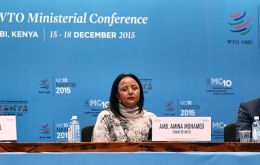
More than 50 members of the World Trade Organization signed an agreement on Wednesday to remove import tariffs on 201 information technology products, marking the first major global tariff-cutting deal in 19 years.
-
Thursday, December 17th 2015 - 07:33 UTC
Congress/Obama deal includes voting for the long stalled IMF quota reforms

The United States Congress has taken a step closer to granting long-awaited approval to reforms of the International Monetary Fund that would give China and other emerging economies a greater voice in shaping the institution's policies.
-
Thursday, December 17th 2015 - 06:50 UTC
Argentina lifts foreign currency controls and let's Peso float, as of Thursday
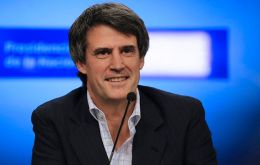
Argentina announced on Wednesday it was lifting currency controls and would allow the peso to float when markets open on Thursday, setting the stage for a devaluation, following pledges by new president Mauricio Macri for reforms to spur economic growth.
-
Thursday, December 17th 2015 - 03:40 UTC
Fed hikes rate to 0.25% in unanimous decision; positive reaction from markets
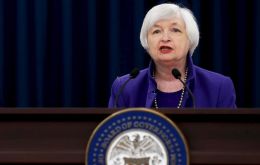
The United States Federal Reserve on Wednesday delivered its first interest rate hike since 2006, with the decision a unanimous one. The central bank raised its key federal funds rate to 0.25%, up from at or near zero percent for the last seven years.
-
Wednesday, December 16th 2015 - 08:49 UTC
Argentina outlines oil and gas wellhead price policy

Argentina's new government will maintain wellhead crude prices above international levels for now, although the differential will narrow as artificially low wellhead prices for natural gas are gradually adjusted upwards, energy minister Juan Jose Aranguren announced on Tuesday.
-
Wednesday, December 16th 2015 - 08:10 UTC
Argentina on track to end import restrictions by end of the year
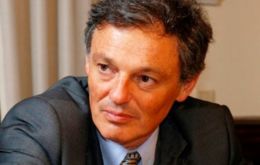
President Mauricio Macri's administration announced the end of restrictions on imports into Argentina, with the current controls of 'sworn statements' or DJAI, replaced by a system of automatic and semi-automatic licences.