MercoPress. South Atlantic News Agency
Energy & Oil
-
Monday, June 23rd 2025 - 10:31 UTC
Will Iran block the Strait of Hormuz?
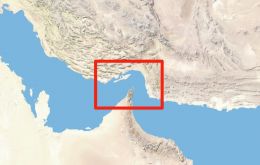
In response to the United States' attack on Saturday, the Iranian Parliament has approved closing the Strait of Hormuz. The decision, which could hinder international trade significantly, particularly that of oil, is awaiting approval from Iran's Supreme National Security Council.
-
Tuesday, June 3rd 2025 - 08:14 UTC
Paraguayan and Argentine officials discuss gas pipeline project to feed Brazil
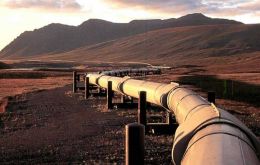
Paraguayan Ambassador Helena Concepción Felip Salazar and Asunción's Vice-Minister of Mines and Energy Mauricio Bejarano met in Buenos Aires with Argentina's Energy Secretary María Tettamanti to advance discussions on a bioceanic gas pipeline project. The talks focused on drafting a memorandum of understanding and outlining steps for gas integration between the two nations.
-
Saturday, May 31st 2025 - 10:00 UTC
Bolivian minister apologizes for delays in fuel supply
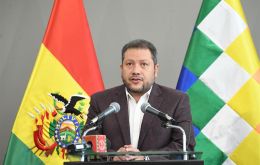
Bolivia's Hydrocarbons and Energy Minister Alejandro Gallardo apologized Friday for the delays in unloading fuel from tanker ships amid unfavorable weather conditions, which will delay the arrival of the product to the landlocked country.
-
Friday, May 30th 2025 - 10:24 UTC
Unloading of fuel for Bolivia begins amid favorable weather

The unloading of fuels began in three Pacific Ocean ports, with an estimated 100 million liters of gasoline and diesel expected to arrive in Bolivia by the weekend. The operation involves ports in Chile and Peru due to weather conditions, Hydrocarbons Minister Alejandro Gallardo explained. The measure seeks to address Bolivia's ongoing nationwide fuel shortage.
-
Thursday, May 29th 2025 - 10:11 UTC
Trump tells UK to get rid of unsightly windmills and open North Sea to modern drilling
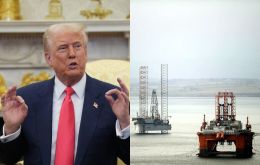
President Donald Trump on Truth Social has strongly criticized UK’s energy policy of pursuing renewables and further taxing North Sea oil and gas operators. In a piece published in OilPrice he suggests getting rid of “costly and unsightly windmills”.
-
Thursday, May 29th 2025 - 09:46 UTC
YPFB adds new Chilean port to boost fuel imports
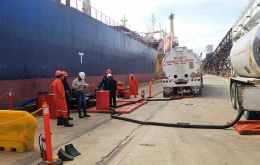
Bolivia’s state oil company, Yacimientos Petrolíferos Fiscales Bolivianos (YPFB), began importing diesel and gasoline through the Chilean port of Mejillones to address a months-long fuel crisis. This new route complements the port of Arica and diversifies imports from four countries, ensuring 100% of market demand is met with 70 million liters of fuel.
-
Monday, May 12th 2025 - 20:37 UTC
Lula announces sizeable Chinese investments in infrastructure

Brazilian President Luiz Inácio Lula da Silva announced Monday that Chinese investors would be allocating some R$ 27 billion (US$ 4.69 billion at the current exchange rate) to infrastructure and other development in the South American country. He made those remarks during his participation in the Brazil-China Business Forum in Beijing. The investments will also cover the areas of education and technology, it was explained.
-
Monday, May 12th 2025 - 10:04 UTC
Petrobras strikes high-quality oil in Santos Basin Pre-Salt Aram block
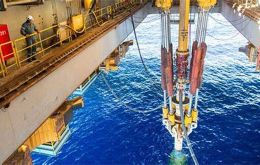
Petrobras has announced a new oil discovery in the pre-salt Santos Basin, identifying “high-quality oil without contaminants” at the 3-BRSA-1396D-SPS exploratory well in the Aram block, located 248 kilometers off the coast of Santos, at a water depth of 1,952 meters
-
Friday, May 9th 2025 - 14:51 UTC
Venezuela seeks support from Russia and China amid economic crisis
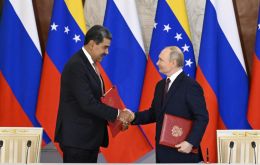
Venezuela is turning to its geopolitical allies, Russia and China, to counter a deepening economic crisis, as the South American nation faces dwindling oil revenues, runaway inflation, and a severe currency devaluation.
-
Thursday, May 8th 2025 - 08:34 UTC
Former Paraguayan President welcomes Milei's Yacyretá tariff adjustment
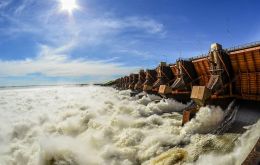
Former Paraguayan President and Yacyretá Binational Entity (EBY) Director Nicanor Duarte Frutos said Argentine President Javier Milei's decree adjusting the energy tariff from US$ 17 to US$ 28 per megawatt-hour (MWh) was the right thing to do and insisted that the measure did not violate any treaty. It rather establishes an effective charge for energy consumption to be paid by his country's National Electricity Administration (ANDE) and the Wholesale Electricity Market Administration Company (CAMMESA).