MercoPress. South Atlantic News Agency
Health & Science
-
Saturday, December 3rd 2016 - 08:20 UTC
Seventy female scientists to Antarctica to battle climate change and make a name for women in science
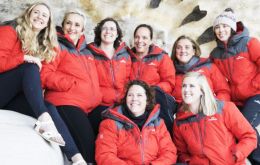
More than 70 female scientists from all around the world have embarked upon a voyage to the South Pole with the common objectives of battling climate change and making a name for women in science. As part of the Homeward Bound initiative, an Australian program aimed at increasing the female representation in science, the group set upon what will be the largest ever all-women expedition to Antarctica.
-
Wednesday, November 30th 2016 - 11:08 UTC
University of Sao Paulo targets the Moon for 2020
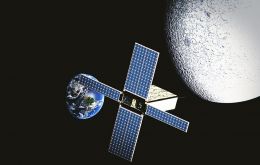
According to a project announced Tuesday by the University of São Paulo, Brazil plans to launch its first mission to the moon in December 2020 with a nanosatellite to orbit the star to the effects of the space environment on different life forms.
-
Tuesday, November 29th 2016 - 09:32 UTC
First case of zika confirmed in Texas
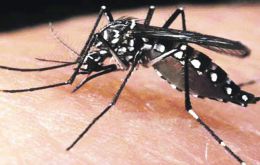
Texas health officials have announced Monday their first case of Zika virus, making it the second US state to report such an occurrence after Florida. The victim is a woman who is not pregnant and has not traveled anywhere a Zika affected area in recent times, it was announced.
-
Wednesday, November 23rd 2016 - 16:39 UTC
Argentina and UK to work jointly in scientific research and exchange of experts
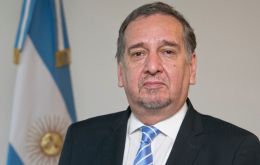
Argentina and the United Kingdom will sign this Wednesday an accord by which the two countries scientific societies will be working jointly in research projects and promoting an active exchange of scientists, as part of the recent joint statement signed last September, revealed Science and Technology minister José Lino Barañao currently in London.
-
Saturday, November 19th 2016 - 12:02 UTC
European scientists in Antarctica trying to locate the oldest ice on Earth
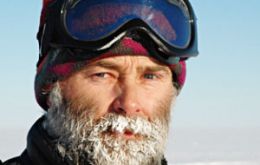
A team of European scientists heads to East Antarctica this month to locate the oldest ice on Earth. The team is part of an EU-funded research consortium from ten European countries whose aim is to search for a suitable site to drill an ice core to capture 1.5 million years of Earth’s climate history.
-
Friday, November 11th 2016 - 19:43 UTC
Samsung apologizes in US full page ads for its fire prone Note 7 phones

Samsung Electronics Co. took out full-page newspaper advertisements in the United States to apologize for its fire-prone Note 7 phones, seeking to restore its battered reputation. The message from the world’s largest smart-phone maker appeared in major publications, including the Wall Street Journal, New York Times, Washington Post and USA Today this week. A representative for the Suwon, South Korea-based company said it hasn’t decided whether to run more ads in other places.
-
Thursday, November 10th 2016 - 11:20 UTC
HMS Protector opens 2016/17 season in South Georgia surveying 160 sq miles of seabed

Having spent last Antarctic summer celebrating the deeds of one British polar hero, the crew of Royal Navy icebreaker HMS Protector have opened the 2016-17 survey season honoring his rival. A century after Sir Ernest Shackleton landed at King Haakon Bay on South Georgia in a makeshift lifeboat – the James Caird – Protector entered the same fjord and sent her hi-tech survey launch – the James Caird IV – close to the identical spot.
-
Monday, November 7th 2016 - 21:57 UTC
WHO/Europe report calls for urgent action to protect children from digital marketing of food
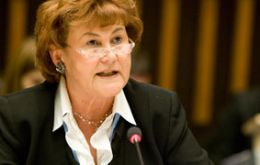
For the first time, researchers and health experts have undertaken a comprehensive analysis of the concerning situation in the WHO European Region of digital marketing to children of foods high in fats, salt and sugars.
-
Tuesday, November 1st 2016 - 10:18 UTC
Spinach effective in helping detect landmines, according to MIT field work

Scientists have transformed the humble spinach plant into a bomb detector. By embedding tiny tubes in the plants' leaves, they can be made to pick up chemicals called nitro-aromatics, which are found in landmines and buried munitions. Real-time information can then be wirelessly relayed to a handheld device.
-
Tuesday, November 1st 2016 - 09:48 UTC
Norovirus outbreak in Massachusetts shellfish growing areas
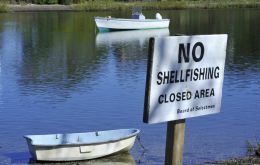
The norovirus which has caused havoc to the cruise industry had emerged in Massachusetts waters forcing the closure of shell fishing within Wellfleet Harbor. The ban imposed by the Massachusetts Division of Marine Fisheries (DMF) has been set since October 28, but does not include bay and sea scallop adductor muscles and carnivorous snails, including conchs and whelks.
