MercoPress. South Atlantic News Agency
International
-
Thursday, November 17th 2011 - 22:20 UTC
Greek bond holders prepare for 50% ‘hair cut’ discussions involving 100bn Euros

Greece and holders of its debt hope to agree on a proposal to halve its privately held debt within weeks, both sides said on Thursday, raising hopes that a key pillar of Greece's 130 billion Euros bailout is still on track.
-
Thursday, November 17th 2011 - 22:15 UTC
Italian cabinet receives ample Senate confidence vote; Monti outlines program
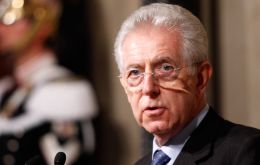
New Italian PM Mario Monti's government of technocrats passed its first test, winning a vote of confidence in the senate late Thursday. As expected, the government won the vote in the upper house of parliament easily, by 281 votes to 25.
-
Thursday, November 17th 2011 - 19:56 UTC
Germany and France clash over a greater role for the European Central bank
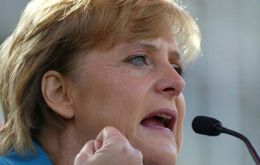
German Chancellor Angela Merkel reiterated Thursday her opposition to a greater role for the European Central Bank in helping to solve the Euro zone debt crisis, saying political action was required.
-
Thursday, November 17th 2011 - 19:53 UTC
Moody downgrades ratings of ten German public-sector banks
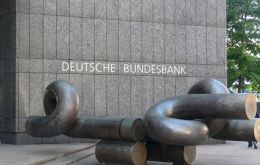
Moody’s ratings agency decided on Thursday to surprisingly downgrade the rating of ten German public-sector banks. This is the first time Europe’s largest economy in the region, which keeps the Euro zone afloat, is hit.
-
Thursday, November 17th 2011 - 17:41 UTC
G20 president says Uruguay is no ‘fiscal haven’ and praises transparency commitment
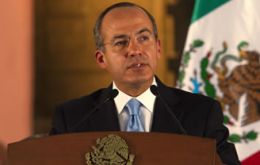
Uruguay received a huge political boost from Mexico (the same it was denied from its Mercosur partners under influence from Argentina) in its dispute with the recent G20 summit which through spokesperson French president Nicholas Sarkozy described Uruguay as a ‘fiscal haven’.
-
Thursday, November 17th 2011 - 07:20 UTC
US is all in a “Pacific power”, Obama tells Australia (and China)

President Barack Obama said that the Asia-Pacific region will play a key role in defining the world's future. “The United States is a Pacific power, and we are here to stay,” he stated in a speech to the Australian Parliament, sending a clear message to Beijing.
-
Thursday, November 17th 2011 - 03:45 UTC
Euro crisis had heads rolling in the IMF; European Department chief removed

The head of the International Monetary Fund's European department quit less than a year into the job and was replaced by a veteran staffer as the European debt crisis worsens.
-
Wednesday, November 16th 2011 - 21:01 UTC
Unhate campaign launches a round of kissing among world leaders

Benetton, the Italian family-controlled clothing empire, looks set to raise a few eyebrows, as it unveiled a new worldwide communication “Unhate” campaign that features political and faith leaders like Pope Benedict XVI, German chancellor Angela Merkel, French president Nicolas Sarkozy, Barack Obama and Hugo Chavez kissing.
-
Wednesday, November 16th 2011 - 18:04 UTC
Italian cabinet, totally technocrat, sworn in; parties promise support for reforms

Mario Monti formed a new technocrat government in Italy Wednesday to tackle a major debt crisis threatening the entire Euro zone and said he hoped it would placate financial markets.
-
Wednesday, November 16th 2011 - 14:45 UTC
The ‘super-connected’ 1.318 corporations of global economic power

As protestors against financial power sweep the world this week, science may have confirmed the protesters' worst fears. An analysis of the relationships between 43.000 transnational corporations has identified a relatively small group of companies, mainly banks, with disproportionate power over the global economy.