MercoPress. South Atlantic News Agency
Investments
-
Monday, May 7th 2012 - 17:33 UTC
Argentina takes official control of YPF; Rajoy asks: who can trust that country?

The Argentine decision to seize control of 51% of YPF oil and gas giant came into effect on Monday as a decree was published on the Official Gazette. From Spain a new barrage of criticisms in support of Repsol and condemning Argentina started the week.
-
Monday, May 7th 2012 - 04:59 UTC
Soybeans becomes Uruguay’s main export item, estimated at 1.1bn in 2012

Soybeans are set to establish several records this year in Uruguay: exports will be above one billion dollars; for the first time the oilseed will be the leading export item of the country displacing beef and prospects for the next season are that over a million hectares will be planted.
-
Saturday, May 5th 2012 - 06:41 UTC
Cristina Fernandez enacts YPF nationalization and oil and gas self-sufficiency law

Argentine President Cristina Fernández enacted the YPF nationalization law, which was approved by the Lower House on Thursday. During a nation-wide televised speech from Government House, the Head of State also introduced the company’s new CEO, oil engineer Miguel Galuccio.
-
Saturday, May 5th 2012 - 06:35 UTC
Spain says Argentina should follow Bolivia example and pay a ‘fair price’ for YPF
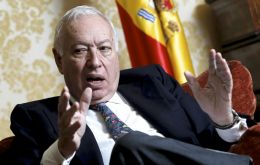
Toning down its initial strong reactions to the nationalization of Spanish controlled YPF Spain’s Foreign minister Jose Manuel Garcia Margallo said that Argentina should pay a “fair price” for the oil company citing a similar case in Bolivia this week.
-
Saturday, May 5th 2012 - 06:31 UTC
A successful oil and gas engineer with global experience, YPF next CEO
A drilling engineer with a long experience in the oil and gas industry Miguel Galuccio, 44, will be taking over as of next Monday as manager of the nationalized YPF corporation, announced on Friday Argentine President Cristina Fernandez.
-
Saturday, May 5th 2012 - 06:26 UTC
Uruguay supports Argentina’s seizure of YPF but countries decide “proceedings”
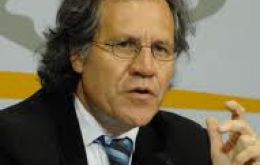
Uruguayan Foreign Minister Luis Almagro backed Argentina’s controversial decision to nationalize the country's biggest oil company YPF arguing countries’ right to recover a strategic market is “indisputable”.
-
Friday, May 4th 2012 - 17:16 UTC
Brazil committed to compete with China in Africa for resources and growing market
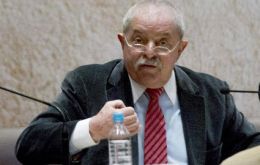
Brazil pledged major investment and technology transfer to Africa to repay a “solidarity debt” from a country with a huge black population to the poorest but resource-rich continent.
-
Friday, May 4th 2012 - 06:11 UTC
YPF vote splits opposition Radical party; dissenters blame government for the energy policy
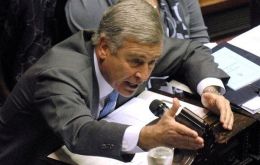
Even when the YPF nationalization bill in the Argentine Lower House was passed with support from most opposition parties, including the two main groupings the event was not without incidents.
-
Friday, May 4th 2012 - 06:01 UTC
Euphoric Argentine lawmakers celebrate final approval of YPF seizure

After a two-day session, Argentina’s Lower House voted late Thursday night 207-32 in favour of expropriating energy corporation YPF, clearing the way for President Cristina Fernandez to sign the controversial bill into law.
-
Friday, May 4th 2012 - 00:26 UTC
BG selling lucrative asset in Brazil to focus on oil and gas fields

UK gas producer BG Group has announced a deal to sell its stake in Brazil's Comgas to Sao Paulo-based Cosan for 1.8bn dollars. BG said it expected to deal to be completed by the end of the year.