MercoPress. South Atlantic News Agency
Latin America
-
Monday, June 4th 2018 - 06:47 UTC
Over half of Mexican voters express support for Lopez Obrador
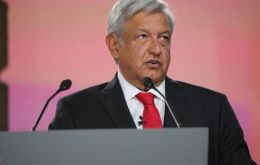
With less than a month before Mexico’s presidential election, more than half of voters support leftist Andres Manuel Lopez Obrador, a survey showed, while they pulled support from the poll leader’s main rival following attacks on his honesty.
-
Saturday, June 2nd 2018 - 08:09 UTC
Nicaragua's husband-wife team ready to fall: end of the road for the Ortegas

By Gwynne Dyer (*) - From the Ceausescus in Romania (overthrown and shot 1989) to the Mugabes (removed in a non-violent military coup 2017), husband-and-wife teams running authoritarian regimes seem to have a particularly high casualty rate. And now it may be the turn of the Nicaraguan team: President Daniel Ortega and his wife, Vice-President Rosario Murillo.
-
Friday, June 1st 2018 - 07:35 UTC
Guyana on the global energy map: oil production expected to reach 600.000bpd

The Norwegian oil and gas research firm Rystad Energy is predicting that Guyana's oil sector could generate annual revenue of US$15 billion and that the government would pocket most of the profit generated from the explorations.
-
Thursday, May 31st 2018 - 06:28 UTC
We have neglected Latin America's realms of gold for too long - Brexit can change that

By Boris Johnson (*) The Foreign Secretary writes in the Telegraph about his recent trip to Latin America, and the unique opportunities the region presents for the UK. Much have I travelled in the realms of gold, and many goodly states and kingdoms seen – 67, to be exact, since I have been Foreign Secretary.
-
Tuesday, May 29th 2018 - 08:47 UTC
Bolivia's president Evo Morales faces increasing students and opposition unrest
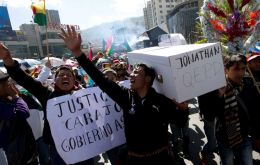
Thousands of protesters took to the streets of several cities across Bolivia on Monday to demand justice after a university student was killed during a demonstration last week. Some of the protesters clashed with police in the central city of Cochabamba. Authorities did not immediately report injuries or arrests.
-
Monday, May 28th 2018 - 06:19 UTC
Colombian election: clear cut right and left candidates will dispute the 17 June runoff

Colombia’s left and right will be holding a runoff to compete for the presidency in June after hard-line conservative Ivan Duque and ex-guerrilla Gustavo Petro scooped most of the votes in the first round of Sunday elections.<br />
The second vote will take place on June 17, which could see Colombia's already fragile peace deal with the FARC guerrillas shaken. -
Saturday, May 26th 2018 - 09:15 UTC
Colombia's presidential election: another referendum on the peace deal?
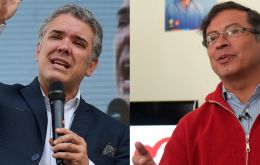
On Sunday, Colombians will head to the polls to elect a new president. At play in this year’s election are a range of issues: Venezuelan migration, economic situation, rampant corruption, high levels of inequality, but above all is the country's historic peace accord that ended over half a century of armed conflict.
-
Saturday, May 26th 2018 - 08:16 UTC
Colombia invited to join OECD; third Latin American member with Mexico and Chile
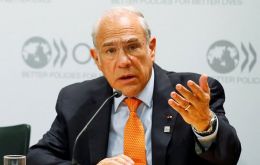
The Organization for Economic Cooperation and Development (OECD) announced on Friday that Colombia would be officially invited to join the group. The Paris-based economic organization was founded in 1961 and has traditionally included industrialized nations, though in recent years it has extended its membership to emerging economies.
-
Friday, May 25th 2018 - 09:00 UTC
Nicaragua peace talks collapse and clashes resume : two dead and 50 injured
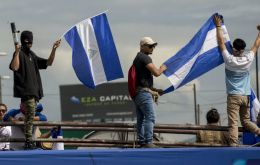
At least two people were killed and 50 wounded as clashes flared in Nicaragua after peace talks between the government and opposition collapsed, the Red Cross and victims' relatives said on Thursday.
-
Friday, May 25th 2018 - 08:15 UTC
Japan encouraging Central and South America to join the TPP trade pact

Japan is encouraging more countries from Central and South America to join the reworked Trans-Pacific Partnership trade pact, in hopes of both capturing the potential of these markets and pressuring the U.S. to return to a framework it left last year.