MercoPress. South Atlantic News Agency
Latin America
-
Friday, November 30th 2012 - 22:32 UTC
Solid Latam support for Palestine ‘observer status’ vote at the UN
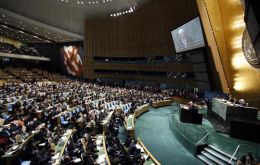
Latinamerican countries most of which recognize Palestine as a free and sovereign state, helped this week with their votes to elevate the status of the Palestine Authority to “non member observer” which was approved this week by an overwhelming majority of the UN General Assembly.
-
Friday, November 30th 2012 - 06:39 UTC
Unasur summit will address Paraguay situation; Brazil and Argentina absent
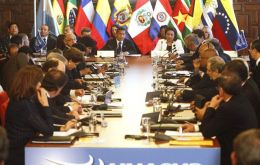
The Union of South American Nations, Unasur leaders meet on Friday in Peru to consider advances to the integration process and a report on the political and electoral situation in Paraguay, which remains suspended from the group since last June.
-
Friday, November 30th 2012 - 06:26 UTC
FARC satisfied with first round of peace talks; Santos and Colombian public opinion cautious
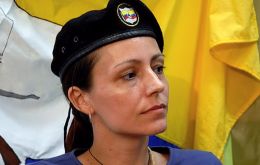
Colombia's FARC rebels said their peace talks with the government were going well, but the lead negotiator for President Juan Manuel Santos was more reserved as the two sides finished the first round of meetings aimed at ending their protracted conflict.
-
Thursday, November 29th 2012 - 18:09 UTC
OAS sends top envoy to Paraguay to prepare for April elections
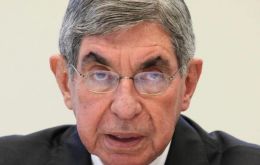
The Organization of American States, OAS, is sending a top electoral observation official to Paraguay to sponsor national political dialogue and make preparations for the OAS mission that will be following the electoral process leading to elections.
-
Wednesday, November 28th 2012 - 22:20 UTC
Colombia withdraws from UN Justice Court angry at latest ruling on Caribbean islands
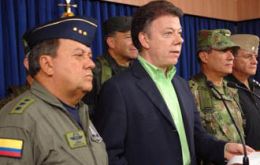
Colombia has withdrawn from a treaty that binds it to the UN International Court of Justice in anger at a ruling that shifts some of its resource-rich waters to Nicaragua, President Juan Manuel Santos announced on Wednesday.
-
Wednesday, November 28th 2012 - 21:50 UTC
Chile and Mexico among the best performing members of OECD in next two years
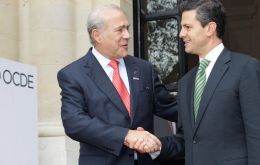
Chile and Mexico will manage to a great extent to avoid the negative prospects from OECD members in the next two years. The half year report from the Organization for Economic Cooperation and Development anticipates a serious weakening of activity in the Euro zone, the US and Japan, but the two OECD Latinamerican members as well as emerging power Brazil will have a contrasting performance.
-
Wednesday, November 28th 2012 - 19:02 UTC
Dengue keeps advancing in Latam despite efforts to contain the disease
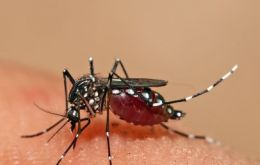
Dengue continues to claim lives in Latin America with over 400 deaths and nearly 161.000 infection cases according to this year’s reports from the different countries.
-
Wednesday, November 28th 2012 - 00:07 UTC
In the midst of regional elections Chavez returns to Cuba to continue cancer treatment
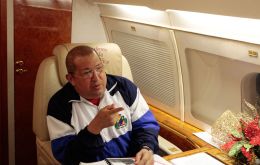
Venezuelan President Hugo Chavez said he is returning to Cuba on Tuesday to continue treatment for cancer, raising new questions about his health just weeks after he won re-election to another six-year term.
-
Tuesday, November 27th 2012 - 23:52 UTC
Peruvian president tells Argentine congress of its solidarity with the Malvinas issue
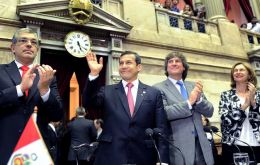
Peruvian president Ollanta Humala expressed solidarity with Argentina in the Malvinas Islands issue and said that “the problems of the region are common problems” for all countries.
-
Tuesday, November 27th 2012 - 22:54 UTC
Argentina will make a plea at the Unasur summit to jointly face ‘vulture funds’
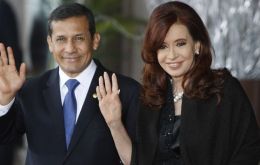
During a ceremony to receive visiting Peruvian leader Ollanta Humala Argentine President Cristina Fernández said that she would make a plea for Unasur members to come together in the fight against ‘vulture funds’ (hedge funds) when the region’s leaders meet this week in Lima.

