MercoPress. South Atlantic News Agency
Latin America
-
Sunday, July 5th 2026 - 20:51 UTC
Argentina sends fresh rescue brigades to Venezuela as most foreign teams begin to withdraw
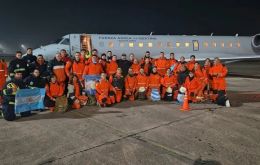
A new contingent of Argentine rescue workers left for Venezuela on Sunday to relieve the search-and-rescue teams deployed after the June 24 twin earthquake, which according to the official toll has left 2,954 dead and more than 16,500 injured. The dispatch coincides with the start of the withdrawal of most international missions, at the point when operations are shifting away from rescuing survivors toward the recovery phase.
-
Saturday, July 4th 2026 - 07:26 UTC
Petro says he asked Trump to lift his OFAC sanctions in a phone call
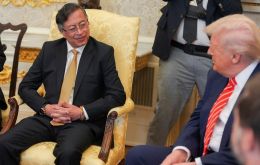
Colombian President Gustavo Petro said he held a phone conversation on Friday with his US counterpart, Donald Trump, in which he asked for support in removing the sanctions on him and his family under the Office of Foreign Assets Control (OFAC) list, known as the Clinton List. According to the Colombian leader and a statement from the Presidency, Trump replied that he “will do his best” to review the case. The White House did not officially confirm the call.
-
Thursday, July 2nd 2026 - 15:32 UTC
A multinational rescue frees Hernán, trapped eight days under Venezuela's quake rubble
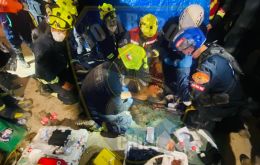
A 43-year-old Venezuelan security guard, Hernán Gil, was rescued alive on Thursday after eight days trapped under the rubble of a building that collapsed in Catia La Mar, in La Guaira state, during the twin earthquake that struck the country on June 24. The Costa Rican Red Cross, which took part in the operation, confirmed the rescue, considered one of the most complex and prolonged of the disaster, which has left at least 2,295 dead and more than 11,000 injured, according to the official toll.
-
Tuesday, June 30th 2026 - 22:19 UTC
Cepeda threatens 'civil disobedience' unless Colombia's president-elect renounces US citizenship

Left-wing senator Iván Cepeda, who lost Colombia's presidential runoff, announced on Tuesday that he will resort to “peaceful civil disobedience” against the incoming government of Abelardo de la Espriella if the president-elect does not renounce his US citizenship and clarify a series of questions before taking office on August 7. The Pacto Histórico leader, from the party of outgoing President Gustavo Petro, urged his voters to join the measure, which he described as not recognizing the new president's authority.
-
Tuesday, June 30th 2026 - 09:39 UTC
Keiko Fujimori wins Peru's presidency as the full count confirms her by 49,641 votes

Peru's National Office of Electoral Processes (ONPE) on Monday closed the count of the presidential runoff at 100% of the tally sheets and confirmed the victory of right-wing Keiko Fujimori over left-wing Roberto Sánchez, 22 days after the June 7 vote. The Fuerza Popular leader obtained 50.14% of valid votes against her rival's 49.87%, a difference of 49,641 ballots, in one of the closest elections in the country's recent history.
-
Tuesday, June 30th 2026 - 08:32 UTC
A regional shift to the right frames the wave of congratulations to Fujimori

The confirmation of right-wing Keiko Fujimori's victory in Peru's presidential runoff drew a wave of congratulations from leaders across the region, who framed the result within the shift to the right underway in several Latin American countries. With Fujimori's arrival in power, the right will add a new government, alongside those of Argentina, Ecuador, Chile, Paraguay and El Salvador, and the recent victory of Abelardo de la Espriella in Colombia.
-
Tuesday, June 30th 2026 - 07:35 UTC
Mexican rescuers in Venezuela call it one of the largest tragedies they have faced
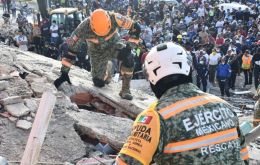
Rescuers from the Mexican Army's Emergency Response Battalion (BAE), considered among the most experienced in the world in natural disasters, say the earthquake that devastated north-central Venezuela is “one of the largest tragedies” they have attended, above all because of the scale of the damage. The team is working in the coastal state of La Guaira, the hardest-hit area, where the official toll exceeded 1,700 dead on Monday.
-
Saturday, June 27th 2026 - 09:43 UTC
Repsol, Ecopetrol and 17 other oil firms cleared for Brazil's next pre-salt auction
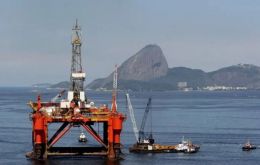
Nineteen oil companies, among them Spain's Repsol and Colombia's Ecopetrol, have been cleared to bid in the upcoming auction of licenses to partner with the Brazilian State in the exploitation of hydrocarbons in the pre-salt, the country's main crude reserve. The list was released on Friday by the National Agency for Petroleum, Natural Gas and Biofuels (ANP), following its publication in the Official Gazette.
-
Thursday, June 25th 2026 - 21:10 UTC
Public meetings will feature presentations from Hatch and MEP, the authors of the socio-economic, environmental and legislative reports

At least 17 people were injured on Wednesday night when a car drove into a crowd celebrating in the streets of Cabo San Lucas, in the Mexican state of Baja California Sur, Mexico's win over the Czech Republic at the World Cup. The driver was detained, and authorities opened an investigation to clarify what happened.
-
Thursday, June 25th 2026 - 06:41 UTC
Offers of aid pour in for Venezuela from across the Americas and beyond after its earthquake
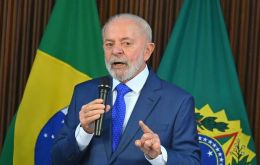
Governments from across the Americas and other regions of the world expressed solidarity with Venezuela and offered assistance after the twin earthquake of magnitude 7.2 and 7.5 that struck the north-central part of the country on Wednesday and that, according to the first official toll, left at least 32 dead and more than 700 injured. Several countries announced the dispatch of rescue teams, while acting President Delcy Rodríguez thanked them for the shows of support.