MercoPress. South Atlantic News Agency
Latin America
-
Friday, May 29th 2026 - 06:31 UTC
Capricorn Bioceanic Corridor advances to final stretch to connect Atlantic with Pacific
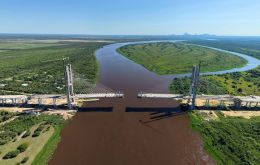
The Capricorn Bioceanic Corridor, one of the most ambitious infrastructure projects underway in South America, is moving through its final stretch on the border between Paraguay and Brazil, with just twenty-one metres remaining to complete the physical link of the so-called Bioceanic Bridge, according to Paraguayan government authorities cited in late May 2026. The structure, built over the Paraguay River, will connect the cities of Carmelo Peralta, in the department of Alto Paraguay, and Puerto Murtinho, in the Brazilian state of Mato Grosso do Sul, and constitutes one of the central pieces of a logistics corridor that will link the Atlantic Ocean with the Pacific across four South American countries.
-
Wednesday, May 27th 2026 - 18:29 UTC
Paz promulgates law authorizing Armed Forces to intervene in Bolivia's internal conflicts
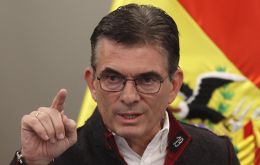
Bolivian President Rodrigo Paz on Wednesday promulgated Law 1731, a measure that removes existing restrictions on the intervention of the Armed Forces in the country's internal conflicts. The signing of the document, which took place past midnight, comes after nearly a month of road blockades led by sectors demanding his resignation, and raises pressure on the president to authorize the deployment of the military on the streets and roads of Bolivia.
-
Tuesday, May 26th 2026 - 23:20 UTC
Legislator Goss takes Falklands' voice to the UN: “We have nothing to hide”
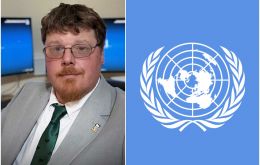
The Member of the Falkland Islands Legislative Assembly Michael Goss on Tuesday presented the archipelago's position before the Regional Seminar of the United Nations Special Committee on Decolonisation, known as the Committee of 24, held in Managua, Nicaragua. In his address, Goss defended the right to self-determination of the inhabitants of the archipelago, reiterated the Legislative Assembly's invitation for the body to send a visiting mission to the Islands, and questioned Argentina's failure to comply with the bilateral cooperation package agreed with the United Kingdom in September 2024.
-
Tuesday, May 26th 2026 - 14:08 UTC
María Corina Machado closes Panama visit with tribute to Venezuelans who crossed the Darién
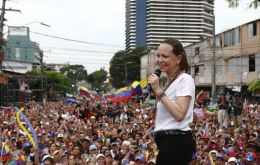
Venezuelan opposition leader and 2025 Nobel Peace Prize laureate María Corina Machado on Monday closed her visit to Panama with a tribute to the more than half a million Venezuelan migrants who over the past decade crossed the Darién jungle on their way to North America, in a speech before the National Assembly of Panama and during the presentation of the key to Panama City by the municipal authorities. The visit was also marked by the confirmation of her presidential candidacy as part of the democratic transition plan set out by the United States following the capture of former president Nicolás Maduro on 3 January.
-
Monday, May 25th 2026 - 21:58 UTC
2026 World Cup drives Airbnb supply surge in Mexican host cities and consolidates real estate firms' control
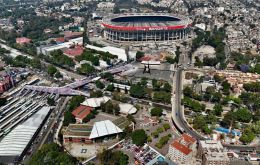
The approach of the 2026 World Cup, which Mexico will co-host alongside the United States and Canada, has accelerated the mass conversion of traditional housing into short-term tourist rentals in the three Mexican cities hosting the tournament, with a sharp rise of real estate firms as the dominant market actor. According to data from the specialized firm AirDNA cited by the newspaper El País, the supply of properties on Airbnb and similar platforms grew in Mexico City by 30% between 2023 and 2026, rising from 18,000 to close to 24,000 units. In the Guadalajara metropolitan area, growth reached 50%, to 9,760 properties, and in the Monterrey metropolitan area it doubled, to 7,274 units.
-
Monday, May 25th 2026 - 04:24 UTC
Three main Colombian presidential candidates close campaigns one week before first round
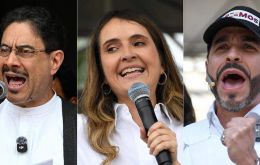
The three main contenders to succeed President Gustavo Petro on Sunday closed their campaigns with massive political rallies in different cities across the country, one week before the first round of the presidential elections of 31 May. Leftist senator Iván Cepeda, of the ruling Pacto Histórico; far-right lawyer Abelardo de la Espriella, of the Defensores de la Patria movement; and right-wing senator Paloma Valencia, of the Centro Democrático, lead the polls, while around 10% of the electorate remains undecided one week before the vote. The eventual runoff is scheduled for 21 June.
-
Monday, May 25th 2026 - 01:49 UTC
Peru sends four tons of food to Bolivia and joins humanitarian airlift over blockades
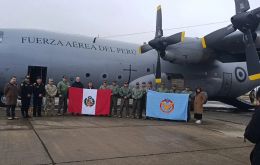
The government of Peru on Sunday delivered to Bolivia a donation of four tons of food intended for families affected by the road blockades that highland peasant sectors have maintained for 19 days, in an initiative that adds Lima to the growing regional humanitarian airlift organized around the government of President Rodrigo Paz. The aid arrived aboard a Peruvian military aircraft and was received by Bolivian Deputy Minister of Consular Management Héctor Huanca and the Peruvian Ambassador in La Paz, Carlos Chávez-Taffur, at El Alto international airport.
-
Monday, May 25th 2026 - 00:44 UTC
Paraguayan Prosecutor's Office maps Marset drug route from Bolivia to European ports
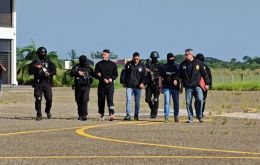
The Paraguayan Prosecutor's Office has filed an indictment against Gianina García Troche, the former partner of Uruguayan drug trafficker Sebastián Marset, that reconstructs in detail the criminal structure operating from Paraguay that for years moved cocaine from Bolivia to major European ports. The document, cited by the Uruguayan newspaper El País, lays out a three-pronged organization, nearly a thousand clandestine flights inside the Paraguayan Chaco, and a verified export volume amounting to 17,340 kilos of cocaine seized in Belgium and the Netherlands, valued at up to USD 434 million on the European market.
-
Monday, May 25th 2026 - 00:38 UTC
Evo Morales demands elections in Bolivia in 90 days “to avoid deaths” and warns against militarization
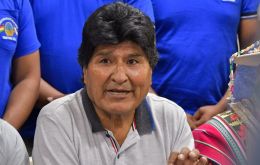
El expresidente boliviano Evo Morales (2006-2019) elevó este domingo la presión sobre el Gobierno de Rodrigo Paz al exigir la convocatoria de elecciones generales en un plazo de 90 días “para que no haya muertos, para que no haya heridos”, en una nueva escalada del pulso político que mantiene paralizadas a las ciudades de La Paz y El Alto desde hace tres semanas. El líder cocalero, prófugo de la justicia boliviana por un caso de presunta trata agravada de menores, advirtió que cualquier decisión del Ejecutivo de “militarizar” el país para desbloquear las rutas constituiría una alternativa “suicida”.
-
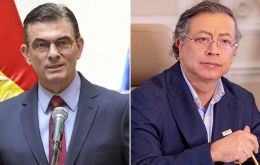
Wednesday, May 20th 2026 - 23:18 UTC
Bolivia escalates internal conflict into diplomatic clash with Colombia and divided regional backing
The political and social crisis that has been shaking Bolivia for 15 days escalated on Wednesday into a regional diplomatic confrontation, with the government of Rodrigo Paz expelling the Colombian ambassador to La Paz, Elizabeth García, denouncing before the Organization of American States an attempt at “institutional destabilization,” and receiving public backing from the United States and from several governments in the region. The decision was taken after Colombian President Gustavo Petro described the protests as a “popular insurrection” and said that in Bolivia “there is a people in the streets being killed,” statements considered “interfering” by La Paz.