MercoPress. South Atlantic News Agency
Latin America
-
Tuesday, June 9th 2026 - 07:07 UTC
Uruguay's Orsi slips to 12th in a regional presidential ranking; Bukele leads
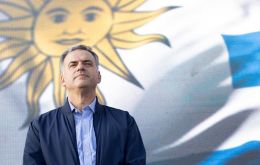
Uruguay's President Yamandú Orsi fell to 12th among the 18 leaders in the June ranking of best-rated Latin American presidents compiled by the Argentine consultancy CB. With a 38.8% positive image, Orsi dropped one spot from May and remains in the survey's “regular” band.
-
Monday, June 8th 2026 - 23:00 UTC
Sánchez narrowly ahead in Peru runoff quick count; both candidates urge caution
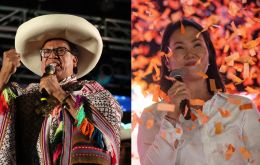
Peru's presidential runoff ended without a clear winner after an extremely close vote. A quick count by the pollster Ipsos, carried out with the NGO Transparencia on a representative sample of tally sheets, gave a slight edge to leftist candidate Roberto Sánchez, with 50.3% of the vote, against 49.7% for conservative Keiko Fujimori. The gap, within the margin of error, amounts to a technical tie that prolongs the uncertainty in a country that has had nine presidents in a decade.
-
Sunday, June 7th 2026 - 21:17 UTC
Trump's 'Shield of the Americas' reshapes Central America's war on drug cartels
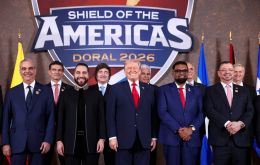
Donald Trump's return to the White House and the launch of the “Shield of the Americas” —a militarized anti-narcotics coalition that excludes Mexico and that Washington unveiled in Miami in March— have reshaped the security landscape in Central America. The pressure, intensified after the capture of Venezuelan President Nicolás Maduro in January, has pushed trafficking routes into international waters and forced uneven responses across the isthmus, according to a report by EL PAÍS.
-
Friday, June 5th 2026 - 23:56 UTC
Fujimori and Sánchez close campaigns in Lima before Peru's tight Sunday runoff
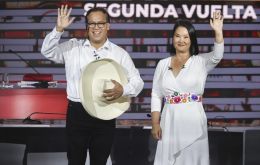
Peru's presidential candidates, conservative Keiko Fujimori and leftist Roberto Sánchez, closed their campaigns in Lima on Thursday before thousands of supporters, three days before a runoff that polls suggest will be very close. Fujimori appealed for the “unity and reconciliation” of Peruvians, while Sánchez promised to end the “chaos” and centered his speech on anti-fujimorismo.
-
Friday, June 5th 2026 - 23:12 UTC
US sanctions Cuba's president Díaz-Canel and inner circle in push for regime change
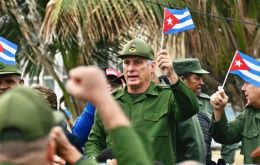
The United States sanctioned Cuban President Miguel Díaz-Canel and his closest circle on Thursday, in a fresh escalation of Washington's pressure on the island with the stated goal of forcing a change of regime after 67 years of communist government. Havana rejected the move at once.
-
Friday, June 5th 2026 - 22:49 UTC
Bolivia's blockade crisis reopens a deep racial divide
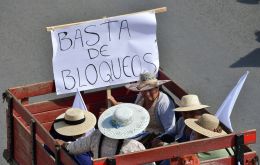
The social conflict in Bolivia has split the country once again. The road blockade led by Indigenous peasants, which has besieged La Paz for more than a month, has brought expressions of racism to the surface in the capital. Worn down by the lack of gasoline and food and by soaring prices, some residents lash out at the protesters —and the hostility runs in both directions.
-
Thursday, June 4th 2026 - 21:15 UTC
Colombian judge orders De la Espriella to stop using national team jersey in campaign
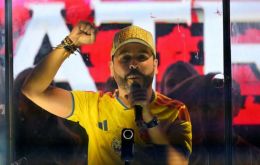
A Bogotá court ordered presidential candidate Abelardo de la Espriella and his party, Defensores de la Patria, to refrain from using the Colombian national football jersey at campaign events and in advertising, while it studies a constitutional protection action filed by a citizen. The provisional measure, issued on June 3 by the 120th Municipal Criminal Court, takes immediate effect and also covers social media and the press.
-
Thursday, June 4th 2026 - 15:11 UTC
Petro drops constituent assembly bid 17 days before Colombia's presidential runoff
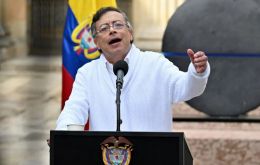
The committee that had promoted a National Constituent Assembly championed by Colombian President Gustavo Petro announced on Thursday that it was halting the collection of signatures and withdrawing the project to reform the 1991 Constitution. The decision, taken 17 days before the June 21 presidential runoff, seeks to clear the way for the governing bloc's candidate, Senator Iván Cepeda, in a move that reshapes the electoral landscape.
-
Wednesday, June 3rd 2026 - 16:54 UTC
Bolivia's blockade crisis risks tipping into civilian clashes, analysts warn
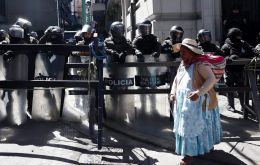
Bolivia's political crisis threatens to spill over into confrontations between urban and rural populations, after nearly a month of road blockades that have disrupted supplies of food, medicine and fuel —especially in the Andean region— and left at least nine people dead. Analysts Pedro Portugal and Gabriela Canedo warned of the danger in remarks to the news agency EFE, pointing to clashes fueled by an ethnic and cultural fracture and by the alleged inaction of Rodrigo Paz's government, whose resignation the mobilized sectors are demanding.
-
Tuesday, June 2nd 2026 - 10:50 UTC
La Paz endures a month of blockades as food and fuel shortages deepen
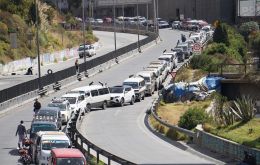
La Paz has spent a month under blockade. The main roads into Bolivia's administrative capital have been cut for four weeks, and shortages of food and fuel worsen by the day. Frustration is mounting among residents: some demand the resignation of President Rodrigo Paz for failing to keep his campaign promises, while others call for a firm hand and the deployment of the army to lift the siege. Most agree that the president, who took office less than seven months ago, should have acted sooner, when the protests began.