MercoPress. South Atlantic News Agency
Latin America
-
Tuesday, June 23rd 2026 - 17:26 UTC
Peru's Sánchez alleges fraud and says he won't recognize a Fujimori government
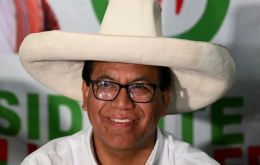
The presidential candidate of Juntos por el Perú, Roberto Sánchez, hardened his rhetoric on the runoff on Tuesday, alleging an alleged “fraud in progress” and announcing that he will not recognize a possible government of right-wing Keiko Fujimori. At a press conference in Lima, the left-wing candidate also called a protest for Saturday in defense of what he considers the popular will expressed at the ballot box.
-
Monday, June 22nd 2026 - 13:24 UTC
De la Espriella gives a victory speech vowing unity as Cepeda awaits the final tally

Right-wing candidate Abelardo de la Espriella delivered a victory speech on Sunday in Barranquilla, in which he proclaimed himself the winner of Colombia's presidential runoff according to the preliminary count and called for national unity, while the official tally remained under way and his rival, left-wing senator Iván Cepeda, conditioned recognition of the result on the definitive count.
-
Monday, June 22nd 2026 - 04:30 UTC
De la Espriella wins Colombia's presidency in the preliminary count as Cepeda awaits the tally

Right-wing criminal lawyer Abelardo de la Espriella won Colombia's presidency, according to the preliminary count by the Registraduría, defeating left-wing senator Iván Cepeda by less than a point in the closest runoff in the country's history. With about 99.9% of the tables processed, De la Espriella took 49.66% of the vote against Cepeda's 48.70%, a difference of some 250,000 ballots. The governing-coalition candidate acknowledged the preliminary count but warned that he would not accept the result until the definitive tally, and challenged 33,000 of the 120,000 polling tables; President Gustavo Petro said that “neither can proclaim himself president.”
-
Saturday, June 20th 2026 - 06:57 UTC
Cuba approves its deepest market reforms in over a decade amid public skepticism
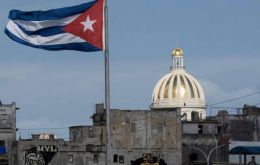
Cuba's National Assembly approved on Friday a package of 176 measures that introduces market dynamics into the island's economy, in the deepest shift since the reforms promoted by Raúl Castro in 2011. The government presented the plan as a response to the worst economic crisis in decades, though much of the population receives it with skepticism.
-
Friday, June 19th 2026 - 17:44 UTC
Peru's Sánchez calls a protest against the result that makes Fujimori the virtual winner

Left-wing candidate Roberto Sánchez called a protest in Lima for Friday against the result of Peru's presidential runoff, which makes right-wing Keiko Fujimori the virtual winner, as the electoral justice was due to decide on the challenges filed by his party. With 99.51% of the tally sheets counted, Fujimori leads Sánchez by some 44,101 votes, though no winner has yet been proclaimed.
-
Friday, June 19th 2026 - 10:47 UTC
De la Espriella leads Colombia's runoff with contained triumphalism as Cepeda hopes for a late surge

Right-wing lawyer Abelardo de la Espriella heads into Colombia's presidential runoff, set for this Sunday, June 21, as the favorite, though with contained triumphalism, while left-wing senator Iván Cepeda trusts that a late push can still overturn the result. Both campaigns sense the election is closer than the polls reflect.
-
Wednesday, June 17th 2026 - 19:11 UTC
Bolivia's blockade crisis leaves at least 16 dead as the government calls unions to talks
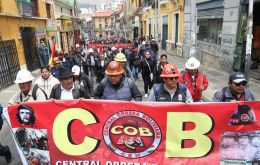
The crisis caused by more than seven weeks of road blockades in Bolivia, driven by sectors demanding the resignation of President Rodrigo Paz, has left at least 16 people dead, as the government called the Bolivian Workers' Center (COB) on Wednesday to a dialogue to seek a way out. By midday, the country's largest union confederation had not confirmed its attendance.
-
Wednesday, June 17th 2026 - 09:14 UTC
Fujimori nears victory in Peru's presidential count as the left calls for protests
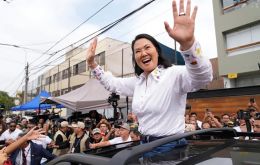
Ten days after the June 7 presidential runoff, Peru still has no proclaimed winner, but the right-wing candidate Keiko Fujimori is heading toward victory. With 99.1% of the vote counted, she leads the left-wing Roberto Sánchez by some 36,889 votes and is projected as the virtual winner, while the left pushes mobilizations and nullity appeals. The official proclamation remains pending on 0.84% of tally sheets under review, with a deadline of mid-July.
-
Tuesday, June 16th 2026 - 08:07 UTC
Bolivia's Paz bets on wearing down protests and holds off deploying the army
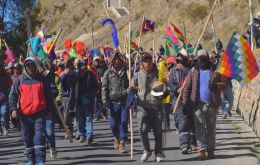
Bolivia's government has opted to wear down the social protests that have shaken the country for about six weeks, rather than resort to a hard line. President Rodrigo Paz promulgated a law regulating states of exception in early June, but has so far not ordered the deployment of the Armed Forces to clear the roads, leaning instead toward exhausting the protesters and dismantling the movements demanding his resignation through the detention or persuasion of their leaders. “The new Bolivia will be built with dialogue, without giving way to violence,” said presidential spokesman José Luis Gálvez.
-
Monday, June 15th 2026 - 16:04 UTC
Peru's electoral board reiterates it will proclaim the president-elect by mid-July
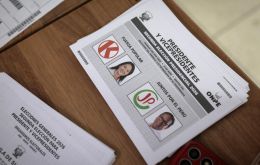
Peru's National Jury of Elections (JNE) reiterated on Monday that the maximum deadline to officially proclaim the new president-elect is mid-July, while vote recounts proceed in three overseas cities over observations to the tally sheets. The body's spokeswoman, Grecia Rentería, said at a press conference that the proclamation would come about two weeks before the swearing-in, set for July 28, with the start of the 2026-2031 term of government.