MercoPress. South Atlantic News Agency
Latin America
-
Saturday, July 11th 2026 - 07:00 UTC
Four held in Ecuador over migrant-smuggling network to the United States
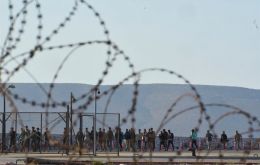
Ecuador's police arrested four people, including a serving officer and a former immigration-control official, accused of belonging to an alleged network dedicated to smuggling migrants to the United States, the institution said. The arrests were made in simultaneous operations in the provinces of Pichincha, Tungurahua, Carchi and Santa Elena.
-
Friday, July 10th 2026 - 18:37 UTC
Colombia's president-elect asks Congress to be sworn in at a military base

Colombia's president-elect, Abelardo de la Espriella, has asked Congress to assess the legal feasibility of moving his inauguration ceremony, set for August 7, from Bogotá to a military garrison, in a proposal without recent precedent that will be left to the incoming legislature to decide.
-
Friday, July 10th 2026 - 18:27 UTC
Milei plans regional tour seeking investment, with a Bolsonaro visit that irks Lula
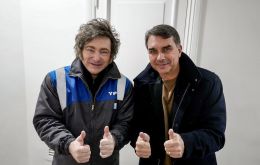
Argentine President Javier Milei announced a busy international schedule for the coming weeks, with trips to Brazil, Peru, Colombia and Ecuador, which he presented as part of an outward-looking strategy aimed at attracting trade and investment. The itinerary includes a gesture toward the Brazilian opposition that is likely to cause discomfort for the government of President Luiz Inácio Lula da Silva.
-
Thursday, July 9th 2026 - 04:13 UTC
Cuba details business reforms opening private firms to foreign investment
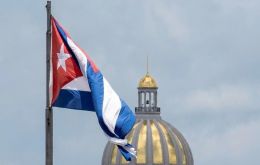
The Cuban government on Wednesday set out the scope of measures on the management model for its state and private economic actors, part of a package of 176 reforms approved in June by the National Assembly with the stated aim of liberalizing and decentralizing the island's economy.
-
Tuesday, July 7th 2026 - 23:00 UTC
Colombia's president-elect suspends transition, accuses Petro of attempting a coup
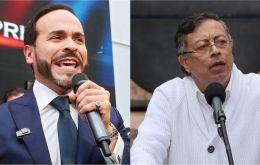
Colombia's president-elect, Abelardo de la Espriella, froze the transition process with the outgoing government of Gustavo Petro on Tuesday and accused the president of attempting a coup, in a sharp escalation exactly one month before the handover of power, set for August 7.
-
Monday, July 6th 2026 - 20:14 UTC
Petro rejects Colombia election result, backs legal bid to annul De la Espriella win
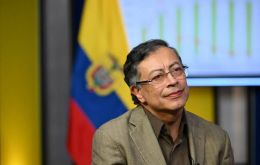
Colombia's outgoing president, Gustavo Petro, reiterated on Sunday that he does not recognize the legitimacy of the incoming government of Abelardo de la Espriella, insisting that the June 21 presidential runoff was marked by fraud — an accusation he has not backed with public evidence and which is contradicted by international observers and the official vote count itself.
-
Monday, July 6th 2026 - 02:08 UTC
Orsi praises Fujimori's 'exemplary perseverance' in a cross-ideological call
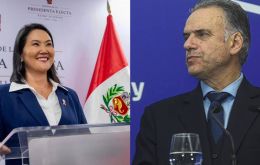
Uruguay's left-wing President Yamandú Orsi congratulated Peru's right-wing president-elect, Keiko Fujimori, by phone on her runoff victory, in a contact that bridged the ideological divide in a region where most governments have shifted to the right. The conversation, released by the Office of Peru's President-Elect, came amid the government transition in the Andean country, with the handover set for July 28.
-
Sunday, July 5th 2026 - 20:51 UTC
Argentina sends fresh rescue brigades to Venezuela as most foreign teams begin to withdraw
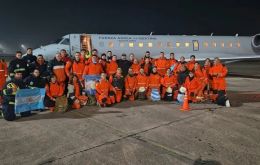
A new contingent of Argentine rescue workers left for Venezuela on Sunday to relieve the search-and-rescue teams deployed after the June 24 twin earthquake, which according to the official toll has left 2,954 dead and more than 16,500 injured. The dispatch coincides with the start of the withdrawal of most international missions, at the point when operations are shifting away from rescuing survivors toward the recovery phase.
-
Saturday, July 4th 2026 - 07:26 UTC
Petro says he asked Trump to lift his OFAC sanctions in a phone call
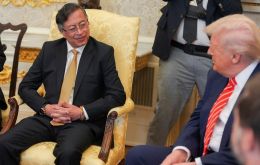
Colombian President Gustavo Petro said he held a phone conversation on Friday with his US counterpart, Donald Trump, in which he asked for support in removing the sanctions on him and his family under the Office of Foreign Assets Control (OFAC) list, known as the Clinton List. According to the Colombian leader and a statement from the Presidency, Trump replied that he “will do his best” to review the case. The White House did not officially confirm the call.
-
Thursday, July 2nd 2026 - 15:32 UTC
A multinational rescue frees Hernán, trapped eight days under Venezuela's quake rubble
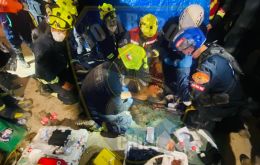
A 43-year-old Venezuelan security guard, Hernán Gil, was rescued alive on Thursday after eight days trapped under the rubble of a building that collapsed in Catia La Mar, in La Guaira state, during the twin earthquake that struck the country on June 24. The Costa Rican Red Cross, which took part in the operation, confirmed the rescue, considered one of the most complex and prolonged of the disaster, which has left at least 2,295 dead and more than 11,000 injured, according to the official toll.

