MercoPress. South Atlantic News Agency
Mercosur
-
Monday, July 16th 2012 - 07:05 UTC
European Parliament begins fact-finding mission in Paraguay
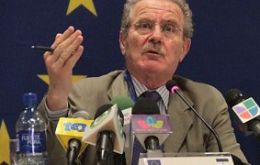
A delegation from the European parliament begins this Monday an in-situ data collecting mission in Paraguay following the situation triggered a month ago when then President Fernando Lugo was impeached and removed from office, but which has caused the new regime a certain freezing of international links.
-
Monday, July 16th 2012 - 03:05 UTC
Mercosur reduced to a group “of bear-hugging and kissing compañeros”
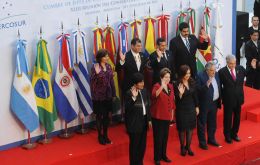
The influential British business and politics magazine The Economist anticipates that following the latest decisions by Mercosur, the South American group has little if any future. The Economist argues that the mounting protectionism and the rule-breaking admission of Venezuela have fatally undermined a once-promising trade block.
-
Friday, July 13th 2012 - 23:34 UTC
Paraguayan presidential hopeful said the country should in no way abandon Mercosur
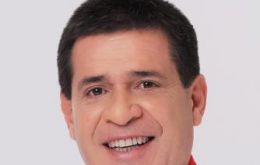
Horacio Cartes a presidential hopeful from the Paraguayan hegemonic Partido Colorado said that exiting Mercosur would only cause the closure of industries and the loss of thousands of jobs in the country.
-
Friday, July 13th 2012 - 07:01 UTC
Brazil calls OAS to consider Mercosur and Unasur statements on Paraguay
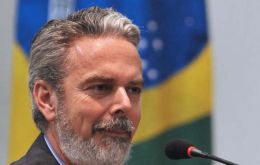
Brazil considers “important” that the Organization of American States, OAS, takes into consideration the decisions from Mercosur and Unasur relative to the suspension of Paraguay from the two regional groupings.
-
Thursday, July 12th 2012 - 07:11 UTC
Argentina displaces Venezuela as holder of the region’s highest inflation title

Venezuela’s president Hugo Chavez running for re-election received a considerable boost for his campaign from his peer and political associate President Cristina Fernandez when it was revealed that Argentine inflation in the first half was over two digits.
-
Thursday, July 12th 2012 - 07:05 UTC
Washington says Paraguay should not be suspended from OAS and calls for regional unity

Paraguay should not be suspended from the Organization of American States, OAS, despite the removal of President Fernando Lugo, said on Wednesday Roberta Jacobson, Assistant Secretary of State for Western Hemisphere Affairs.
-
Thursday, July 12th 2012 - 02:03 UTC
Paraguayan Supreme Court receives unconstitutional appeal on Lugo’s removal
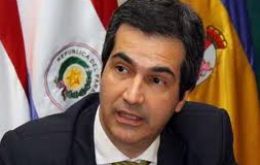
The Paraguayan Supreme Court accepted on Wednesday an unconstitutional appeal against the removal of President Fernando Lugo which requests the annulment of the political impeachment undertaken and voted by Congress.
-
Wednesday, July 11th 2012 - 19:24 UTC
With Venezuela, Mercosur will extend from Patagonia to the Caribbean
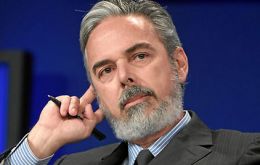
Brazilian Foreign minister Antonio Patriota again supported the access of Venezuela as full member of Mercosur and the suspension of Paraguay, which he described as a clear message for all those possible “anti-democratic adventures”.
-
Wednesday, July 11th 2012 - 07:17 UTC
Defence of Argentine sovereignty over Malvinas has become “a regional issue”

The Argentine ambassador in London Alicia Castro said that South America has reached such a degree of unity that it is possible to think “on the defence of Argentine sovereignty over the Malvinas in regional terms”.
-
Wednesday, July 11th 2012 - 01:20 UTC
Uruguay president and vice-president clash over Venezuela’s Mercosur admission
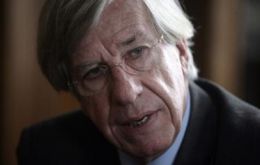
Uruguayan Vice president Danilo Astori openly clashed with President Jose Mujica over the recent decision to incorporate Venezuela to Mercosur arguing it was “the deepest institutional injury” suffered by the block and questioned the concept that the juridical “has to be at the service of the political”.