MercoPress. South Atlantic News Agency
Mercosur
-
Wednesday, June 27th 2012 - 08:20 UTC
Paraguay “back to business as usual” but with a shadow “legitimate” government
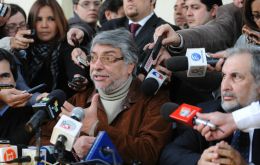
Ousted Paraguayan president Fernando Lugo announced on Tuesday that he will not be attending the coming Mercosur summit scheduled to take place this Thursday and Friday in Mendoza.
-
Tuesday, June 26th 2012 - 01:36 UTC
Uruguay will not support any kind of economic sanctions on Paraguay
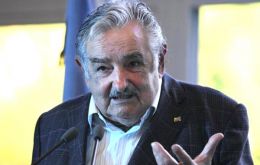
Uruguayan president Jose Mujica rejected on Monday the possibility of applying economic sanctions on Paraguay following on the “parliamentary coup” as was announced by Venezuela which decided to cut the supply of subsidized oil.
-
Tuesday, June 26th 2012 - 01:33 UTC
Mercosur and Unasur leaders to hold a joint discussion next Friday in Mendoza
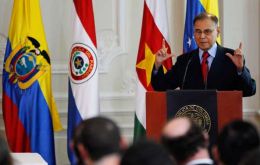
Chilean president Sebastián Piñera revealed that next Friday during the regular Mercosur summit, the leaders of Unasur member states are scheduled to hold an extraordinary meeting to jointly address the political crisis in Paraguay triggered by the removal of President Fernando Lugo.
-
Tuesday, June 26th 2012 - 00:40 UTC
Paraguayan Electoral tribunal confirms Franco president and the electoral calendar
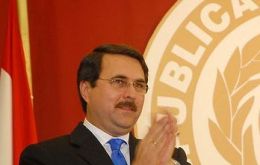
The Paraguayan Supreme Electoral tribunal said on Monday that President Federico Franco “must complete” the current mandate that concludes August 2013 and discarded any possibility of advancing the national elections scheduled for April the same year.
-
Monday, June 25th 2012 - 07:12 UTC
Paraguay suspended from Mercosur summit which begins Monday
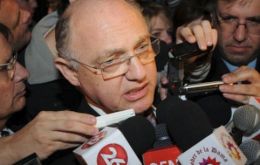
Mercosur countries decided on Sunday “to suspend with immediate effect” the participation of Paraguay in the coming Mercosur summit and preparatory meetings set to begin Monday until next Friday in Mendoza because of the removal of President Fernando Lugo.
-
Monday, June 25th 2012 - 07:07 UTC
Wen Jiabao confirms Mercosur interest; Uruguay’s deep sea port blueprints to be sent to Beijing
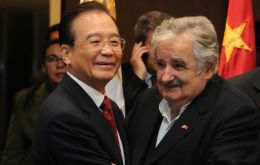
A memorandum of understanding with Mercosur and a deep sea port to the east of Uruguay were two of the main issues addressed by visiting Chinese PM Wen Jiabao with President Jose Mujica revealed the Executive Deputy Secretary.
-
Monday, June 25th 2012 - 06:47 UTC
Lugo will attend Mercosur summit; Unasur chair transfer to be advanced
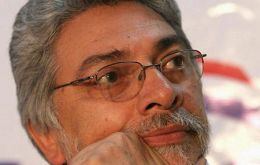
Paraguayan removed president Fernando Lugo denied legitimacy to the administration of his successor Federico Franco and announced he will be travelling next week to Mendoza for the Mercosur meeting of presidents scheduled for next June 29.
-
Monday, June 25th 2012 - 06:25 UTC
Uruguay recommends new presidential elections for the Paraguayan crisis
Uruguay called for strict respect of the Mercosur and Unasur democratic clauses and said the best way out of the current political crisis in Paraguay was to hold presidential elections as soon as possible.
-
Monday, June 25th 2012 - 06:19 UTC
Brazil says it is “impossible” to force the Paraguayan congress to review the removal of Lugo
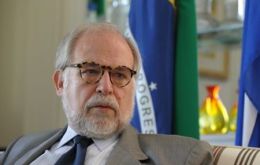
Brazil will wait for the Paraguayan situation caused by the removal of Fernando Lugo “to decant” before assessing the most appropriate measures to address the “rupture of democratic order” in the country, according to Planalto sources.
-
Sunday, June 24th 2012 - 02:27 UTC
Franco: “no coup, a change of leadership”; Germany admits new government
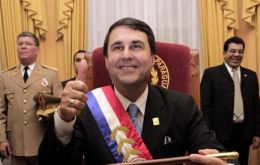
“There is no coup here,” assured the new president of Paraguay Federico Franco on Saturday, who acted confidently before the international press following the ousting of Fernando Lugo on Friday.