MercoPress. South Atlantic News Agency
Mercosur
-
Tuesday, January 10th 2012 - 05:57 UTC
Chilean per capita meat consumption has doubled in the last two decades
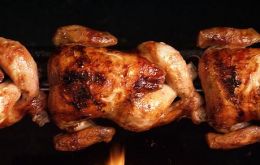
In the last two decades Chileans consumption of different meats has doubled according to data from the Agriculture Policy and Studies Office, ODEPA, released this week. From the 39.6 kilos of 1991, meats consumption soared in 2011 to 84.2 kilos on average, and not taking into account fish and sea food.
-
Tuesday, January 10th 2012 - 05:54 UTC
FMD in Paraguay: 168 livestock sacrificed and major investigation into previous outbreak
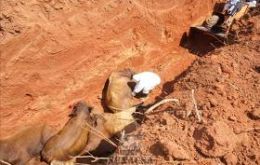
Paraguay veterinary services concluded Monday midday the termination of 168 livestock mostly belonging to a farm where an outbreak of foot and mouth disease was confirmed 2 January in the county of San Pedro to the centre north of the country.
-
Tuesday, January 10th 2012 - 05:53 UTC
Chavez and Ahmadinejad mock 'US imperialism' and joke about having an atomic bomb
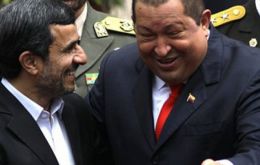
Iranian President Mahmoud Ahmadinejad and Venezuela's Hugo Chávez lavished each other with praise on Monday, mocked US disapproval and joked about having an atomic bomb at their disposal.
-
Tuesday, January 10th 2012 - 05:51 UTC
With October election in mind Chavez back on the air with “Alo Presidente” program
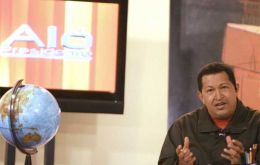
Venezuelan President Hugo Chavez resumed on Sunday his weekly television and radio broadcast after a seven-month pause. Chavez's program, Alo Presidente, had been halted while he was receiving treatment for cancer.
-
Tuesday, January 10th 2012 - 05:49 UTC
Bush fires in Patagonian Chubut out of control; several towns evacuated
Authorities from the Argentine Patagonia province of Chubut issued a red alert on the fires that affect forest areas and decided to evacuate El Hoyo town, while 40 Chilean fire-fighters were expected to arrive to the mountain region to help put out the bush fires.
-
Tuesday, January 10th 2012 - 05:48 UTC
Brazil to build five new dams in the Amazon but with “oil-rigs” technology
Brazilian president Dilma Rousseff signed the decree for the construction of five new hydroelectric dams in the Amazon basin and readies for a renewed attack from domestic and international environmentalists against the project.
-
Tuesday, January 10th 2012 - 05:46 UTC
“Clarin rebelled against reality” when Cristina Fernandez diagnosis was “false positive”

Faced with media controversy following Argentine President Cristina Fernandez thyroid cancer surgery that resulted in a “false positive” case, that is minor benign non cancerous tumours in spite of the original diagnosis, the Argentine Executive Chief of Staff Oscar Parrilli revealed that the president had ordered him to “tell it all” regarding the 22 December operation.
-
Monday, January 9th 2012 - 06:57 UTC
PM Cameron discards any Falklands’ sovereignty negotiations with Argentina

British Prime Minister David Cameron discarded any Falkland Islands sovereignty negotiations with Argentina and said that his government is permanently vigilant about the protection of the Islands and their defence.
-
Monday, January 9th 2012 - 06:55 UTC
Chile, Venezuela, Cuba hold CELAC ministerial meeting in Santiago

Foreign Affairs ministers from Chile, Cuba and Venezuela begin discussions Monday in Santiago to advance in the implementation of the recently created Community of Latin American and Caribbean States, Celac.
-
Monday, January 9th 2012 - 06:51 UTC
Iran’s Ahmadinejad begins Latam tour in Venezuela: meeting with Chavez

Venezuelan President Hugo Chavez will welcome his Iranian counterpart Mahmoud Ahmadinejad on Monday on his first stop of a five-nation tour of Latin America, state media reported.