MercoPress. South Atlantic News Agency
Mercosur
-
Thursday, November 17th 2011 - 17:41 UTC
G20 president says Uruguay is no ‘fiscal haven’ and praises transparency commitment
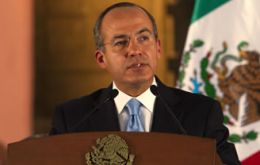
Uruguay received a huge political boost from Mexico (the same it was denied from its Mercosur partners under influence from Argentina) in its dispute with the recent G20 summit which through spokesperson French president Nicholas Sarkozy described Uruguay as a ‘fiscal haven’.
-
Thursday, November 17th 2011 - 07:08 UTC
Mercosur is not moving but Uruguay “will not stay put licking its wounds”

Uruguayan president Jose Mujica said that Mercosur “is not moving forward or backwards” but is certainly working much better than the European Union where old experienced nations “made a mess of it”. Nevertheless, Uruguay will not stay put “licking its wounds”, it will look for other trade links.
-
Monday, November 14th 2011 - 20:18 UTC
Mercosur/EU confident of a first proposals exchange in mid 2012
The seventh round of Mercosur/EU trade negotiations held in Montevideo ended with “progress in some areas at regulation and norms levels” and with the commitment of exchanging proposals in mid 2012, according to Joao Aguiar Machado head of the EU team.
-
Thursday, November 10th 2011 - 06:31 UTC
Uruguay advised to lower Mercosur expectations and ‘follow your own interests’

Mercosur expectations must be lowered and made to prosper in energy integration, infrastructure and trade, said a Uruguayan leading economist adding that without sounding dramatic “we must follow our interests”.
-
Monday, November 7th 2011 - 05:13 UTC
Uruguayan opposition accuses Argentina of having Sarkozy label the country a “tax haven”
Opposition leaders in Uruguay accused Argentina of “exerting pressure inside the G20 and the Organisation for Economic Co-operation and Development (OECD)” so the neighbouring country would be labelled a “tax haven,” the Montevideo media said.
-
Wednesday, November 2nd 2011 - 04:44 UTC
Brazil heading for another record trade surplus close to 30 billion dollars

Brazil posted a trade surplus of 2.355 billion dollars in October, beating forecasts for a third straight month, outpacing imports in the final days of the month following a recovery in global commodities prices.
-
Tuesday, November 1st 2011 - 06:01 UTC
IberoAmerican summit a “failure”: Latam has its own voice in world affairs

Spanish media criticized harshly the latest Ibero-American summit in Paraguay last Saturday arguing that the non attendance of 11 of 22 leaders of the region can only be described as a failure of Madrid’s diplomacy and disrespect for the Spanish representatives.
-
Tuesday, November 1st 2011 - 05:10 UTC
The Euro crisis plays in favour of advancing EU/Mercosur trade negotiations

The worsening of the world crisis is a factor that plays in favour of advancing negotiations for the European Union and Mercosur cooperation agreement and strategic association, said Socialist Euro Deputy Luis Yañez from Spain currently visiting Montevideo.
-
Tuesday, October 25th 2011 - 19:45 UTC
Crises in the US and Spain have Uruguayans returning in growing numbers

Uruguayan expatriates are returning at an average of 350 per month which is three times the 2010 rate, but his only refers to those that have formally requested advice and assistance from the country’s Foreign Affairs ‘Return and Welcome Office’.
-
Monday, October 24th 2011 - 02:58 UTC
CFK manages re-election with the widest margin since restoration of democracy
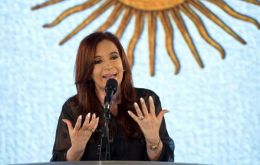
President Cristina Fernandez was re-elected in a landslide Sunday, winning with the widest victory margin in Argentina since the recovery of democracy in 1983. At midnight and with 58% of polling stations reporting CFK had 53% of the vote with runner up Socialist Hermes Binner collecting 17.7%.