MercoPress. South Atlantic News Agency
Politics
-
Friday, December 6th 2019 - 09:10 UTC
Argentina: Surveys indicate 40.8% of the population lives below the poverty line
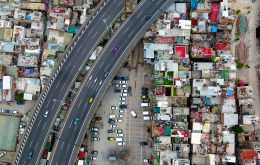
A third of Argentine homes and 40.8% of people were below the poverty line at the end of the third quarter according to the Social Debt Observatory from the Argentine Catholic University, UCA, which regularly releases the data.
-
Friday, December 6th 2019 - 09:05 UTC
Argentine congress plans to have 2020 Budget Bill approved before end of the year

The recently sworn-in Argentine Lower House of Congress expects to sanction the Budget 2020 Bill during a special session next 18 December, giving the government of president-elect Alberto Fernandez sufficient margin to address the current situation and put Argentina back on track with an idea of revenue and commitments.
-
Friday, December 6th 2019 - 08:55 UTC
French general strike against planned reform of pensions enters second day

A strike that crippled public transport and closed schools across France entered a second day on Friday, with trade unions saying they planned to keep going until President Emmanuel Macron backs down from a planned reform of pensions.
-
Friday, December 6th 2019 - 08:44 UTC
OAS confirms the Bolivian presidential election was rigged: “overwhelming evidence of malicious operations”

The Americas regional forum, Organization of American States, OAS, published details of ”deliberate“ and ”malicious” steps to rig Bolivia's October election in favor of then-President Evo Morales, who has resigned and left the country in the midst of a political uprising.
-
Thursday, December 5th 2019 - 10:58 UTC
Discovery of WW1 German Battlecruiser SMS Scharnhorst in Falklands waters

The Falklands Maritime Heritage Trust is pleased to announce that the wreck of SMS Scharnhorst has been located off the Falkland Islands. The Scharnhorst, an armoured battle-cruiser and the flagship of Admiral Maximilian Graf von Spee’s East Asia Squadron, was sunk on 8 December 1914 during the Battle of the Falkland Islands, a crucial naval battle in the early days of the First World War.
-
Thursday, December 5th 2019 - 09:59 UTC
Suddenly out of the deep sea gloom emerged the mighty Scharnhorst with her great guns poking in every direction
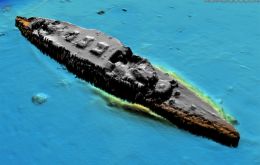
Mensun Bound, the leader of the mission which discovered the flagship of Admiral Graf von Spee's squadron, was born in the Falkland Islands and since a child has been obsessed with the sea, its mysteries, myths and the great Battle of the Falkland Islands, a decisive naval action at the start of the Great War of 1914.
-
Thursday, December 5th 2019 - 09:55 UTC
Trump's tariffs puts Brazil's Bolsonaro and Argentine president elect Fernandez in the same boat

The South American four-nation trade bloc Mercosur began a tense meeting on Wednesday reeling from US steel and aluminium tariffs and a spat between its two biggest members. Foreign ministers of Brazil, Argentina, Paraguay and Uruguay opened the two-day meeting in the southern Brazilian town of Bento Goncalves, paving the way for a head of state summit on Thursday.
-
Thursday, December 5th 2019 - 09:54 UTC
Argentine next economic team seems to be closely inspired by Stiglitz' policies

Argentina's incoming cabinet has already been chosen and will be revealed on Friday, President-elect Alberto Fernandez said, while his team confirmed a few major picks, including the incoming foreign minister, chief of staff and some names from the economic team.
-
Thursday, December 5th 2019 - 09:21 UTC
Trump leaves Nato summit following footage showing several world leaders making remarks about the president

US President Donald Trump has left a major Nato summit early following video footage which appeared to show world leaders poking fun of him. Footage from an event on Tuesday night emerged that showed several world leaders making remarks about Trump.
-
Thursday, December 5th 2019 - 09:18 UTC
LATAM/Delta code-sharing opens connectivity to 74 destinations in US and Canada and 51 in South America

Codeshare agreements signed this week by three LATAM Airlines Group affiliates with new partner Delta Air Lines aim to improve connectivity between the Americas. The agreements were signed December 2 with LATAM affiliates in Peru, Colombia and Ecuador and are due to start in the first quarter of 2020, subject to regulatory approval.