MercoPress. South Atlantic News Agency
Politics
-
Wednesday, September 2nd 2026 - 07:42 UTC
A conciliatory chancellor calls to ‘refresh’ UK’s special relationship with the US
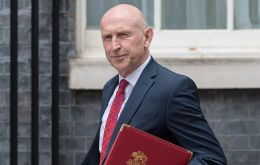
Chancellor of the Exchequer John Healey in an interview with The Times, tried to cool the strong exchange caused by British leaders’ reaction to White House statements on a possible review to US neutrality policy towards the Falkland Islands sovereignty, which could imply serious consequences.
-
Tuesday, September 1st 2026 - 17:28 UTC
Milei announces a national address on Thursday over the Falklands claim
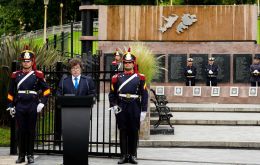
Argentine President Javier Milei announced on Tuesday that he will address the nation on Thursday evening to set out the state of the sovereignty claim over the Falklands, a day after US President Donald Trump said he was reviewing his country's position on the archipelago.
-
Tuesday, September 1st 2026 - 17:24 UTC
Falklands/Chile second shipping link, decisive support from Punta Arenas

To support a second shipping link between the Falkland Islands and Chile, the Municipality of Punta Arenas is hosting a “Business Showroom” on Monday 28th and Tuesday 29th September 2026.
-
Tuesday, September 1st 2026 - 11:26 UTC
Trump says he reviews “every position” when asked about Falklands sovereignty

US President Donald Trump replied on Monday in the Oval Office, when asked whether his government was reviewing its position of neutrality on the Falklands: “I always review every position. That's just one of many.” It is the first time he has publicly addressed the sovereignty dispute between the United Kingdom and Argentina, though his answer committed to nothing.
-
Tuesday, September 1st 2026 - 10:32 UTC
Uruguay and Argentina seek to stop the green hydrogen plant repeating the pulp mill conflict
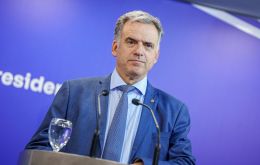
The governments of Uruguay and Argentina are trying to contain tensions surrounding the green hydrogen and synthetic fuels plant that HIF Global plans to build in the Uruguayan department of Paysandú, on the Uruguay river, after a statement by President Yamandú Orsi drew three consecutive denials from the Argentine side.
-
Tuesday, September 1st 2026 - 09:55 UTC
A Pentagon memo already floated in April using the Falklands as leverage over London
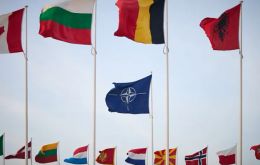
Senior US Defense Department officials are considering a review of Washington's position on the Falklands as one of several measures to press the United Kingdom to meet the 5% of gross domestic product military spending target agreed at NATO, the British newspaper The Telegraph reported, citing a senior US official.
-
Tuesday, September 1st 2026 - 09:49 UTC
Uruguay's central bank marks five years without intervening in the currency market
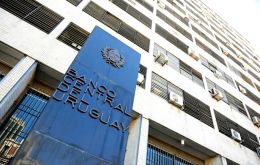
The Central Bank of Uruguay completed five years on Monday without intervening in the foreign exchange market. Its last operation was a purchase of 31.2 million dollars in 2021. Its president, Guillermo Tolosa, described the milestone as of “enormous” importance and said the country is going through a period of “absolutely free floating of the currency”.
-
Tuesday, September 1st 2026 - 09:23 UTC
The Venezuelan oil concession goes to Alejandro Betancourt's firm, under investigation in Europe

The White House on Monday identified the company that will operate seventeen Venezuelan oil fields for a century in partnership with the US government: North American Blue Energy Partners, owned by Venezuelan businessman Alejandro Betancourt, who is under investigation in Switzerland and Spain over his alleged involvement in a scheme to launder funds from the state oil company PDVSA. There is no conviction against him.
-
Monday, August 31st 2026 - 22:13 UTC
Brazil: Flávio Bolsonaro promises 500,000 prison places inspired by the Salvadoran model
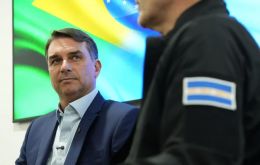
Senator Flávio Bolsonaro, the Liberal Party's presidential candidate and Luiz Inácio Lula da Silva's main rival in October's elections, met on Sunday in São Paulo with El Salvador's justice and public security minister, Gustavo Villatoro, and announced he will incorporate into his programme measures inspired by President Nayib Bukele's security policy.
-
Monday, August 31st 2026 - 08:42 UTC
PM Burnham addresses cost of living and young people priorities in first visit to Northern Ireland
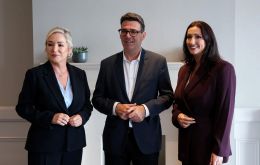
Prime Minister Andy Burnham arrived Thursday in Northern Ireland as part of his summer tour of the United Kingdom, to discuss cost of living, young people priorities and an overall growth agenda. In Northern Ireland for the first time since becoming Prime Minister, Andy Burnham met with the First Minister, Michelle O’Neill and deputy First Minister Emma Little-Pengelly, and later with all five main parties.