MercoPress. South Atlantic News Agency
Politics
-
Monday, August 24th 2026 - 06:53 UTC
Two newly detained men testify in the case over the shooting of the Bolivian lawyer
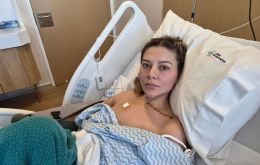
Two men held as part of the investigation into the shooting of Bolivian lawyer Nadia Beller gave statements to prosecutors in Santa Cruz de la Sierra on Sunday. One is accused of supplying the weapon used in the ambush; the other, a Colombian national identified as a possible gunman, turned himself in after learning he was being sought.
-
Sunday, August 23rd 2026 - 22:41 UTC
Argentina votes this week on the reform barring the central bank from funding the Treasury
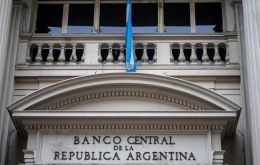
Argentina's Chamber of Deputies will on Wednesday debate the reform of the central bank's charter promoted by Javier Milei's government, which bars the monetary authority from financing the fiscal deficit through money creation and restores preservation of the value of the currency as its sole objective.
-
Sunday, August 23rd 2026 - 22:32 UTC
The Mercosur-Singapore trade agreement reaches Argentina's Congress
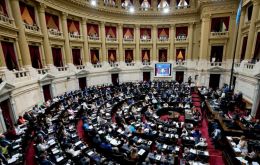
Argentina's Chamber of Deputies will on Wednesday take up ratification of the free trade agreement between Mercosur and Singapore, signed in December 2023 and still awaiting parliamentary approval. It is the first trade treaty the bloc has concluded with a Southeast Asian country.
-
Saturday, August 22nd 2026 - 08:40 UTC
Colombia's government objects to the law barring lower requirements for senior posts
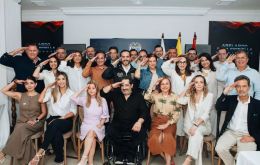
Colombian President Abelardo de la Espriella this week objected to the first bill sent to him for signature since he took office on August 7: legislation prohibiting any reduction in the minimum education and experience requirements for senior positions in the public sector and in companies with state participation.
-
Saturday, August 22nd 2026 - 08:28 UTC
Progressive leaders gathered in Uruguay denounce US interference and acknowledge their own mistakes
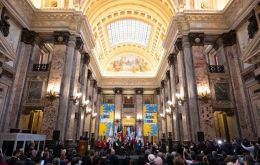
The opening session of the third Pan-American Congress, held on Friday at the Legislative Palace in Montevideo, combined criticism of United States policy towards Latin America with calls for self-criticism within progressive forces. More than 150 lawmakers, former presidents, ministers and political figures from fifteen countries are taking part, according to organisers.
-
Friday, August 21st 2026 - 22:41 UTC
Uruguay's president meets Kicillof and agrees to cooperate on food and scientific research
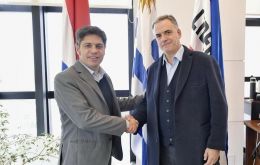
Uruguayan President Yamandú Orsi on Friday received the governor of Argentina's Buenos Aires province, Axel Kicillof, at the Torre Ejecutiva in Montevideo, where the two signed two cooperation agreements covering agrifood and scientific matters.
-
Friday, August 21st 2026 - 21:52 UTC
FIFA sanctions Argentina over the final's brawl and the Falklands banner

FIFA's Disciplinary Committee on Friday imposed financial and sporting sanctions on the Argentine Football Association and four members of its national squad over the confrontations at the end of the 2026 World Cup final and over breaches committed throughout the tournament, among them the display of a banner asserting a sovereignty claim over the Falklands.
-
Friday, August 21st 2026 - 10:12 UTC
Montevideo hosts a progressive congress after three consecutive electoral defeats in the region
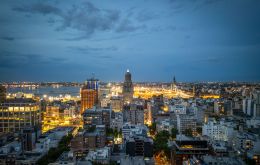
More than a hundred lawmakers, former presidents, ministers and political figures from fifteen countries across the Americas gather from Friday at Uruguay's Legislative Palace in Montevideo for the third Pan-American Congress, a parliamentary forum of progressive forces running until Sunday. Organisers put attendance at more than 150 participants.
-
Friday, August 21st 2026 - 10:10 UTC
Bolivian prosecutors open a second case against the consultant who advised Milei and Paz
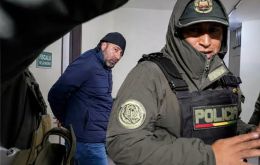
Prosecutors in La Paz have opened an investigation on their own initiative into alleged illicit enrichment by Argentine political consultant Fernando Cerimedo, who was charged this week in Santa Cruz with attempted femicide following the shooting of his former partner, lawyer Nadia Beller.
-
Friday, August 21st 2026 - 08:59 UTC
The prosecutor in the Maradona case says a crime occurred and the trial will not collapse
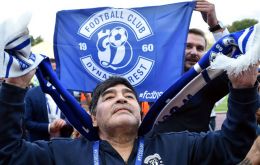
Deputy chief prosecutor for San Isidro Patricio Ferrari said on Thursday that the delivery of medical records belonging to Diego Armando Maradona's father, rather than the footballer's own, may constitute a criminal offence, and ruled out that the discovery will halt the trial over the star's death in November 2020.