MercoPress. South Atlantic News Agency
Politics
-
Friday, November 24th 2017 - 09:21 UTC
“Brexit is madness” says Gibraltar CM: instead of looking to the future it looks to the past
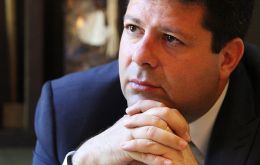
Gibraltar’s presence in an increasingly interconnected world means it will not be isolated as a result of Brexit, Chief Minister Fabian Picardo said on Spanish television, even as he described the UK’s withdrawal from the European Union as “madness”.
-
Friday, November 24th 2017 - 08:58 UTC
Argentine submarine crew families have been told their loved ones “are all dead”

Families of crew lost in the Argentine ARA San Juan submarine have been told their loved ones “are all dead” after an explosion on the day the vessel disappeared, according to reports. Family members claimed on Thursday they had already received phone calls from Navy officials telling them the entire crew had perished in a blast, believed to have taken place between 180m and 900m below the surface.
-
Friday, November 24th 2017 - 08:28 UTC
Falklands: next month Argentine families will know results of DNA tests at Darwin cemetery
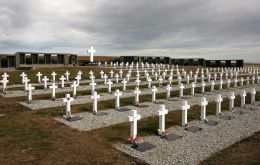
The humanitarian mission to identify the Argentine unknown soldiers fallen during the South Atlantic conflict and buried in the Falkland Islands Darwin cemetery is reaching its end, and many families will finally know, after 35 years, where the remains of their loved ones rest, according to the Buenos Aires media.
-
Thursday, November 23rd 2017 - 08:58 UTC
Hammond's budget anticipates worsening economic forecast caused by Brexit

Britain's Chancellor of the Exchequer has outlined cautious spending plans to a nation bracing for the shock of leaving the European Union, amid a stream of worsening of economic forecasts that hampered room for giveaways.
-
Thursday, November 23rd 2017 - 08:29 UTC
Missing submarine search returns to the point where the last contacts were made
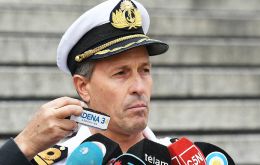
Ships and planes hunting for the missing Argentine submarine with 44 crew members will return to a previous search area after officials said Wednesday that a noise made a week ago in the South Atlantic could provide a clue to the vessel’s location.
-
Thursday, November 23rd 2017 - 08:19 UTC
Putin talks to Macri and sends a oceanographic vessel to help with the search

Russia has agreed to dispatch an oceanographic ship to Argentina in order to help with the search for the missing Argentine submarine, ARA San Juan, the Argentine Foreign Ministry said on Wednesday following a telephone conversation between Russian and Argentine presidents Vladimir Putin and Mauricio Macri.
-
Thursday, November 23rd 2017 - 08:10 UTC
EU still not satisfied with £40bn Brexit “divorce bill”, suggested by PM May government

Despite UK prime minister Theresa May reportedly doubling her Brexit ‘divorce bill’ offer, European Union (EU) diplomats have already indicated they are still not satisfied and could demand more cash for talks to progress.
-
Thursday, November 23rd 2017 - 07:38 UTC
Falklands' newly elected Legislative Assembly members receive parliamentary training

A delegation from the Commonwealth Parliamentary Association, CPA, is currently visiting the Falkland Islands to provide Parliamentary training to the newly elected Legislative Assembly as part of a joint program agreed ahead of the election.
-
Wednesday, November 22nd 2017 - 20:24 UTC
Three former football officials are banned for life by FIFA’s Ethics Committee

Julio Rocha, Rafael Esquivel and Richard Lai had all pleaded guilty to bribery and corruption charges brought by the United States Department of Justice in its massive international criminal probe into FIFA.
-
Wednesday, November 22nd 2017 - 17:47 UTC
Air China has “temporarily suspended” flights to Pyongyang
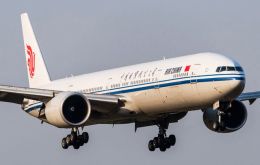
Beijing-owned Air China airline has ended flights to the capital of North Korea Pyongyang, due to a lack of passenger demand. Flights were “temporarily suspended due to unsatisfactory business operations,” said an Air China employee.