MercoPress. South Atlantic News Agency
Politics
-
Monday, March 6th 2017 - 10:37 UTC
Fed says rate hike in March would be “appropriate” if US economy evolves as expected
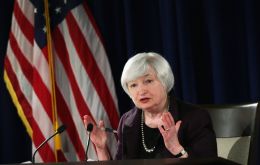
Federal Reserve chair Janet L. Yellen said a March rate hike would be “appropriate” if the economy continues to evolve as expected, signaling that the central bank will likely raise its benchmark interest rate sooner than many economists and investors had expected just a few weeks ago.
-
Monday, March 6th 2017 - 08:52 UTC
Russia displaces Saudi Arabia as world's largest supplier of crude oil
Russia has taken over from Saudi Arabia as the world’s largest supplier of crude oil, according to the Riyadh based Joint Organizations' Data Initiative. Russia pumped 10.49 million barrels a day in December, with Saudi Arabia just behind at 10.46 and the US third at 8.9 million barrels. Iraq came up in fourth place with 5 million barrels.
-
Monday, March 6th 2017 - 08:43 UTC
Theresa May sends strong warnings to Scottish government: “UK will not drift apart in post-Brexit”
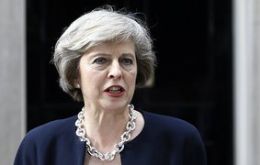
United Kingdom Prime Minister Theresa May has warned the Scottish Government that control over policy areas such as fishing and agriculture might not come to Holyrood in the wake of Brexit. PM May said while no powers will be taken away from Scottish ministers as a result of the decision to leave the European Union, responsibilities that transfer back to Britain from Brussels “must sit at the right level to ensure our United Kingdom can operate effectively”.
-
Monday, March 6th 2017 - 08:33 UTC
If no post-Brexit deal is reached, 'UK can leave without paying a penny', says Lords' report
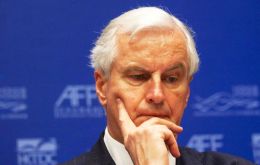
Britain can legally walk away from the European Union without paying a penny if there is no post-Brexit agreement, a House of Lords inquiry has concluded. The Lords EU Financial Affairs Sub Committee said the UK would be in a “strong” legal position if the two-year Article 50 withdrawal negotiations ended without a deal.
-
Monday, March 6th 2017 - 08:19 UTC
Chancellor warns EU that UK will “fight back” if it does not reach a Brexit deal it wants
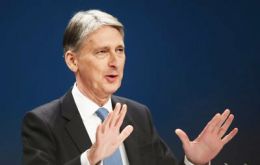
Chancellor Philip Hammond has warned the EU that Britain will “fight back” and not “slink off like a wounded animal” if it does not get the Brexit deal it wants. In some of the toughest talking yet ahead of the UK triggering the Article 50 negotiations on terms of withdrawal, the Chancellor said Britain would “do whatever we need to do” to be competitive in the event of leaving the EU without a trade agreement.
-
Saturday, March 4th 2017 - 11:47 UTC
“There are no secret flights” between Falklands and Brazil, says Ambassador Kent
There are no secret flights between Falklands and Brazil, and any landings which have occurred are because of medical or mechanical emergencies, said UK ambassador in Argentina Mark Kent, in fluent Spanish, currently visiting the province of Mendoza on official business and for the grape harvest and wine festival.
-
Saturday, March 4th 2017 - 11:16 UTC
Identification of soldiers remains buried in Falklands has started, says Argentina

The Argentine Justice ministry's Human Rights and Cultural Pluralism Desk, announced on Friday that the identification process of the remains of the “Argentine heroes” buried in the Falkland Islands Darwin cemetery has started, and is based on the “accord signed between Argentina and the UK”.
-
Friday, March 3rd 2017 - 13:19 UTC
Brazil investigating if RAF flights to the Falklands landed in the country
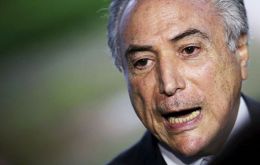
The Brazilian government announced it had opened an investigation among miltiary institutions regarding Royal Air Force landings in Brazilian airports, while making flights between Britain and the Falkland/Malvinas Islands.
-
Friday, March 3rd 2017 - 13:15 UTC
Firms less optimistic waiting for Trump´s fiscal policies, says Fed´s Beige Book
The U.S. economy expanded at a modest-to-moderate pace from early January through mid-February, the Federal Reserve said on Wednesday, although firms were less optimistic amid some uncertainty about the Trump administration's fiscal policies.
-
Friday, March 3rd 2017 - 12:48 UTC
Trump comes out strongly in support of Attorney General Sessions accused of misleading Congress
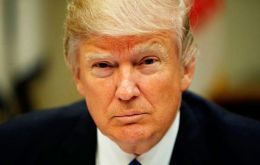
President Donald Trump came out strongly in support of Attorney General Jeff Sessions on Thursday, releasing a statement saying Sessions did not make any misleading statements under oath during his confirmation hearings, but that he could have been more accurate in his responses to lawmakers.