MercoPress. South Atlantic News Agency
Politics
-
Thursday, March 5th 2015 - 06:23 UTC
UK/Latam links have seen 36% rise in trade and investment, says minister
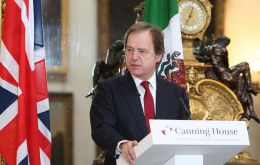
Foreign Office minister Hugo Swire underlined the growing links of the United Kingdom with Latin America during the state visit of president Enrique Peña Nieto from Mexico, a country with which he feels a close affinity, and is 'integral to the success of the UK”.
-
Wednesday, March 4th 2015 - 22:14 UTC
Argentina/Chile celebrate Tierra del Fuego mines-free; Rossi claims UK impedes mine-clearance in Falklands
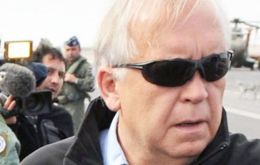
Argentina and Chile defense ministers, Agustín Rossi and Jorge Burgos, attended this week a historic ceremony in which they signed a document declaring Tierra del Fuego free of anti-personal mines. During the meeting minister Rossi blamed the UK for not allowing Argentina to clear the mines in the Falklands/Malvinas Islands.
-
Wednesday, March 4th 2015 - 06:17 UTC
Argentine Justices call for an end to impunity and to disputes among government branches
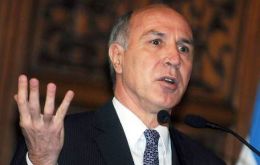
Argentina's Supreme Court opened on Tuesday a new term with the head Justice Ricardo Lorenzetti delivering a very much awaited speech calling for 'an end to impunity' and a strong reply to harsh comments by President Cristina Fernandez on Sunday, renewing her administration’s criticism against the judicial system.
-
Wednesday, March 4th 2015 - 06:14 UTC
Brazil's currency at its weakest since September 2004...and sliding
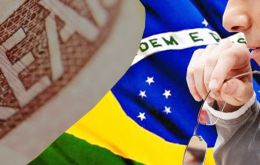
The Brazilian Real reached on Tuesday its weakest level against the dollar in more than 10 years, amid concern the country’s political and economic situation is growing worse.
-
Wednesday, March 4th 2015 - 05:38 UTC
Petrobras corruption: top prosecutor hands the Supreme Court names of 54 politicians
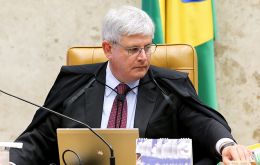
Brazil's top prosecutor Rodrigo Janot asked the Supreme Court on Tuesday to open an investigation into 54 politicians who allegedly benefited from a multibillion-dollar kickback scheme at state-run oil company Petrobras a Supreme Court spokesperson said on Tuesday.
-
Wednesday, March 4th 2015 - 05:27 UTC
Israel demands Argentina continues with investigation into terrorist attacks
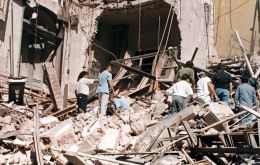
The Israeli government has said that the investigation into the Israel Embassy bombing of 1992 is responsibility of the Argentine State, following President Cristina Fernandez comments on the matter during her address to Congress.
-
Tuesday, March 3rd 2015 - 22:56 UTC
Queen Elizabeth will name cruise vessel Britannia in Southampton
P&O Cruises has confirmed that Her Majesty The Queen, accompanied by His Royal Highness The Duke of Edinburgh, will name the new P&O Cruises vessel Britannia at Ocean Terminal, Southampton, SO14 3QN, on Tuesday March 10, 2015.
-
Tuesday, March 3rd 2015 - 22:37 UTC
Malvinas' 50-Peso bill, an Argentine stunt, says Foreign Office minister
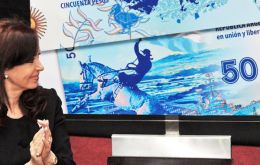
Britain derided a new Argentine banknote featuring the disputed Falkland Islands as a stunt on Tuesday and said it had no intention of discussing sovereignty over the archipelago with Buenos Aires.
-
Tuesday, March 3rd 2015 - 22:32 UTC
UK should support the Pacific Alliance
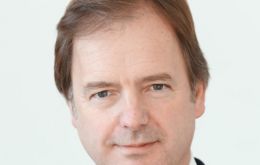
By Hugo Swire of the UK Foreign and Commonwealth Office - A year ago I spoke at a summit in London hosted by the Financial Times and the Foreign and Commonwealth Office (FCO) about how the UK could work most effectively with the ‘Pacific Alliance’.
-
Tuesday, March 3rd 2015 - 06:46 UTC
Maduro gives US two weeks to cut size of Caracas embassy staff to 17
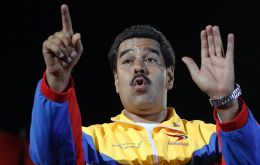
Venezuela's government has given the U.S. two weeks to slash the size of its embassy staff in Caracas to 17 diplomats as tensions between the two nations rise. Foreign Minister Delcy Rodriguez made the announcement Monday after a meeting with the top American diplomat in Caracas. She said it is up to the U.S. to decide which of an estimated 100 diplomats it wishes to send home.

