MercoPress. South Atlantic News Agency
Tag: Donald Trump
-
Monday, March 30th 2026 - 15:01 UTC
Brazil hit hardest as Latin America adjusts to Trump tariffs after one year
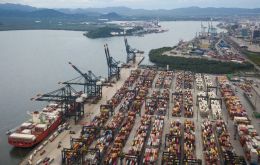
One year after the Trump administration launched its tariff offensive against more than 180 countries, Latin America presents a mixed picture: some economies lost competitiveness in the U.S. market, while others redirected exports or negotiated agreements to cushion the blow.
-
Monday, March 30th 2026 - 01:16 UTC
US allows Russian oil tanker to reach Cuba in easing of energy blockade

The United States authorized the passage of a Russian oil tanker loaded with crude bound for Cuba, in the first easing of the de facto energy blockade Washington has imposed on the island since the start of the year, The New York Times reported, citing a U.S. official.
-
Saturday, March 28th 2026 - 01:30 UTC
Trump demands Iran reopen Strait of Hormuz, slams NATO and warns: “Cuba is next”
U.S. President Donald Trump said on Friday that the military operation against Iran is “two weeks ahead” of schedule, demanded the reopening of the Strait of Hormuz, and sharply criticized European NATO allies for refusing to join the campaign. “When these times come, you learn who your real friends are,” he told an audience of a thousand investors at the FII Priority forum in Miami.
-
Wednesday, March 25th 2026 - 20:22 UTC
Iran rejects Trump's 15-point proposal and asserts sovereignty over the Strait of Hormuz

Iran rejected on Wednesday the 15-point proposal put forward by the Trump administration to end the war, calling its terms “excessive and detached from reality,” while international mediators scramble to arrange a direct meeting between representatives of both countries that could be, they warn, the last chance to prevent a broader escalation.
-
Wednesday, March 25th 2026 - 00:12 UTC
Venezuela sends diplomatic delegation to Washington to formalize restoration of ties with US

Venezuelan acting president Delcy Rodríguez announced on Tuesday that a delegation of Venezuelan diplomats will travel to Washington this week to advance the normalization of bilateral relations with the United States, severed since 2019.
-
Tuesday, March 24th 2026 - 23:42 UTC
US deploys 82nd Airborne troops to the Gulf as Trump claims Iran offered a “gift”

The Pentagon is preparing to deploy soldiers from the 82nd Airborne Division to the Middle East, even as President Donald Trump insists negotiations with Iran are advancing and that Tehran has offered a “gift” related to gas, oil and the Strait of Hormuz.
-
Tuesday, March 24th 2026 - 05:55 UTC
Analysts warn $200 oil is no longer a far-fetched scenario

Oil prices could surpass $150 per barrel and approach $200 if the Strait of Hormuz blockade persists, according to energy industry analysts — a level that would make a global recession virtually inevitable.
-
Tuesday, March 24th 2026 - 01:58 UTC
Dollar falls and São Paulo stock exchange surges after Trump's truce signal with Iran

Brazilian financial markets posted one of their best sessions of the year on Monday after President Donald Trump announced a five-day postponement of strikes against Iran's energy infrastructure, citing “productive conversations” with Tehran.
-
Tuesday, March 24th 2026 - 00:45 UTC
Trump delays strikes on Iran's energy grid by five days, claims “productive” talks

US President Donald Trump announced on Monday a five-day moratorium on the threatened attacks against Iran's energy infrastructure, hours before the 48-hour ultimatum he issued on Saturday demanding Tehran reopen the Strait of Hormuz was set to expire.
-
Monday, March 23rd 2026 - 05:40 UTC
Republican operative's proposal for US support on Malvinas electrifies Argentine media

A social media post by Republican operative Marc Zell urging the Trump administration to reconsider its position on the Falklands/Malvinas and support Argentina's sovereignty claim triggered a wave of coverage across Argentine media over the past week, despite being based on a false premise and carrying no official backing from Washington.